Skip to content
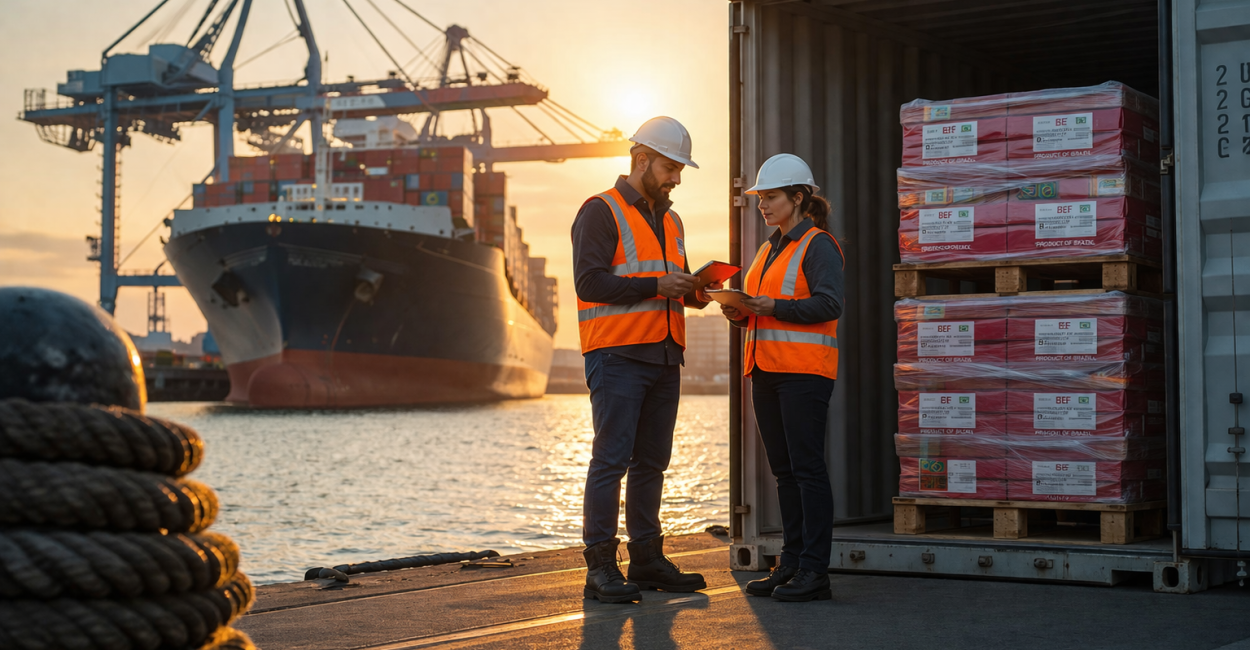
Brazil beef exports 2026 are reshaping global protein markets as production, logistics, and demand converge to push volumes and values higher. This article explains what Brazil’s export surge means for producers, importers, and supply-chain planners, and how to leverage opportunities today. It outlines drivers, trade flows, regulatory shifts, and practical steps to navigate the expanding global beef market.
Rising shipments from Brazil in 2026 highlight opportunities for scale, but also challenges in traceability, sustainability certification, and cold-chain logistics. Policymakers, packers, and exporters must align on quality control, market diversification, and compliance to sustain growth and access premium markets. This deep dive explores those dynamics and actionable strategies.
Below we analyze volumes, trade partners, regulatory factors, price signals, logistics bottlenecks, and sustainability trends tied to Brazil beef exports 2026, offering data-driven recommendations and comparative tables for quick reference.
Brazil Beef Exports 2026: Production Growth and Capacity
Rising Slaughter and Processing Capacity in Brazil
Brazil beef exports 2026 reflect increased slaughter capacity as packers expanded processing lines and implemented automation. Investment in abattoirs and cold storage improved throughput, enabling higher exportable volumes while maintaining food-safety standards.
Expanded capacity also meant tighter relationships with feedlot operators and genetic-improvement programs, ensuring consistent carcass weights and yields. This integration helped stabilize supply visible to international buyers and brokers.
For traders and logistics managers, the clear signal is to coordinate booking and cold-chain slots earlier, aligning production forecasts with shipping capacity to reduce demurrage and spoilage risks.
Regional Production Hubs and Export Corridors
Cattle-producing states in central-west and south Brazil feed major export corridors to ports like Santos and Paranaguá. These corridors combine road, rail, and inland terminals to streamline flow to container and reefer vessels. Strategic hub investments reduced transit times and improved predictability for refrigerated shipments.
Concentration of slaughterhouses near feedlot clusters lowered transport of live animals, improving animal welfare metrics and carcass quality. That trend boosted buyer confidence in consistent supply of chilled and frozen cuts for 2026 contracts.
Operators should assess corridor reliability and diversify shipping lanes (containerized vs. bulk reefer) to mitigate seasonal road challenges and port congestion risks impacting delivery windows.
Supply-chain Integration and Vertical Coordination
Vertical integration among ranchers, packers, and exporters strengthened Brazil beef exports 2026 by aligning incentives across the chain. Contracts increasingly included quality specs, traceability clauses, and sustainability credentials to meet buyer demands.
Integrated data platforms began sharing herd health, slaughter records, and cold-chain telemetry across stakeholders, improving compliance with importers’ sanitary requirements and reducing dispute instances post-shipment.
Exporters that invested in integrated management systems captured premium markets and reduced rejection rates at destination ports, underscoring technology’s role in scaling reliable export flows.
Global Demand Drivers for Brazil Beef Exports 2026
Shifts in International Consumption Patterns
Brazil beef exports 2026 benefited from rising middle-class demand in Asia and renewed protein needs in the Middle East. Dietary shifts toward protein diversification supported growth in frozen beef and processed cuts. Markets that were historically pork- or poultry-dominant now show increased beef imports.
Price competitiveness and available volumes made Brazilian product attractive for large-scale food service and retail buyers seeking both value and consistent supply. That demand spike influenced longer-term purchase contracts and futures hedging.
Suppliers should map consumption trends by region to align product mix—chilled cuts for premium markets, frozen cuts for volume-driven buyers—and adjust marketing accordingly.
Trade Policy and Tariff Influences
Preferential trade agreements and tariff adjustments in 2026 affected Brazil beef exports 2026 by redirecting flows toward lower-tariff destinations. Duty reductions in key markets boosted competitiveness of Brazilian primal cuts versus local production.
Sanitary protocols and equivalence agreements opened new markets, while temporary safeguards or anti-dumping reviews created short-term disruptions that export managers had to navigate through diversification and compliance certifications.
Exporters should track bilateral agreements and sanitary negotiations proactively to capture gateways when market access changes increase demand for Brazilian beef.
Retail and Foodservice Procurement Trends
Large retailers and global foodservice chains sought consistent, traceable supply in 2026, driving long-term sourcing contracts from Brazil. These buyers prioritized suppliers that could deliver on quality, certification, and sustainability credentials.
Private-label demand and value-chain partnerships led to specification-driven exports, where packers tailored cuts, packaging, and labeling to match retailer formats and consumer preferences.
To win these contracts, exporters optimized packaging for shelf life, ensured cold-chain integrity, and provided clear documentation to meet buyer audits and private standards.

Market Destinations and Trade Flows for Brazil Beef Exports 2026
Top Importers and Shifting Market Shares
China, the Middle East, and parts of Asia continued to lead as recipients of Brazil beef exports 2026. China’s import growth reflected both direct consumer demand and processing needs; meanwhile Gulf states and Southeast Asia increased purchases tied to re-export and foodservice sectors.
Market shares shifted as some European buyers increased purchases of chilled, certified beef while lower-priced frozen cuts moved to high-volume Asian markets. This geographic segmentation influenced pricing and logistics strategies.
Exporters should maintain flexible allocation models to shift volumes across these markets in response to price signals and sanitary events that affect demand patterns.
Logistics Routes and Shipping Strategies
Ocean freight capacity, reefer container availability, and port scheduling shaped delivery reliability for Brazil beef exports 2026. Major exporters used a mix of direct container services and conventional reefer vessels depending on destination and product shelf-life.
Airfreight remained niche for high-value chilled cuts destined for premium markets, despite cost premiums. Most volume moves relied on coordinated port operations and inland transportation planning to minimize cold-chain interruptions.
Export planners should hedge freight capacity by securing space bookings, monitoring shipping lane disruptions, and diversifying carriers to protect contracted deliveries.
Documentation and Sanitary Compliance at Destinations
Sanitary certificates, origin documentation, and compliance with importers’ traceability requirements became stricter in 2026. Brazil beef exports 2026 required rigorous adherence to veterinary health certifications and digital trace files to avoid rejections at destination ports.
Electronic certification and pre-clearance procedures accelerated customs processing, reducing dwell times and cold-chain exposure risks. Exporters investing in these systems saw fewer delays and lower demurrage costs.
Operational teams should align with certified labs, maintain audit-ready records, and use e-cert platforms to streamline cross-border compliance for key markets.
Pricing, Contracts, and Financial Dynamics of Brazil Beef Exports 2026
Price Formation and International Benchmarks
Brazil beef exports 2026 pricing reflected global supply-demand balances, currency moves (BRL vs. USD), and competitor supply from countries like Argentina and Australia. FOB and CIF price negotiation incorporated freight and cold-chain insurance considerations.
Exporters relied on futures and forward contracts to hedge currency and commodity risks, while buyers locked minimum volumes under price-adjustment clauses linked to international indices and spot market differentials.
Understanding pricing mechanisms and hedging tools is essential for producers and traders to protect margins and offer competitive long-term contracts to international buyers.
Contract Terms, Payment, and Risk Management
Contracts for Brazil beef exports 2026 increasingly included payment terms, letters of credit, and performance clauses addressing cold-chain breaches. Risk mitigation involved insurance for shipment loss, quality disputes, and political or sanitary disruptions.
Exporters used escrow arrangements and staggered shipments to reduce buyer risk, and incorporated arbitration clauses to expedite dispute resolution. Financial discipline in credit exposure to large buyers preserved cash flow and reduced receivable risk.
Producers should work with trade finance partners to tailor instruments that balance competitive payment terms with protection against non-payment and market volatility.
Value Capture and Premium Segmentation
Capturing premium value in Brazil beef exports 2026 required certification (e.g., sustainability, origin, antibiotic-free) and product differentiation like dry-aged or specialty cuts. Exporters investing in branding and traceability commanded higher price points in niche markets.
Segmenting product lines between commodity frozen cuts and branded chilled offerings allowed companies to balance volume and margin objectives. For chain suppliers, loyalty and consistency in delivery fostered long-term contracted premiums.
Targeted marketing and compliance investments remain key to accessing premium channels and improving overall export profitability.

Regulation, Sustainability, and Traceability in Brazil Beef Exports 2026
Environmental and Deforestation Policies Impacting Exports
Regulatory scrutiny around land use and deforestation influenced Brazil beef exports 2026 as importers demanded proof of legal land tenure and zero-deforestation sourcing. Sustainability frameworks tied to trade access affected buyer decisions and access to premium markets.
Exporters adopted satellite monitoring, supplier audits, and chain-of-custody documentation to demonstrate compliance and avoid trade restrictions. National and international policies increasingly tied market access to verifiable environmental practices.
Proactive compliance with environmental standards reduces trade disruption risk and opens doors to sustainability-linked financing and market premiums.
Traceability Systems and Digital Certifications
Traceability became a core requirement for Brazil beef exports 2026, using digital IDs, blockchain pilots, and integrated databases to track cattle from ranch to port. These systems improved recall capabilities and buyer confidence in origin claims and sanitary status.
Digital certification eased cross-border verification and reduced paperwork processing time, minimizing delays at customs. Exporters participating in interoperable platforms gained competitive advantages in markets demanding provenance transparency.
Investment in traceability not only supports market access, but also serves as a foundation for premium labeling and sustainability claims.
Animal Health Standards and Export Eligibility
Maintaining OIE-aligned veterinary standards was critical for Brazil beef exports 2026. Outbreak prevention, vaccination programs, and rigorous inspection regimes ensured stable export eligibility across regions with strict sanitary rules.
Regular audits and compliance with importing-country equivalence requirements prevented sudden market closures. Exporters coordinated closely with MAPA (Ministry of Agriculture) and accredited labs to expedite certifications.
Producers and exporters must prioritize herd health protocols and documentation to sustain uninterrupted access to high-value markets.
Logistics, Cold Chain, and Infrastructure for Brazil Beef Exports 2026
Cold-chain Requirements and Meat Quality Preservation
Maintaining temperature integrity from packing to final delivery was non-negotiable for Brazil beef exports 2026. Investments in reefer containers, palletized frozen systems, and cold-room capacity reduced quality deterioration and microbial risk for chilled and frozen products.
Telemetry and IoT sensors provided real-time temperature monitoring, enabling corrective action during transit. Exporters with robust cold-chain systems reported lower rejection rates and improved shelf life at destination markets.
Logistics teams should specify acceptable temperature ranges in contracts, use validated packaging, and require carriers to provide telemetry data for audit trails and insurance claims.
Port Handling and Inland Transport Optimization
Port efficiency and inland transport reliability determined shipment turnaround and export cost for Brazil beef exports 2026. Consolidated shipments, scheduled slot management, and improved inland rail options reduced bottlenecks and lowered freight per unit.
Strategic use of transshipment hubs and alternate ports during peak season maintained shipment cadence, while cold-room staging near ports minimized delays in vessel loading and reduced spoilage risk.
Shippers should collaborate with port operators, carriers, and customs brokers to lock predictable windows and contingency plans during seasonal congestion.
Infrastructure Investment Priorities and Public-private Roles
Further improvement of roadways, rail links, and refrigerated terminal capacity was necessary to scale Brazil beef exports 2026 sustainably. Public investment in logistics corridors, paired with private sector cold-chain expansion, created multiplier effects for export growth.
Public-private partnerships accelerated port upgrades and inland terminal modernization, complementing private investments in packer-level cold storage and container depots to handle export surges.
Stakeholders should advocate coordinated infrastructure plans that prioritize refrigerated logistics and reduce transit times to preserve meat quality for international buyers.
Opportunities and Risks for Exporters and Producers in 2026
Market Opportunities and Strategic Positioning
Brazil beef exports 2026 presented opportunities in premium chilled markets, value-added processing, and branded supply chains tied to sustainability claims. Exporters who targeted niche segments with certification and consistent quality unlocked higher margins and long-term contracts.
Expanding into under-served import markets and offering tailored packaging and cut specifications also created differentiation versus global competitors, enabling better price realization per kilogram exported.
Companies should evaluate product portfolios, invest in certifications, and pursue partnerships with international distributors to capture emerging demand pockets.
Key Risks: Disease, Geopolitical, and Market Volatility
Risks to Brazil beef exports 2026 included animal-disease outbreaks, trade restrictions, currency fluctuations, and sudden shifts in import policies. These events could quickly reroute trade flows and depress prices, harming margin stability for exporters and ranchers.
Proactive risk management—biosecurity, insurance, contract diversification, and contingency logistics—is essential to withstand shocks and protect export revenue streams amid heightened global uncertainty.
Maintaining transparent communication with buyers and authorities helps mitigate reputational and commercial impacts when risks materialize.
Practical Steps for Exporters to Capture Growth
- Invest in traceability and digital certification to meet buyer requirements
- Secure diversified shipping contracts to mitigate freight disruptions
- Develop premium product lines with sustainability credentials
- Strengthen partnerships with logistics providers for cold-chain integrity
Applying these tactics positions exporters to benefit from Brazil beef exports 2026, converting volume growth into sustainable revenue and market access across regions.
Comparative Data and Performance Indicators for Brazil Beef Exports 2026
Key Export Metrics and Year-over-year Comparisons
Tracking tons exported, average FOB prices, and market share by destination offers clarity on performance trends for Brazil beef exports 2026. Year-over-year comparisons indicate where margins expanded and which markets absorbed incremental supply.
Exporters use KPIs like rejection rates, on-time delivery, and cold-chain integrity incidents to refine operations and improve buyer satisfaction in 2026’s competitive environment.
Below is a compact table comparing volume and average price across representative markets to guide strategic decisions.
| Destination | 2025 Volume (kt) | Avg FOB 2026 (USD/kg) |
|---|---|---|
| China | 820 | 4.10 |
| Middle East | 340 | 3.50 |
| Southeast Asia | 270 | 3.30 |
Cost Structure and Margin Drivers
Understanding slaughter costs, cold storage fees, freight, and compliance expenses helps explain margin variance across product lines. Brazil beef exports 2026 benefited when scale lowered unit costs and when premium products attracted higher margins that covered compliance investments.
Exporters should model scenarios including currency swings and freight surges to protect profitability when market conditions change abruptly.
Work with financial advisors and trade finance partners to structure deals that balance cash flow needs and exposure to volatile inputs like fuel and exchange rates.
Benchmarking Against Competitors
Comparing productivity, certification levels, and logistics costs with other exporters (e.g., Australia, Argentina) clarifies competitiveness. Brazil beef exports 2026 were advantaged by scale and cost base but faced premium-segment competition where provenance and branding matter more.
Benchmarking identifies areas for investment—such as quality grading or cold-chain upgrades—to close gaps and target higher-value markets.
Regular benchmarking exercises help prioritize CAPEX and operational changes that yield measurable export performance improvements.
Conclusion
Brazil beef exports 2026 signal a pivotal year where scale, logistics, and sustainability combined to expand global market access. Producers and exporters who invest in traceability, cold-chain integrity, and market diversification stand to capture both volume and premium margins tied to evolving buyer demands.
To benefit from Brazil beef exports 2026, stakeholders should prioritize compliance, strategic contracting, and infrastructure coordination. Consider auditing your cold-chain, exploring sustainability certification, and locking flexible freight arrangements to turn 2026’s record export momentum into lasting growth.
FAQ
What Drove the Record Brazil Beef Exports in 2026?
Record exports in 2026 were driven by expanded slaughter capacity, stronger demand from Asia and the Middle East, and improved logistics including reefer capacity and digital certifications. Currency competitiveness and preferential trade terms also encouraged large-volume contracts, supporting higher shipments and wider market reach.
Which Markets Increased Imports of Brazil Beef in 2026?
Key markets increasing imports included China, Gulf Cooperation Council countries, and Southeast Asia, where demand for both frozen bulk cuts and chilled value-added products rose. Foodservice expansion and retail demand in these regions absorbed larger Brazilian volumes while premium markets sought certified chilled cuts.
How Important is Traceability for Exports from Brazil in 2026?
Traceability became essential for market access and buyer confidence in 2026. Digital certifications, origin tracking, and chain-of-custody documentation reduced trade barriers, lowered rejection risk, and enabled exporters to meet sustainability and sanitary requirements demanded by importers and regulators globally.
What Logistics Challenges Affected Brazil Beef Exports in 2026?
Challenges included port congestion, reefer container shortages, inland transport disruptions, and cold-chain failures. Exporters mitigated these by diversifying ports, securing container slots earlier, investing in cold-room capacity, and using telemetry for real-time temperature monitoring to preserve product quality.
How Can Exporters Capture Premium Prices in 2026 And Beyond?
To capture premiums, exporters should pursue sustainability and origin certifications, develop branded chilled products, maintain consistent quality, and ensure robust cold-chain controls. Strategic partnerships with large retailers and foodservice buyers, plus targeted marketing of differentiated cuts, help justify higher price points.
Sources: Brazil Ministry of Agriculture (MAPA), FAO, International Trade Centre analyses.