
Advertisements

Is the practice of changing farm management to increase carbon stored in soils and biomass, then quantifying and selling those gains as verified carbon credits. It ties on-farm practices—cover crops, reduced tillage, agroforestry—to measurable carbon removals that can enter regulated or voluntary carbon markets. This is not simply “selling green”; it requires measurement, additionality, permanence considerations, and adherence to protocols that convert sequestration into marketable units.
Interest in Carbon Credit Farming has surged because agriculture can offer low-cost, scalable carbon removals where industrial offsets fall short. Farmers face both an opportunity and a risk: new revenue streams but also audit burdens, up-front costs, and multi-year commitments. Clear rules, trusted measurement methods, and pragmatic business models are the difference between profitable adoption and disappointment.
Pontos-Chave
- Carbon Credit Farming monetizes measured increases in soil and biomass carbon from specific on-farm practices, requiring verification under accepted protocols.
- Key risks are additionality, permanence, leakage, and measurement uncertainty; mitigating these determines credit value and longevity.
- Successful projects blend agronomy with simple measurement systems, cost-sharing for capital changes, and contracts that fit farm cash flow.
Why Carbon Credit Farming Changes the Farm Business Model
Carbon Credit Farming alters what a farm sells. Instead of only crops or livestock, farms can sell verified ecosystem services. That requires thinking like a project developer: identify baseline practices, design changes that increase carbon, and structure contracts to capture the economic value. The business model shifts from seasonal revenue to multi-year payments tied to measured outcomes.
Revenue Diversification and Risk Allocation
When farmers add carbon credits, they diversify income. Payments can be annual or front-loaded via contracts or advances. But this comes with strings: verification costs, multi-year monitoring, and potential liability if carbon reverses (for instance, due to tillage or fire). Effective deals split costs and risks—programs often provide measurement, technical extension, or cost-share for cover crop seed and equipment.
How Markets Price Farming Credits
Markets value attributes: permanence guarantees, co-benefits (water, biodiversity), and low measurement uncertainty. Agricultural credits often trade at a discount versus engineered removals because soil carbon is reversible and harder to measure. Premiums exist for verifiable co-benefits or stacked revenue (e.g., habitat payments), but buyers demand transparent methodologies and registry entries.
How Carbon is Measured and Verified in Farms
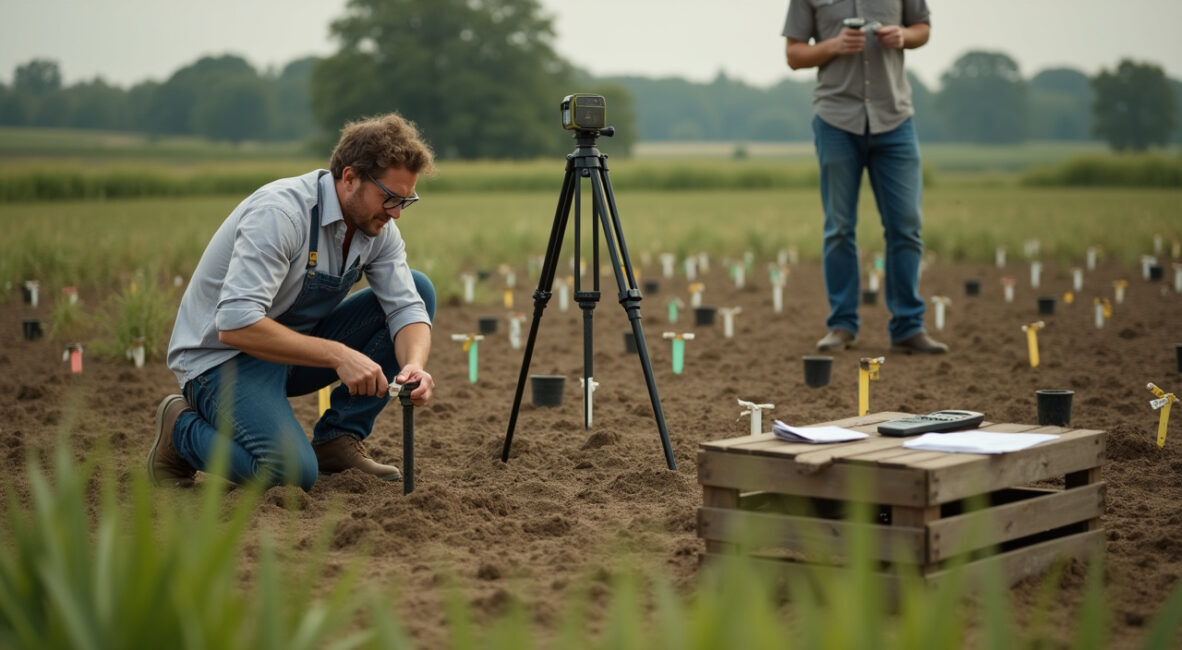
Robust measurement is the backbone of Carbon Credit Farming. Measurement approaches range from direct soil sampling to model-based estimates calibrated with sensors and remote imagery. Verification combines sampling protocols with third-party audits. Protocol choice affects costs, credit quantity, and market eligibility.
Soil Sampling, Models, and Remote Sensing
Direct soil sampling measures changes in soil organic carbon (SOC) but is costly at scale and slow. Models like COMET-Farm and DNDC use management and climate inputs to estimate sequestration and are cheaper. Remote sensing supports model inputs and spatial targeting; for example, satellite NDVI helps detect cover crop presence and biomass. Combining methods reduces uncertainty and cost.
Protocols and Registries
Protocols from Verra (VM0042), American Carbon Registry, and the California Air Resources Board set rules for additionality, permanence, and leakage. Registries require baseline definition, monitoring plans, and periodic verification. Some protocols allow stacking payments (e.g., conservation programs) if rules prevent double-counting. Choosing the right protocol is a strategic decision tied to market access and price.

Which Farming Practices Drive Creditable Carbon Gains
Not all sustainable practices qualify for Carbon Credit Farming. Creditable actions are those that demonstrably increase carbon stocks above a credible baseline. Common eligible practices include reduced tillage, cover cropping, extended rotation, perennial integration, and agroforestry. Each practice has different sequestration rates, co-benefits, and permanence profiles.
Practice-specific Sequestration Ranges and Drivers
Cover crops can increase SOC by roughly 0.1–0.3 metric tons CO2e per acre per year in many temperate systems, depending on crop mix and climate. Reduced tillage often increases near-surface carbon but may show limited net gains over long periods unless combined with residue retention. Agroforestry and tree planting produce higher per-acre removals but demand land-use changes and longer permanence commitments.
Operational Considerations for Farmers
Adoption hurdles include equipment needs, learning curve, crop insurance interactions, and short-term yield variability. Successful projects bundle technical assistance, seed access, and transitional payments. Programs that align agronomic benefits—soil health, moisture retention—with carbon goals achieve higher adoption and better long-term permanence.
Designing Contracts and Deals That Work for Farmers
Contract design determines whether Carbon Credit Farming is attractive. Contracts must balance credit buyer protections with farmer cash-flow realities. Key elements include payment structure, risk allocation for reversal, data rights, and audit schedules.
Advertisements
Payment Structures and Advance Financing
Contracts vary: pay-per-credit after verification, multi-year forward purchases, or advance payments for implementation. Advances help farmers cover seed and equipment. Buyers often include clauses for reversals; insurance or buffer pools can cover non-permanence. Transparent pricing formulas tied to verified metrics reduce disputes.
Data, Privacy, and Long-term Obligations
Buyers require access to management records and monitoring data. Farmers need limits on data use and clear ownership rules. Many contracts require 10–30 year commitments. Farmers should negotiate exit clauses, compensation for reversals due to factors beyond their control (e.g., wildfires), and provisions for contract transfer if the land changes hands.
Pitfalls, Common Mistakes, and How to Avoid Them
Carbon Credit Farming sounds simple, but common errors sink projects. Mistakes include overestimating sequestration, selecting the wrong protocol, understating monitoring costs, and ignoring legal transfer issues. Awareness of these pitfalls reduces financial and reputational risk.
- Overreliance on model estimates without field calibration.
- Signing long-term contracts with unclear reversal clauses.
- Ignoring stacked-payment rules and double-counting risks.
- Failing to budget for verification and administrative costs.
Mitigation starts with due diligence: run pilot plots with third-party measurement, get legal review of contracts, and choose trusted aggregators or registries. Budget realistically: verification and admin often consume 20–40% of gross credit revenue in small projects.
Policy, Market Trends, and Future Outlook
Policy shifts and buyer demand shape Carbon Credit Farming. Corporate net-zero commitments drive voluntary market demand, while some jurisdictions may create regulated demand for removals. Standards are tightening around additionality and permanence, and buyers focus on verifiable co-benefits.
Policy Risks and Opportunities
Carbon policies can create demand but also regulatory complexity. For example, California’s cap-and-trade rules and U.S. federal incentives affect eligibility and price. Public programs—like conservation cost-share—can reduce farmer costs but may limit crediting. Farmers need to track policy changes and work with advisors to align actions with both public and private programs.
Market Innovations to Watch
Advances include in-field sensors, improved soil assays (e.g., spectroscopy), and blockchain-based registries for traceability. Insurance products to cover reversals and standardized aggregator frameworks lower barriers. These trends will improve credit confidence and could raise price points for agricultural credits.
Próximos Passos Para Implementação
Start by assessing your baseline: soil tests, current practices, and realistic sequestration potential. Work with a technical provider or extension agent to design a practice bundle that fits your operation. Pilot on a subset of fields to test agronomy and measurement before scaling. Negotiate contracts with clear payment timing, data rights, and reversal terms. Finally, factor in administrative costs and consider joining an aggregator if you prefer pooled verification and sales.
With the right design, Carbon Credit Farming can be a durable revenue stream that improves soil health and resilience. But it requires rigorous measurement, honest contracts, and a willingness to manage long-term obligations.
What is Carbon Credit Farming and How Does It Differ from Traditional Carbon Offsets?
Carbon Credit Farming converts measurable increases in on-farm carbon—soil and biomass—into marketable carbon credits. Unlike many industrial offsets that reduce emissions at source, farming credits represent removals stored in living or soil carbon pools. Key differences are higher variability, potential reversibility, and the need for agronomic practices tailored to local soils and climate. Protocols for agricultural credits emphasize baseline establishment, monitoring frequency, and reversal risk management to account for these differences.
How Long Do Farmers Typically Commit Land to Generate Credits?
Commitment lengths vary by protocol and practice. Common terms are 10 to 30 years to secure permanence and market acceptance. Shorter terms appear in pilot programs, but buyers often discount credits from short commitments. Long commitments increase farmer risk but also often generate higher prices. Contracts may include buffer pools or insurance to handle reversals; farmers should evaluate compensation for long-term restrictions on land use, transferability clauses, and exit conditions before signing.
What Are Realistic Carbon Sequestration Rates for Common Practices?
Sequestration rates depend on soil type, climate, and management. Cover crops often yield 0.1–0.3 metric tons CO2e per acre per year in temperate zones. Reduced tillage can add similar amounts but plateaus unless combined with residue retention. Agroforestry and tree planting produce larger removals, sometimes 1–5+ metric tons CO2e per acre annually as trees mature. These are averages; local testing and calibrated models are necessary for project-specific estimates and credible crediting.
How Much of the Credit Revenue Does a Farmer Actually Receive?
Net revenue to farmers depends on the deal structure and costs. Aggregators and verification can consume 20–40% of gross credit value in small projects. Direct deals where the farmer handles more tasks can yield a larger share but require technical capacity. Other deductions may include monitoring, reporting, and registry fees. Advance financing reduces upfront risk but also reduces net proceeds. Clear cost modeling up front helps set realistic expectations about net farm income from credits.
Can I Stack Carbon Payments with Government Conservation Programs?
Stacking depends on program rules and double-counting prevention. Some public conservation funds allow stacking if benefits are distinct and accounted for. Registries typically prohibit double-crediting for the same carbon outcome—meaning you cannot sell the same metric ton twice. However, you can often receive cost-share payments while selling credits if you document that the carbon increment is additional to the cost-share baseline. Legal and registry guidance is essential to avoid ineligibility or contract disputes.
Advertisements
