Skip to content
Coffee farming climate change is transforming how growers manage land, water and crop varieties. Understanding the science and practical adaptations is essential to protect yields, livelihoods and coffee quality over the next decade.
As rising temperatures, shifting rainfall patterns and new pests stress coffee systems, producers must adopt resilient practices, from shade management to varietal selection and water conservation. This article outlines proven strategies, technology options, and policy considerations to help farmers, cooperatives and supply-chain actors respond.
Below you’ll find eight focused sections covering adaptation techniques, farm-level interventions, market responses, and long-term planning for coffee farming climate change, plus practical checklists, comparative tables and an FAQ to guide implementation.
Climate-Smart Coffee Production
Defining Climate-smart Coffee and Its Goals
Climate-smart coffee production integrates practices that increase productivity, enhance resilience and reduce greenhouse gas emissions on coffee farms. It focuses on adapting farm management to changing temperature and precipitation patterns while maintaining or improving yield and bean quality.
On-the-ground measures include soil health management, diversified shade systems, and efficient irrigation to buffer plants against drought and heat stress. These actions aim to secure farmer incomes and protect ecosystem services that support coffee, such as pollination and water regulation.
Stakeholders—from agronomists to exporters—use climate-smart principles to prioritize interventions that are cost-effective, scalable and sensitive to local social and ecological conditions, helping farms survive and thrive under coffee farming climate change.
Key Components of a Resilient Coffee System
Resilient coffee systems combine shade trees, soil conservation, pest monitoring and water management to reduce vulnerability to extreme weather and shifting disease pressure. Biodiversity on farm landscapes is crucial to buffer microclimates and maintain soil fertility.
Integrating agroforestry with diverse shade species moderates temperature and reduces evapotranspiration, while cover crops and mulches conserve moisture and limit erosion. These practices also support carbon sequestration and biological control of pests.
Farmers should pair technical measures with capacity building, credit access and market linkages so resilience investments are financially sustainable and aligned with broader supply-chain incentives addressing coffee farming climate change.
Monitoring and Indicators for Adaptation
Effective adaptation requires monitoring temperature, rainfall, pest incidence and yield trends to detect climate-driven changes early. Simple on-farm indicators—soil moisture, flowering time and plant vigor—help farmers adjust practices rapidly.
Digital tools, like weather stations and mobile advisories, can improve decision-making but must be accessible and relevant to smallholder contexts. Participatory monitoring with cooperatives enhances knowledge exchange and local forecasting ability.
Baseline data on varietal performance, elevation suitability and historical yields supports targeted interventions and investment planning, enabling continuous improvement in response to coffee farming climate change.
Adaptation Strategies for Coffee Farmers
Immediate Farm-level Actions for Increased Resilience
Short-term adaptation measures can produce quick benefits in yield stability and plant health. These include pruning, improving drainage, targeted fertilization, and timely harvesting to reduce losses from weather extremes or pest outbreaks.
Reconfiguring planting density and selective shade adjustments help manage heat stress and optimize microclimates. Farmers should also adopt integrated pest management to limit disease spread under shifting conditions.
Combining immediate actions with planning for longer-term changes ensures farms can adapt progressively to coffee farming climate change while minimizing financial shock.
Farmer Checklist for Resilient Practices
- Assess shade tree species and distribution for microclimate buffering
- Install mulching and cover crops to retain soil moisture
- Improve soil fertility with compost and targeted nutrients
- Set up simple drainage to avoid root rot in intense rains
- Adopt basic pest monitoring and low-toxicity control methods
These checklist items offer practical, low-cost entry points for farmers to begin strengthening their operations. Prioritize actions that match available labor and resources and that provide the largest resilience gains per dollar spent.
Local extension services and cooperative technicians can help tailor the checklist to local agroecological and socio-economic conditions, improving adoption and long-term impact against coffee farming climate change.
Case Studies: Rapid-response Adaptations
Examples from Latin America and East Africa show farmers rapidly planting shade trees, diversifying income with intercrops, and switching harvest timing to avoid peak heat. These adjustments preserved yields and quality during abnormal seasons.
Community-level seed banks and nursery networks enabled quick access to resilient varieties, while collective investments in water storage reduced drought vulnerability. Collaboration with buyers helped secure premiums for climate-smart coffee.
Such case studies demonstrate that coordinated, locally led responses can reduce risk exposure and form a foundation for scaling adaptive practices across coffee-growing regions facing coffee farming climate change.
Shade Management and Agroforestry
Benefits of Shade Systems for Climate Buffering
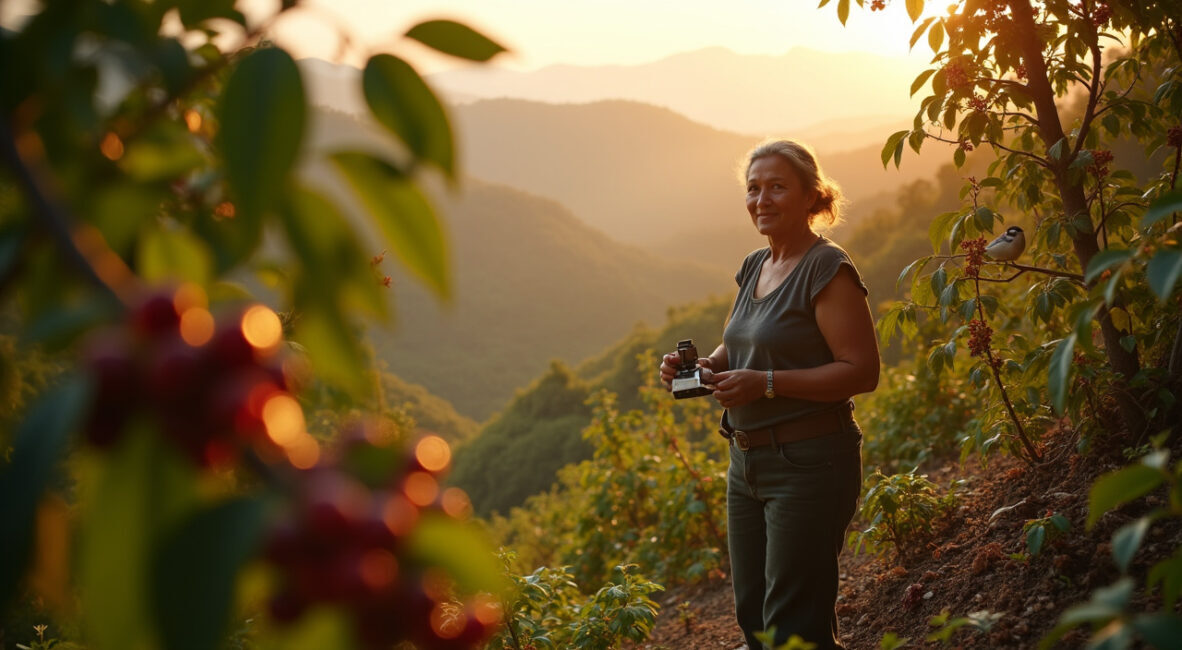
Shade trees cool coffee plants, reduce evapotranspiration and maintain humidity—key buffers against warming and erratic rainfall. A well-designed canopy can lower leaf temperatures and protect flowering and fruit set.
Agroforestry also enhances biodiversity, improves soil structure through litterfall and roots, and provides secondary products like fruit or timber to diversify income. These ecosystem services make shade a core strategy in climate-adaptive coffee farming.
Selecting appropriate tree species and managing canopy density is essential to balance shade benefits with yield goals and disease risk, adapting shade design to specific elevation and microclimate conditions.
Selecting Shade Species and Guilds
Choosing native or well-adapted shade species supports soil fertility, pest control and farmer livelihoods. Nitrogen-fixing trees, deep-rooted species and fruit trees are common choices that deliver multiple benefits.
Species selection should consider growth rate, canopy architecture, litter quality and market potential. A diverse guild reduces the risk of single-species failure and enhances long-term system stability.
Integrating fodder or timber trees can provide additional revenue streams, helping farms finance other climate adaptation investments and making agroforestry a resilient component of coffee farming climate change strategies.
Managing Trade-offs: Light, Yield and Disease
Too much shade can reduce yields or increase fungal disease pressure in humid areas, while too little shade fails to protect against heat stress. Fine-tuned management balances light interception and airflow to optimize bean quality and health.
Regular pruning, spatial arrangement and canopy thinning during wet seasons improve air circulation and reduce humidity-related pathogens. Monitoring and adaptive pruning guide these interventions seasonally.
Testing shade density at farm scale and adjusting by elevation and variety supports better outcomes, aligning agroforestry practices with coffee farming climate change realities without sacrificing profitability.
Varietal Selection and Genetic Approaches
Choosing Varieties for a Warming World
Varietal selection is a cornerstone adaptation to climate change: varieties with higher heat tolerance, drought resilience or disease resistance help maintain yields under new climatic stressors. Elevational suitability shifts mean some zones may favor new cultivars.
Producers should evaluate performance under local conditions through trials and participatory selection, considering cup quality, maturation timing and market acceptance alongside resilience traits. Varietal portfolios often outperform single-cultivar reliance.
Access to quality planting material and nursery management ensures faster adoption. Collaboration with research institutes accelerates the development and dissemination of adapted cultivars for coffee farming climate change.
Breeding and Biotechnology Options
Conventional breeding, marker-assisted selection and, in some regions, genetic technologies aim to combine yield, quality and resilience traits. These approaches can create varieties resistant to rust and tolerant of heat and variable moisture.
Breeding cycles are long, so integrating short-term management changes with medium-term varietal plans is critical. Seed systems must ensure genetic purity and availability for smallholder adoption at scale.
Transparency about methods and regulatory frameworks, plus market acceptance of new varieties, influence uptake. Linking breeders with farmers ensures breeding targets align with real-world needs posed by coffee farming climate change.
Maintaining Quality While Adapting Varieties
Cup quality is a commercial imperative; resilient varieties must meet buyer standards. Post-harvest practices—processing, fermentation and drying—can mitigate varietal changes and preserve desired sensory profiles.
Quality-focused selection balances resilience and flavor attributes, often prioritizing intermediate solutions like blending beans from different microclimates or maintaining seed lots of specialty varieties at higher elevations.
Traceability, certification and buyer engagement support premium prices for adapted varieties with strong flavor, encouraging farmers to invest in resilient genetics while meeting market demands around coffee farming climate change.
Water Management and Soil Health
Conserving Water on Coffee Farms
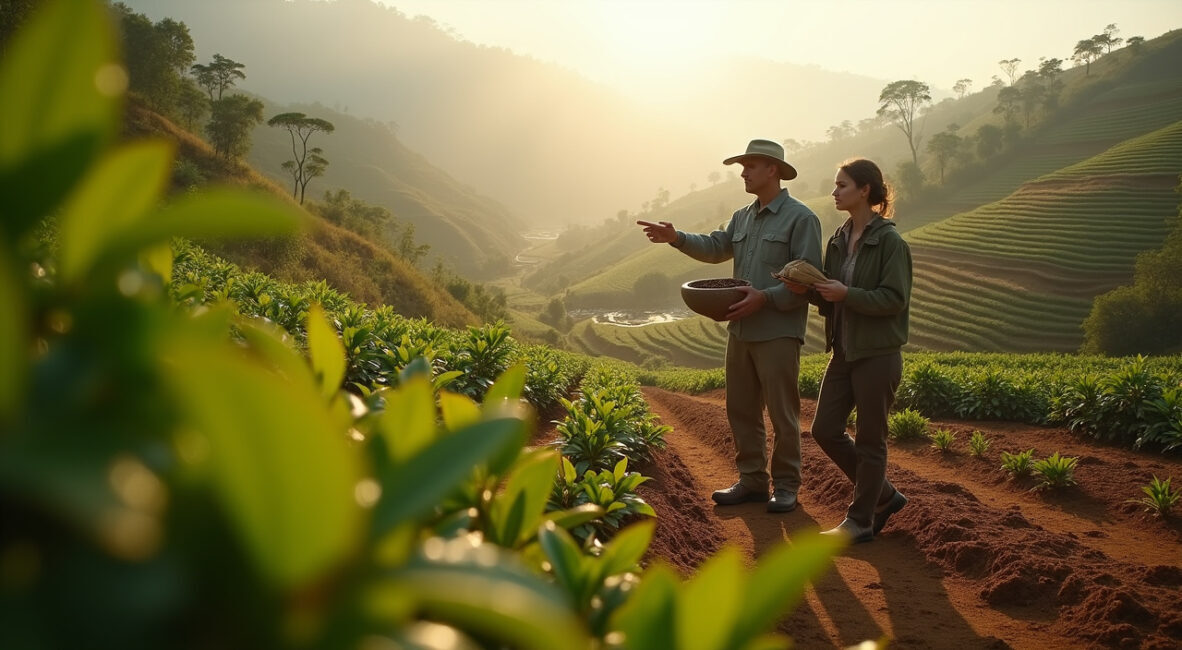
Water scarcity and irregular rainfall require efficient use and storage. Techniques include contour lines, terraces, mulching, and water-harvesting ponds that capture runoff for dry spells. Proper irrigation scheduling reduces waste and maintains plant health.
Drip irrigation and low-pressure systems deliver water to root zones efficiently, though capital costs may limit adoption without financing. Combining water-saving agronomic practices with infrastructure yields the best resilience outcomes.
Community-level water management—shared storage and rotational access—can increase equity and ensure smallholders gain from investments addressing coffee farming climate change.
Soil Fertility and Carbon Sequestration
Healthy soils with high organic matter retain moisture and support robust root systems, increasing tolerance to drought and heavy rains. Practices like composting, green manures and minimal tillage build soil structure and microbial activity.
Soil carbon sequestration through agroforestry and cover cropping contributes to climate mitigation while improving fertility. Measuring soil health indicators helps track progress and justify investments in regenerative practices.
Access to organic amendments and training in nutrient management optimizes fertilizer use, reducing runoff and promoting long-term resilience in response to coffee farming climate change.
Comparative Water Strategies
| Strategy | Benefits | Constraints |
|---|---|---|
| Mulching & cover crops | Reduces evaporation, builds soil organic matter | Requires labor and biomass sources |
| Drip irrigation | Efficient water use, targeted delivery | Initial cost, maintenance needs |
| Water harvesting ponds | Buffers dry seasons, communal benefit | Land and construction investment |
Choosing the right mix depends on farm size, topography and finance. Combining techniques yields the best outcomes for sustainable coffee farming climate change adaptation.
Integrated Pest and Disease Management
Shifting Pest and Pathogen Pressures
Climate change alters pest lifecycles, expands ranges and increases disease outbreaks like coffee leaf rust. Warmer, wetter conditions often favor pests and pathogens, demanding proactive management and surveillance systems.
Farmers must adapt monitoring frequency, apply threshold-based controls and diversify cropping systems to reduce vulnerability. Early warning systems and regional information exchange improve preparedness.
Investment in resistant varieties and biological controls reduces chemical reliance and preserves beneficial insects, aligning pest management with broader climate resilience goals in coffee farming climate change.
Biological and Cultural Control Methods
Biological agents, habitat for predators, crop rotation and sanitation reduce pest pressure sustainably. Removing diseased material, managing shade and improving plant vigor lower infection risk without heavy pesticide use.
Integrating push-pull strategies, pheromone traps and beneficial fungi can suppress pests while protecting pollinators. These methods require training and local adaptation but are cost-effective long-term.
Combining cultural controls with targeted interventions keeps resistance management viable and supports ecosystem health as part of comprehensive coffee farming climate change responses.
Monitoring Networks and Early Warning
| Tool | Use |
|---|---|
| Local pest scouting | Detects outbreaks early for rapid response |
| Mobile alert apps | Disseminates regional risk forecasts |
| Weather stations | Predicts conditions favorable to disease |
Cooperative-level monitoring and links to extension services create effective early warning systems, allowing farmers to act before widespread damage occurs and reducing the long-term impact of coffee farming climate change.
Markets, Finance and Policy Responses
Market Mechanisms to Support Adaptation
Premiums for sustainably produced or climate-resilient coffee incentivize farmers to adopt adaptive practices. Certifications and buyer contracts that reward climate-smart investments can lower adoption barriers.
Forward contracts, blended finance and climate funds help de-risk investments in nurseries, irrigation and agroforestry. Market signals aligned with resilience objectives accelerate uptake across regions.
Traceability and transparency increase buyer confidence in claims related to climate adaptation, strengthening market-based pathways to scale coffee farming climate change responses.
Access to Finance and Insurance
Smallholders need affordable credit and tailored insurance to invest in adaptation. Index-based insurance, microcredit and blended grants reduce exposure to weather shocks and encourage long-term resilience investments.
Public-private partnerships and cooperative savings schemes can mobilize capital for community infrastructure like water storage. Financial literacy programs ensure funds target effective climate-smart interventions.
Designing products that reflect local risk profiles and seasonal cash flows enhances relevance and uptake, improving the financial sustainability of coffee farming climate change measures.
Policy Levers and Institutional Roles
Governments and institutions can enable adaptation through extension services, research funding, seedlings distribution and land-use planning. Policies that support agroforestry, carbon projects and landscape restoration create enabling environments.
Regional cooperation on pest surveillance, watershed management and climate forecasting increases resilience beyond individual farms. Public policy should align with market incentives to scale effective practices.
Transparent regulatory frameworks and support for farmer organizations strengthen collective action and ensure that climate adaptation in coffee farming benefits smallholders equitably.
Technology, Data and Innovation
Digital Tools for Decision Support
Mobile advisories, weather forecasts and farm management apps provide actionable guidance for planting, irrigation and pest control. These tools help farmers respond to short-term weather variability and longer-term trends.
Sensors and IoT devices can monitor soil moisture and microclimate, but must be cost-effective and accompanied by training. Data-driven recommendations improve timing and efficiency of inputs, supporting resilience.
Open-data platforms and farmer networks increase the reach of innovations, enabling smallholders to leverage technology in confronting coffee farming climate change challenges.
Remote Sensing and Landscape Planning
Satellite imagery and GIS mapping identify vulnerable zones, track deforestation and inform reforestation and shade placement. Landscape planning optimizes water capture and connectivity for biodiversity.
Combining remote sensing with ground truthing by cooperatives yields practical management maps that guide investment and monitor outcomes. This supports targeted interventions at scale.
Spatial analysis also informs risk assessments and helps prioritize support to communities most at risk from coffee farming climate change impacts.
Innovation Hubs and Farmer-led Experiments
Local innovation hubs and farmer field schools enable iterative testing of varieties, shade configurations and processing methods. Participatory experimentation accelerates adoption of context-appropriate solutions.
Linking hubs to research institutions and buyers shortens feedback loops, ensuring innovations meet market and agronomic needs. Peer learning strengthens community capacity to adapt collectively.
Documenting successes and failures supports scaling of promising practices and creates a culture of continuous improvement in addressing coffee farming climate change.
Long-Term Planning and Landscape Approaches
Landscape-level Resilience Strategies
Managing beyond the farm—watersheds, corridors and community forests—reduces systemic risk and maintains ecosystem services vital to coffee production. Landscape planning addresses shared challenges like water security and pest migration.
Collaborative governance structures align land use with conservation and production goals, balancing livelihoods with biodiversity protection. Payment for ecosystem services schemes can compensate stewards of landscape benefits.
Long-term investments in restoration and connectivity enhance adaptive capacity across coffee-growing regions facing coffee farming climate change.
Scenario Planning and Risk Assessments
Scenario planning helps stakeholders visualize plausible futures under different temperature and precipitation trajectories. Risk assessments combine climate models with socio-economic data to prioritize interventions.
Participatory scenario exercises engage farmers and decision-makers in defining acceptable trade-offs and sequencing investments, improving resilience and buy-in for long-term strategies.
Embedding scenario insights in regional development plans ensures adaptation is proactive rather than reactive, reducing future vulnerability to coffee farming climate change.
Governance, Equity and Inclusive Transitions
Equitable adaptation requires attention to land tenure, gender, youth and marginalized groups to ensure benefits reach those most vulnerable. Inclusive governance structures enhance legitimacy and long-term success.
Investments should be designed to avoid exacerbating inequalities—targeted subsidies, capacity building and participatory planning help distribute benefits fairly across communities.
By centering equity, landscape-level responses to coffee farming climate change become more durable and socially just, supporting resilient livelihoods for future generations.
In summary, coffee farming climate change demands integrated responses across genetics, agroecology, water and markets. Combining farm-level practices with finance, policy support and technology creates resilient systems that sustain productivity and livelihoods.
Farmers, cooperatives, researchers and buyers must collaborate to scale tested solutions, monitor impacts and adapt as conditions evolve. Start by prioritizing low-cost, high-impact measures—soil health, shade optimization and pest monitoring—and build from there.
FAQ
How Does Climate Change Specifically Affect Coffee Yields and Quality?
Climate change shifts temperature and rainfall patterns, affecting flowering, fruit set and bean development. Increased heat can reduce bean size and alter cup profile, while erratic rain and drought stress lower yields and increase disease risk. These impacts change harvest timing and require varietal and management adjustments to preserve quality and productivity over time.
What Are the Most Cost-effective Adaptation Steps Smallholders Can Take?
Low-cost, high-impact measures include mulching to conserve soil moisture, targeted pruning and shade adjustments to moderate microclimate, composting to improve soil fertility, and basic pest scouting. These practices increase resilience quickly and can be combined with cooperative support for nursery access and shared water infrastructure to amplify benefits for smallholders.
Can Buyers and Markets Help Farmers Adapt to Climate Risks?
Yes. Buyers can offer premiums for climate-resilient practices, provide long-term contracts to stabilize income, and invest in training or infrastructure like nurseries. Market incentives aligned with adaptation reduce financial barriers to adoption, making it feasible for farmers to implement resilient systems that meet quality standards.
Are There Specific Coffee Varieties Better Suited to Future Climates?
Breeders are developing varieties with improved heat tolerance, drought resistance and disease resilience. While many adapted lines exist, suitability depends on elevation and local conditions. Participatory trials help identify varieties that balance resilience with cup quality, and access to quality planting material is critical for scaling these options.
How Can Farmers Access Funding or Insurance for Adaptation Investments?
Farmers can access microcredit, cooperative savings, climate funds, and index-based insurance products designed for weather risks. Public-private partnerships and NGO programs often support initial investments. Building financial literacy and working through cooperatives improves access and reduces individual risk when adopting adaptation measures.
External resources and further reading: Food and Agriculture Organization, World Bank climate resources, and research on coffee resilience like publications by the World Agroforestry (ICRAF).