Skip to content
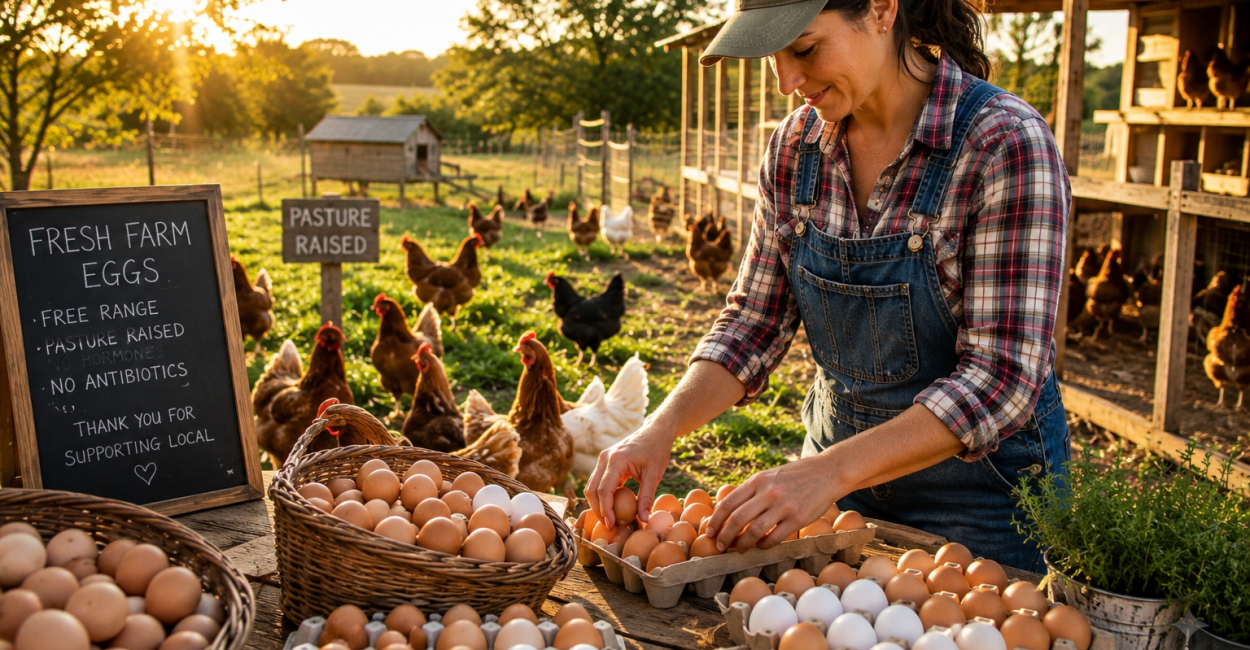
Running a small egg farm can seem straightforward: keep a few hens, collect eggs, and sell them. But the reality behind a small-scale egg operation is far more complex, blending biology, economics, and local regulations. For instance, a backyard flock of just six hens can produce over 1,000 eggs a year, enough to feed a family and even have surplus to sell. Yet, on the flip side, well-run farms with 70 to 100 hens often face a true cost of about $12 per dozen eggs once labor is factored in. This gap exposes the paradox of small egg farming—it’s easy to keep hens, but striking a profitable balance is another story.
This article explores the real math behind small egg farms at different scales (25, 100, and 500 hens), dives into the breeds that make sense, covers key regulations for selling eggs in 2026, and reveals the one condition under which a small egg operation truly pays off. If you’ve ever wondered whether a small egg farm is a viable business or just a costly hobby, this guide will give you a clear picture based on practical experience and current market realities.
What You Should Know Before Starting a Small Egg Farm
- A small backyard flock can produce plenty of eggs, but actual profits depend heavily on labor and operational costs.
- Choosing the right breed—commercial layers, broilers, or dual-purpose—is critical for aligning production with your goals.
- Feed costs make up about 60–70% of operational expenses, making efficient feed management essential for profitability.
- Licensing and regulations vary widely by state and sales channel, making local research a must before starting.
- Profitable small egg farms almost always rely on direct-to-consumer sales at premium prices.
Choosing Between Layer Hens, Broilers, and Dual-Purpose Breeds for a Small Egg Farm
The first big decision in small-scale egg farming is picking the right type of birds. It’s a choice that shapes your operation’s economics and workload. Layer hens are bred specifically for egg production over 12 to 18 months, typically delivering 280–310 eggs annually for commercial breeds like ISA Brown or Hy-Line Brown. Premium market breeds like Rhode Island Red or Sussex produce fewer eggs but larger, higher-value ones, better suited for farmers markets or direct sales.
Broilers, on the other hand, are raised solely for meat in a short 6 to 8-week cycle and require USDA or state-approved processing facilities to sell legally. For farms under 500 birds, broilers only make financial sense when combined with layers to maximize bird utility.
Dual-purpose breeds like Delaware or Orpington offer a middle ground, producing 200–250 eggs per year plus quality meat at the end of their laying cycle. This versatility is ideal for diversified farms targeting direct-to-consumer markets. Avoid ornamental or “backyard” breeds like Silkie or Polish if profit is your goal—they lay far fewer eggs, making the math challenging.
| Type | Breed Example | Eggs/Year | Pullet Cost | Best For |
|---|---|---|---|---|
| Layer Commercial | ISA Brown | 300–310 | $8–$12 | Volume operations |
| Layer Premium DTC | Rhode Island Red | 240–260 | $15–$20 | Farmers markets |
| Dual-Purpose | Australorp | 220–250 | $18–$25 | DTC + secondary meat |
| Heritage Premium | Sussex | 200–230 | $20–$30 | Premium niche markets |
“The difference between successful and struggling small egg farms isn’t just technical skill—it’s understanding the economic realities of your bird choices and market.”
The Flock Size Math: Comparing 25, 100, And 500 Hens
Honest numbers often scare off new entrants. But knowing the real math behind flock sizes is indispensable. We use a conservative egg production estimate of 260 eggs per hen per year, and a direct-to-consumer (DTC) selling price around $6 per dozen. Feed costs average $0.12 per hen per day, while labor is discussed separately to highlight cash break-even points.
25 Hens: Backyard Plus
- Setup costs: $1,500–$2,500 (small coop, feeders, fencing)
- Monthly eggs: ~542 eggs (~45 dozen)
- Revenue at $6/dozen: $270
- Feed cost: $90/month
- Cash margin before labor: $180/month
A money pocket operation, not a business. Without valuing your own time or hiring labor, you might break even or lose money. Best for those with existing infrastructure and spare time.
100 Hens: Serious Side Hustle
- Setup costs: $4,800–$8,800 (larger coop, equipment)
- Monthly eggs: ~2,167 eggs (~180 dozen)
- Revenue at $6/dozen: $1,080
- Monthly feed and supplies: ~$350
- Cash margin before labor: $730
- Labor: 35–45 hours/month valued at $15/hour = $525–$675
- Net margin after labor: $55–$205
The minimum scale for a real side business. It can provide supplemental income but won’t replace a full-time salary.
500 Hens: Small Commercial
- Setup costs: $22,000–$35,000 (coop, organic pullets, equipment)
- Annual eggs: ~135,000 eggs (10,833 dozen)
- Revenue mix: 60% DTC at $6/dozen + 40% farmers market at $7/dozen = $6.40 average
- Annual gross revenue: ~$69,333
- Annual costs (feed, labor, supplies): ~$36,400
- Net margin: ~$32,900 per year
- Payback: 9–13 months
The first scale that supports a self-sustaining business with real profit. Requires solid market demand, infrastructure, and capital.
“Scaling without securing buyers for your increased production is the fastest route to financial trouble in egg farming.”
Breaking Down the Real Costs of Starting a Small Egg Farm
General startup cost estimates often range wildly from $5,000 to $100,000, but these lump sums obscure the real picture. Let’s dissect costs by category and scale.
Housing
- Mobile chicken tractor (25–50 hens): $300–$800 DIY, $800–$1,500 for kits
- Small fixed coop (25–100 hens): $1,500–$6,000 depending on materials
- Semi-commercial coop (100–500 hens): $10–$15 per bird (barn conversion or new build)
Birds
- Day-old chicks: $3–$5 each but require 18–20 weeks before laying (feed costs ~$10.80 per bird during this period)
- Ready-to-lay pullets (16–20 weeks old): $15–$25 each for conventional, $20–$25 for organic
- Recommendation: Start with ready-to-lay pullets to generate revenue immediately despite higher upfront cost
Equipment
- Feeders, waterers, nesting boxes, fencing for 500 hens: $5,000–$10,000
- For 25–100 hens: $400–$2,000 depending on automation
- Egg washing station: $200–$1,500 manual, $5,000+ automated
- Refrigeration: $200–$800 for dedicated mini fridge
- Egg cartons: $0.20–$0.50 each in bulk
Ongoing Monthly Costs
- Feed: $0.10–$0.15 per hen per day conventional; $0.25–$0.40 for organic
- Bedding: $20–$80 per month for 100 hens
- Veterinary care and health: $15–$50 per month for 100 hens
- Mortality: expect 5–8% annual loss, budget accordingly
Understanding and planning for these specific costs prevents surprises in your bottom line.
Where to Sell Eggs in 2026 And What Each Channel Pays
The sales channel you choose dictates roughly 80% of your small egg farm’s economic viability. Selling eggs at the wrong price for the wrong channel is a common mistake that guarantees losses.
- Farm Stand / Farm Gate: $4–$7 per dozen, minimal licenses needed under 3,000 hens, zero extra labor beyond production, but dependent on local traffic.
- Farmers Market: $5–$8 per dozen for premium free-range eggs, requires vendor permits and insurance, 4–6 hours weekly labor for setup and sales.
- Restaurants and Food Service: $2.50–$6 per dozen, needs commercial license and inspections, offers predictable volume but lower prices.
- Grocery/Retail: $2–$3.50 per dozen wholesale, high regulatory compliance costs, typically requires 1,000+ hens to justify.
- Online/Local Delivery: $6–$10 per dozen for premium products, involves interstate regulations, refrigeration logistics, and limited delivery radius.
Matching your flock size to the right sales channel maximizes your chances of profitability:
- 25 hens: farm gate or direct neighbor sales
- 100 hens: farmers market plus farm gate
- 500 hens: farmers market, restaurants, and CSA subscription boxes
Licensing, Permits, and Legal Requirements for Selling Eggs in 2026
Regulatory compliance is often the most confusing part of starting a small egg farm, with vast differences by state and sales channel.
The federal threshold is critical: producers with fewer than 3,000 laying hens who sell directly to consumers are exempt from USDA inspection and grading requirements. But states vary widely—some require no license for small sales, others have strict rules even for tiny flocks.
Compliance layers include:
- Federal: Under 3,000 hens and direct consumer sales usually exempt; interstate sales trigger federal regulations.
- State: Varied thresholds (250–3,000 hens), specific permits for farmers markets or retail, labeling rules.
- Local: Zoning for livestock, setbacks, and maximum birds per acre.
Examples:
- Minnesota: Direct farm sales exempt under 3,000 hens.
- Texas: Requires “ungraded” labeling and vendor permits for farmers markets.
- Oregon: Egg Handler’s License needed for farmers markets.
Before you start, contact your State Department of Agriculture, check county zoning, and research your target sales venues’ requirements.
Scaling from Backyard to Commercial: What Changes at Each Threshold
Growth demands new skills, resources, and compliance. Here’s a snapshot of what changes as you scale:
- 25–50 hens: Minimal regulation, 30–45 minutes daily care, local sales, supplemental income.
- 100–250 hens: Possible state licensing, 1–1.5 hours daily plus market days, automation begins, side business level.
- 500–1,000 hens: Likely state licenses and inspections, 2–3 hours daily, organized collection and packaging, part-time staff possible, first level to sustain a salary.
- 3,000+ hens: Full federal USDA regulation, commercial scale beyond this article’s scope.
Rushing to scale without confirming buyers for every dozen you produce leads to cash flow problems and wasted capital.
The Feed Cost Problem and Why It Drives Your Farm’s Profitability
Feed accounts for 60–70% of operating costs on a small egg farm. Managing this expense directly impacts your profit margin.
Typical feed costs in 2026 per hen per day:
- Conventional layer feed (16% protein): $0.10–$0.12
- Non-GMO feed: $0.15–$0.18
- Organic certified feed: $0.25–$0.35 (can be 3–4× more expensive if bought in small bags)
Strategies to reduce feed cost without hurting production include:
- Buying feed in bulk, which can save 20–35% compared to retail bags.
- Supplementing with free-range foraging, fodder crops, mealworms, or fermented feed.
- Utilizing kitchen scraps from local restaurants to lower feed bills and build partnerships.
Production efficiency also matters: breeds like ISA Brown convert feed to eggs more efficiently than heritage breeds, which can make or break your margin depending on market strategy.
“Feed efficiency is the single biggest factor separating profitable small egg farms from those that break even or lose money.”
The One Condition Under Which a Small Egg Farm Makes Financial Sense
After evaluating all the numbers, the clear conclusion is this: a small egg farm only pays when you sell at premium prices directly to consumers. Farmers markets and CSA programs allow you to charge $6–$8 per dozen, far above wholesale prices.
Compare the math for 100 hens producing 180 dozen eggs monthly:
- At $2.50 per dozen wholesale: $450 gross revenue minus $350 feed and supply costs leaves $100/month, which doesn’t cover labor.
- At $6.50 per dozen direct-to-consumer: $1,170 gross revenue minus $350 costs leaves $820/month, enough to pay labor and leave surplus.
This 2.6× price multiplier is the difference between a hobby and a business.
Who should avoid starting a small egg farm? Those planning to sell wholesale with fewer than 1,000 hens, lacking time or interest in direct sales, or without access to basic infrastructure. On the other hand, those with rural property, access to active farmers markets, or plans to diversify income streams stand a better chance.
Next Steps: Validate Your Market Before Buying Hens
Before investing in birds and infrastructure, confirm you have a solid market for your eggs at the price point that covers your costs. Test local farmers markets, connect with CSA groups, or build a network of farm gate customers. Remember, profitability depends more on demand and price than just on production.
Use the flock size math and cost breakdowns here to model your own scenario realistically. If your numbers don’t work without premium pricing and direct sales, reconsider your approach. Small egg farming can be deeply rewarding—but only when the economics add up.
FAQ
What is the Ideal Flock Size for a Small Egg Farm to Be Profitable?
Profitability typically starts around 500 hens when paired with direct-to-consumer sales channels like farmers markets or CSA programs. Smaller flocks (under 100 hens) often only generate supplemental income and struggle to cover labor costs. Scaling up without a confirmed market for the increased production is a common pitfall, so focus on building steady demand before expanding.
Which Breeds Produce the Most Eggs for Small-scale Farming?
Commercial layer breeds such as ISA Brown, Lohmann Brown, and Hy-Line Brown are top producers, laying between 280–310 eggs per year. Premium market breeds like Rhode Island Red and Sussex lay fewer eggs but produce larger, more valued eggs for direct sales. Avoid ornamental or backyard breeds if your goal is profitability.
How Significant is Feed Cost in Running a Small Egg Farm?
Feed costs account for roughly 60–70% of all operating expenses. Efficient feed management, including bulk purchasing and supplementing with free-range foraging or kitchen scraps, can drastically improve margins. Choosing feed-efficient breeds also plays a crucial role in profitability.
What Legal Requirements Do I Need to Consider Before Selling Eggs?
Regulations vary by state and sales channel. Generally, farms with fewer than 3,000 hens selling directly to consumers are exempt from federal USDA inspection. However, state and local laws may require permits, labeling, and zoning compliance. Contact your State Department of Agriculture and local authorities before starting sales.
Is It Better to Sell Eggs Wholesale or Direct to Consumers?
Direct-to-consumer sales through farmers markets, farm stands, or CSA programs allow higher prices ($6–$8 per dozen), often making the difference between profit and loss. Wholesale prices are much lower ($2.50–$3 per dozen) and usually require larger scale and licenses. For small farms, direct sales are almost always the better option.