
Advertisements

Vertical farming vs traditional farming is a central debate shaping the future of food production, driven by urbanization, climate change, and resource constraints. This comparison matters because it frames how we can sustainably increase yields, reduce logistics, and improve food security for growing populations.
Understanding the trade-offs between vertical and conventional field agriculture reveals opportunities in land use efficiency, water savings, and supply chain resilience. This article examines methods, economics, environmental impacts, technology, scalability, and policy implications so you can evaluate which approach—or combination—can realistically feed the world.
Comparing Vertical Farming and Conventional Agriculture
Definitions and Basic Differences
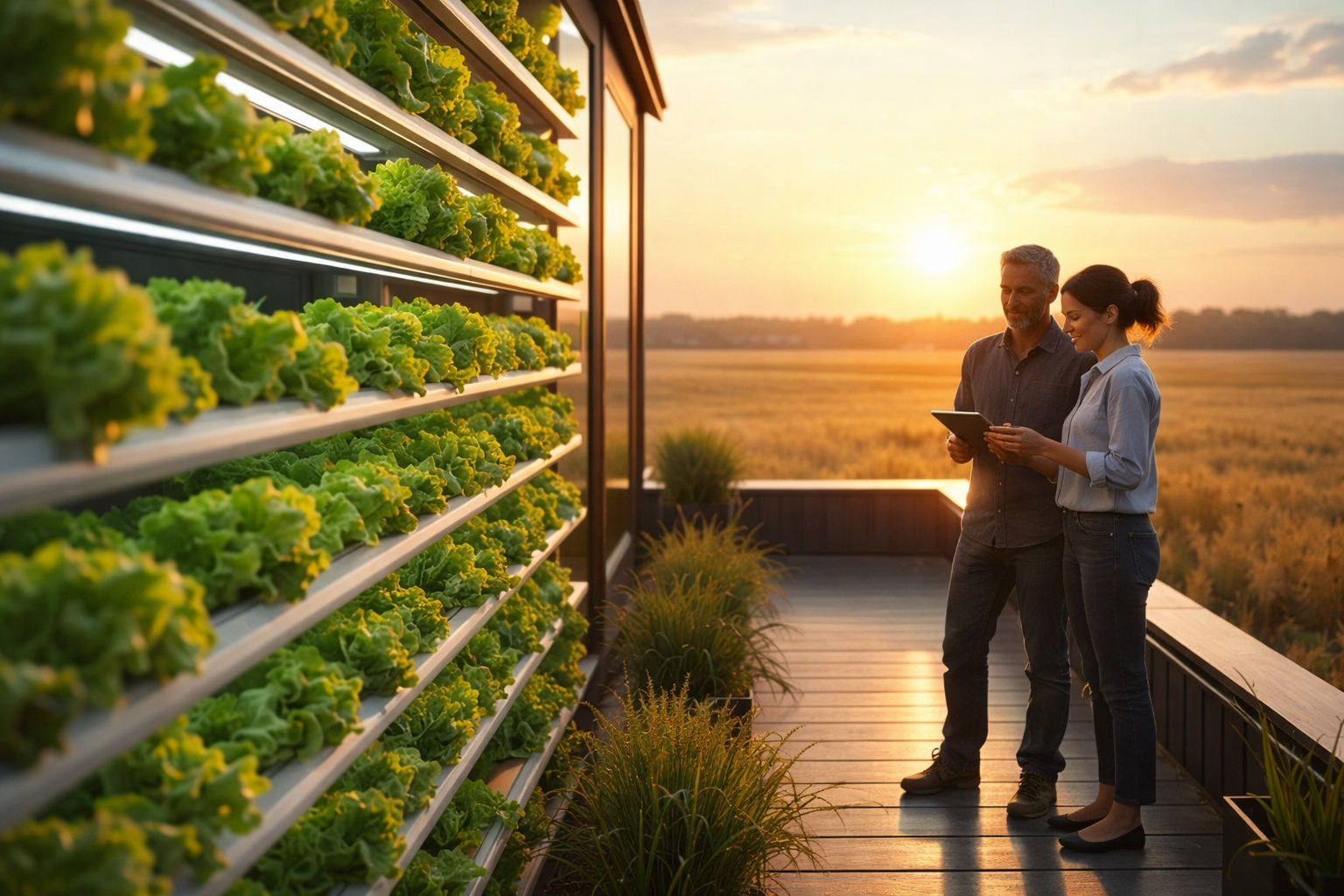
Vertical farming refers to growing crops in vertically stacked layers, often using hydroponics, aeroponics, or controlled-environment agriculture. Traditional agriculture means open-field or greenhouse production relying on soil, seasonal cycles, and outdoor conditions. These distinctions shape inputs, yields, and management practices.
The controlled environment of vertical farms enables precise control of light, nutrients, and climate, reducing variability and pests. Conventional farms benefit from economies of scale, lower capital intensity per hectare, and established supply chains connecting growers to markets.
When comparing vertical farming vs traditional farming, consider land use efficiency, energy needs, water consumption, labor models, and crop selection—each system excels under different constraints and objectives.
Resource Use: Land, Water, and Energy
Vertical systems dramatically reduce land footprint by stacking production, offering high productivity per square meter. They typically use recirculating water systems that cut water use by 70–95% versus field irrigation. However, energy for lighting and climate control raises operational costs and carbon footprint concerns unless renewable sources are used.
Conventional farming uses natural sunlight and often depends on rainfall or irrigation networks; it consumes more land and water but less artificial energy. Practices like drip irrigation and precision agriculture help close the gap on resource efficiency.
Assessing vertical farming vs traditional farming requires lifecycle analysis that includes embodied energy in construction, nutrient inputs, and ongoing operational electricity to evaluate net resource impacts accurately.
Crop Types and Productivity Patterns
Leafy greens, herbs, microgreens, and some fruiting crops adapt well to vertical farms due to short cycles and high-value yields. Root crops and staple grains remain more cost-effective in traditional fields because of spatial and root-zone requirements. Crop selection dictates the viability of each model.
Vertical farms can achieve multiple crop cycles per year, increasing annual productivity compared to single-season field crops. Traditional agriculture benefits from crop rotation, perennial systems, and large-scale mechanization that suit staples like wheat, corn, and soy.
Vertical farming vs traditional farming decisions must align crop economics, consumer demand, and logistical proximity to markets to maximize both yield and profitability.
Vertical Farming Versus Field Cultivation Economics
Capital Costs, OPEX, and ROI Considerations
Vertical farming demands higher upfront capital for infrastructure: LED lighting, racks, HVAC, sensors, and automation. Operating expenses include electricity, nutrient solutions, and skilled labor. Return on investment depends on crop selection, yield per square meter, and market prices.
Advertisements
Conversely, traditional farms typically have lower initial capital per hectare, though land acquisition and mechanization represent significant costs. Variable expenses include fuel, fertilizers, and seasonal labor. ROI benefits from scale, commodity markets, and long-standing practices.
Comparing vertical farming vs traditional farming economically requires cash-flow modeling that includes amortization of capital, energy scenarios, and market price volatility to assess long-term viability.
Labor, Automation, and Skills
Vertical farms often rely on automation, sensors, and data analytics to reduce routine labor and increase consistency. Skilled technicians, agronomists, and engineers are essential to manage systems. Traditional farms use seasonal labor and established mechanized workflows but are increasingly adopting precision tools.
Training and workforce development are critical. Vertical operations may reduce physical labor but increase technical roles; traditional farms can gain productivity with GPS-guided equipment and digital agronomy tools.
When evaluating vertical farming vs traditional farming, factor in labor availability, training costs, and the potential for automation to reshape agricultural employment dynamics.
Market Access and Pricing Dynamics
Vertical-farmed produce often targets premium markets—restaurants, urban retailers, and consumers valuing freshness and local sourcing—commanding higher prices per kilogram. Price sensitivity and willingness to pay determine market penetration.
Traditional farming supplies commodity markets and large grocery chains with lower-cost staples. Logistics, cold chain, and distribution scale favor field agriculture for bulk shipments and export markets.
Understanding local demand, distribution channels, and consumer preferences helps determine whether vertical farming vs traditional farming is the better business model for a given region or crop.
Sustainability and Environmental Impact Comparison
Greenhouse Gas Emissions and Carbon Footprint
Vertical farms can lower food miles and reduce post-harvest losses, but their electricity demand—especially for lighting and climate control—can increase emissions unless renewable energy is used. Lifecycle assessments vary widely by energy mix and technology efficiency.
Traditional farming may emit greenhouse gases through diesel use, fertilizer production, and soil emissions (e.g., N2O). However, practices like conservation agriculture and agroforestry can sequester carbon and reduce net emissions.
For an accurate comparison of vertical farming vs traditional farming emissions, assess energy sources, transport distances, fertilizer use, and potential carbon sequestration in soils or building-integrated systems.
Water Quality and Nutrient Management
Hydroponic and aeroponic vertical systems use closed-loop nutrient solutions, minimizing runoff and contamination of waterways. This reduces eutrophication risks associated with conventional fertilizer runoff from fields and surface irrigation.
Traditional farms can adopt best management practices—buffer strips, cover crops, precision fertilization—to limit nutrient loss. However, diffuse pollution from large-scale field agriculture remains a major environmental concern.
Comparing vertical farming vs traditional farming requires attention to wastewater handling, nutrient recycling, and policies encouraging responsible fertilizer application to protect water resources.
Biodiversity, Land Use, and Soil Health
Vertical farms reduce pressure to convert natural habitats into farmland by offering high productivity on small footprints, potentially preserving biodiversity. They, however, do not support soil ecosystems and related services unless coupled with agroecological initiatives.
Traditional agriculture has significant impacts on habitat conversion, soil degradation, and monoculture-driven biodiversity loss. Regenerative practices can restore soil health and increase on-farm biodiversity when implemented at scale.
Decisions about vertical farming vs traditional farming should weigh trade-offs between land-sparing benefits and the ecological roles of healthy soils and managed landscapes.
Technology and Innovation in Modern Agriculture
Control Systems, Sensors, and Data-driven Farming
Vertical farms integrate sensors for humidity, CO2, temperature, and nutrient dosing, enabling closed-loop control and AI-driven optimization. This data-centric approach increases consistency and reduces waste, improving yield predictability and quality.
Traditional farms are adopting IoT sensors, satellite imagery, and precision application tools to optimize inputs and monitor crop health over large areas. These innovations improve fertilizer efficiency and pest management.
Both systems benefit from data analytics; comparing vertical farming vs traditional farming highlights how real-time control can be transformative for production, traceability, and decision support.
Lighting, Climate Control, and Energy Innovations
Advances in LED efficiency, dynamic spectrum tuning, and heat recovery systems are reducing energy per kilogram in vertical farms. Pairing facilities with on-site renewables or waste heat sources further lowers carbon intensity and operating costs.
Field agriculture leverages passive solar energy but depends on weather and seasonal cycles. Innovations in low-energy greenhouses and season extension technologies help bridge gaps in productivity and reduce energy inputs.
Energy strategy is a core differentiator when comparing vertical farming vs traditional farming; efficient lighting and clean energy integration are key to sustainable scaling of vertical systems.
Mechanization and Post-harvest Innovations
Automation in vertical farms includes robotic transplanting, harvesting, and packing workflows that reduce labor costs and contamination risks. Controlled environments simplify post-harvest handling by minimizing field exposure.
Traditional farms use large-scale harvesters, sorting, and bulk storage solutions that excel at throughput for staples. Innovations in cold chain logistics and decentralized packing centers improve shelf life and reduce losses.
Choosing between vertical farming vs traditional farming involves considering downstream supply chain efficiencies, shelf life requirements, and the value of proximity to consumers for freshness-sensitive produce.
Scaling, Policy, and Business Models
Urban Agriculture, Supply Chains, and Localization
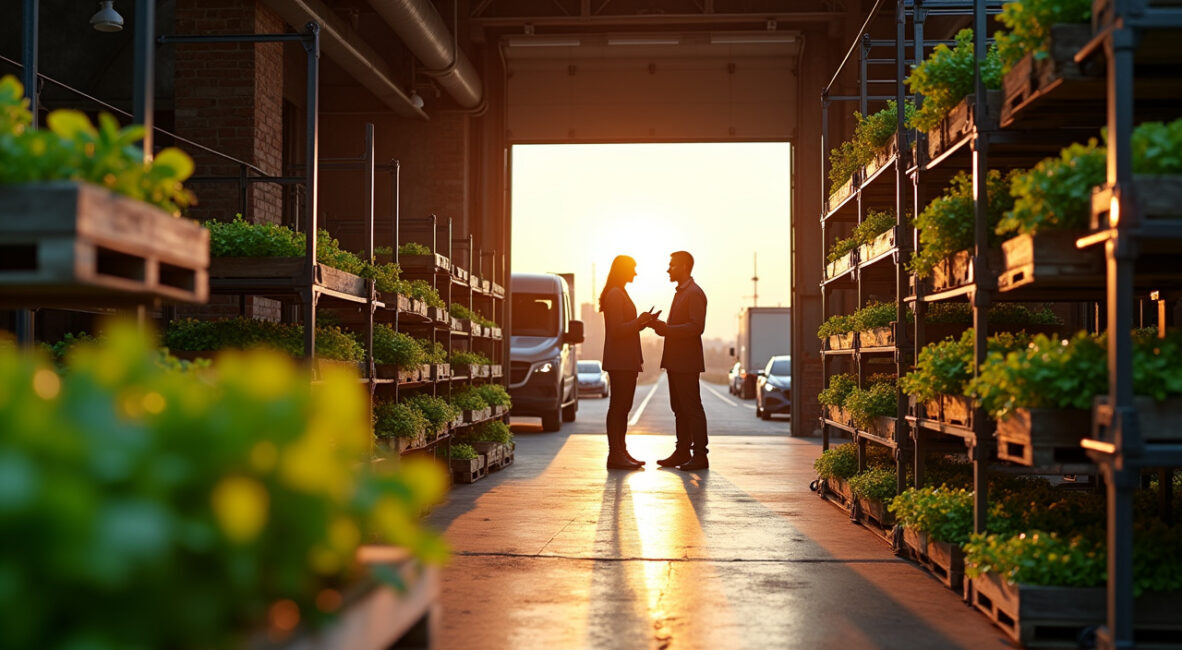
Vertical farms are often located near or within cities, reducing transport time and emissions while supplying fresh produce year-round. This localization strengthens resilient urban food systems and shortens cold chains.
Traditional agriculture benefits from centralized production hubs and long supply chains that serve regional and global markets. Improving logistics, storage, and distribution networks can reduce waste and improve access.
When comparing vertical farming vs traditional farming, assess how supply chain geometry, market access, and consumer expectations influence the feasibility of localized versus centralized production.
Policy, Incentives, and Regulatory Frameworks
Governments can accelerate vertical farming adoption through incentives for renewable energy, research grants, and urban land-use policies supporting adaptive reuse of buildings. Zoning and food safety regulations also shape deployment.
For traditional agriculture, subsidies, crop insurance, and conservation programs influence farmer decisions, impacting land management and adoption of sustainable practices. Trade policies shape commodity flows and pricing.
Policy design matters when evaluating vertical farming vs traditional farming; supportive frameworks should balance innovation while ensuring equitable access and environmental safeguards. See resources from FAO and USDA.
Business Models: Standalone, Hybrid, and Partnerships
Vertical farming business models include proprietary urban farms, franchise models, B2B supply for retailers, and integration with restaurants or grocery chains. Public-private partnerships can finance pilot projects and research.
Hybrid models combine field-grown staples with vertical-produced fresh goods to diversify risk and optimize resource use. Cooperatives and contract farming can link smallholders into larger supply systems.
Choosing the right model is crucial in the vertical farming vs traditional farming debate; aligning capital structure, market channels, and operational expertise determines long-term success.
Case Studies, Comparisons and Practical Adoption
Successful Urban Vertical Farms and Lessons Learned
Several commercial vertical farms have demonstrated success with leafy greens through optimized LED regimes, automation, and direct retail partnerships. Key lessons include the importance of energy strategy, crop selection, and controlling operating costs.
Scaling beyond pilot projects requires rigorous process control, reliable market contracts, and contingency planning for equipment downtime. Partnerships with retailers or restaurants can stabilize demand and pricing.
These case studies inform comparisons of vertical farming vs traditional farming by illustrating how technology, location, and business discipline drive outcomes in urban contexts.
Large-scale Traditional Operations and Modernizations
Conventional farms adopting precision ag, cover cropping, and reduced-tillage practices achieve yield improvements while lowering input intensity. Integration of digital agronomy and traceability tools strengthens market positioning.
Mechanization efficiencies and commodity-scale logistics make traditional farms efficient for staples and bulk commodities. Investments in sustainability can deliver both environmental benefits and market premiums.
Comparing vertical farming vs traditional farming requires recognition that modernization of field agriculture is closing some gaps in efficiency and sustainability while remaining essential for calorie-dense staples.
Comparative Table: Yields, Costs, and Environmental Metrics
| Metric | Vertical Farming | Traditional Farming |
|---|---|---|
| Land use per kg | Low (stacked) | High (field) |
| Water efficiency | Very high (recirculating) | Variable (irrigation/ rainfed) |
| Energy demand | High (lighting/HVAC) | Low (natural light) |
Implementation Roadmap and Practical Recommendations
Steps to Evaluate Adoption for Growers
Start with a feasibility assessment: crop selection, market demand, capital availability, and energy sourcing. Conduct pilot projects to validate yields and economics before full-scale deployment. Consider hybrid strategies that blend vertical and field production.
Use lifecycle and sensitivity analyses to test scenarios for energy prices, labor costs, and market volatility. Engage local stakeholders and potential buyers early to secure offtake arrangements and reduce market risk.
These pragmatic steps help stakeholders compare vertical farming vs traditional farming outcomes and choose an approach aligned with regional priorities and risk tolerance.
Checklist for Technology, Energy, and Sustainability
When planning vertical or modernized traditional operations, verify energy efficiency of LEDs and HVAC, availability of renewable power, water recycling systems, and waste nutrient management. Ensure compliance with food safety and local regulations.
For field operations, prioritize soil health, precision nutrient management, and integrated pest strategies. Track metrics for yield per input, water use efficiency, and carbon footprint to measure progress.
A robust checklist supports transparent decision-making and helps stakeholders evaluate vertical farming vs traditional farming through measurable sustainability indicators.
Comparative Table: Investment Timeline and Scalability
| Aspect | Vertical Farming | Traditional Farming |
|---|---|---|
| Time to scale | Moderate (construction/permits) | Long (land consolidation) |
| CapEx intensity | High upfront | Moderate to high |
| Scalability | Modular (city-scale) | Scale by acreage |
Risks, Limitations, and Future Outlook
Barriers to Adoption and Common Risks
High capital costs, energy price volatility, and technical complexity are major barriers for vertical farming. For traditional agriculture, climate risk, land degradation, and market consolidation pose challenges. Access to finance and skilled labor influences adoption rates.
Supply chain disruptions, regulatory uncertainty, and consumer acceptance can also affect viability. Risk mitigation includes diversification, partnerships, and investment in renewables to stabilize operational costs.
Understanding these constraints is essential when weighing vertical farming vs traditional farming as strategies for resilient food systems.
Opportunities for Hybrid Models and Integration
Hybrid approaches leverage strengths of both systems: field-grown staples combined with urban vertical production for fresh, high-value produce. Co-locating vertical farms with food hubs or distribution centers reduces waste and accelerates market access.
Integration can include using agricultural waste for energy, shared logistics for cold chains, or contracts linking rural producers with urban processors and retailers. Collaboration reduces risk and improves overall system resilience.
These blended strategies present a pragmatic path forward in the vertical farming vs traditional farming debate, balancing scale with proximity and sustainability.
Long-term Outlook and Research Frontiers
Future advances in low-energy lighting, AI-driven crop optimization, and affordable modular infrastructure could improve the economics and sustainability of vertical farming. Breeding crops optimized for soilless production also expands possibilities.
For traditional agriculture, innovations in regenerative practices, soil carbon markets, and climate-resilient varieties will shape long-term productivity. Policy incentives and investment in rural infrastructure remain crucial.
The outlook favors a diversified food system where vertical farming vs traditional farming are complementary components, each optimized for specific crops, regions, and supply chain roles.
Conclusion
Comparing vertical farming vs traditional farming shows that neither approach is a universal solution; each has strengths and limitations. Vertical systems excel in land-scarce urban contexts and for high-value, perishable crops, while traditional farming remains essential for calorie-dense staples and large-scale commodity production.
Policymakers, investors, and growers should pursue integrated strategies—combining technological innovation, renewable energy, and sustainable field practices—to build resilient food systems. Reflect on local needs, market demands, and environmental goals when choosing the right mix, and consider pilot projects to test real-world performance.
FAQ
What is the Main Difference Between Vertical Farming and Traditional Farming?
The primary difference is production environment: vertical farming uses stacked, controlled-environment systems with hydroponics or aeroponics indoors, while traditional farming relies on outdoor fields and soil. Vertical farms prioritize land efficiency and year-round production; traditional farms offer scale and lower capital per hectare.
Can Vertical Farming Replace Traditional Agriculture Globally?
Vertical farming cannot fully replace traditional agriculture due to limits on root crops and staples like grains. It can, however, complement field production by supplying fresh produce near urban centers, reducing food miles, and improving supply chain resilience.
Which System Uses Less Water: Vertical Farming or Traditional Farming?
Vertical farming generally uses significantly less water because of closed-loop hydroponic or aeroponic systems that recycle nutrient solutions. Traditional farming’s water use varies widely and is often higher due to runoff and less efficient irrigation methods.
Are Vertical Farms Environmentally Friendly?
Vertical farms can be environmentally friendly if powered by renewable energy and optimized for efficiency. They reduce land conversion and water pollution but may have high electricity demands; energy sourcing is key to net environmental benefits.
How Do Costs Compare Between Vertical and Traditional Farming?
Capital and operating costs tend to be higher for vertical farming because of infrastructure and energy needs, but higher yields and premium pricing can offset costs. Traditional farming has lower capital intensity per hectare but depends on commodity markets and scale.
Advertisements
