Skip to content
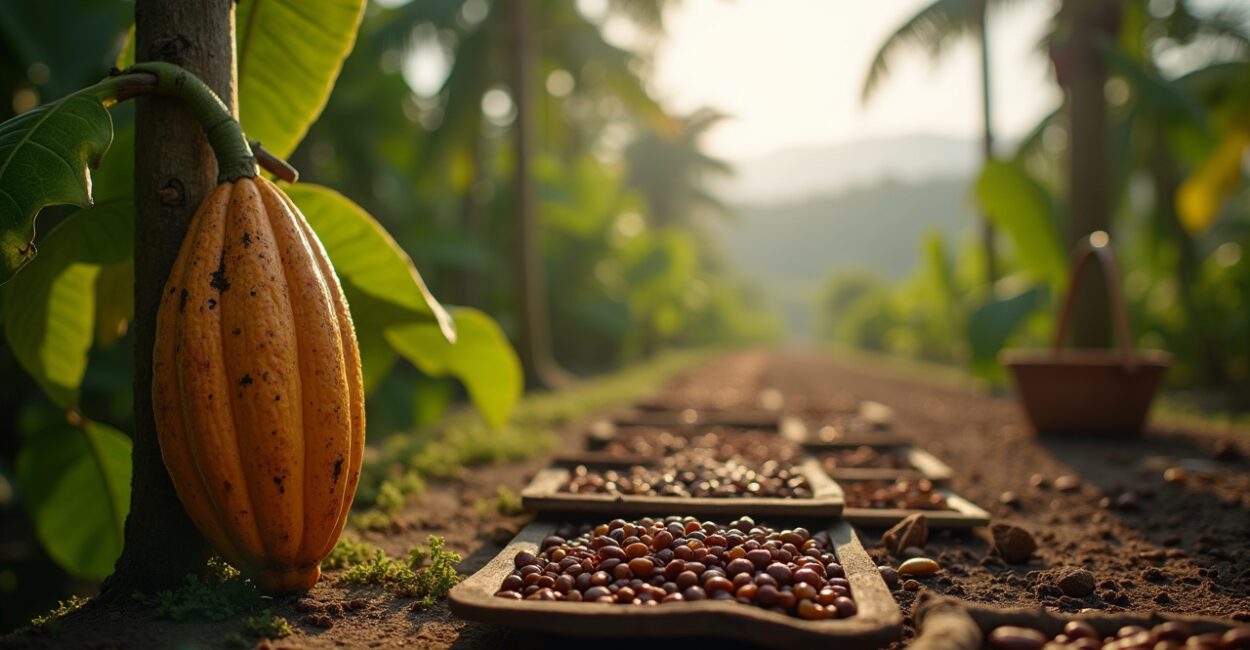
The global market is waking up to Cocoa Farming Sustainability as prices hit record highs in 2024/2025 and supply concerns spurred panic. Cocoa Farming Sustainability matters because it addresses environmental damage, social risks like child labor, and the need for traceable, climate-resilient supply chains. To begin, this article explains why the crisis in West Africa opened an ethical opportunity and how Brazil is positioning itself as a sustainable alternative.
West Africa—primarily Ghana and Ivory Coast—faces production collapse from climate stress, aging trees, and disease, driving futures prices to historic levels. Meanwhile, buyers demand traceability and compliance with rules such as the EU Deforestation Regulation (EUDR). Keep reading to discover why the world’s top chocolate makers are turning their eyes to Brazil.
Sustainable Cocoa Solutions: Global Cocoa Crisis and the Need for Change
Why Cocoa Farming Sustainability is Urgent
The collapse of production in West Africa due to aging plantations, fungal diseases and climate variability created a supply shock that pushed cocoa futures to record levels in 2024/2025. Cocoa Farming Sustainability becomes urgent as brands face regulatory pressure, consumer demands and reputational risk. Building resilient, ethical supply chains reduces deforestation risk, avoids child labor scandals, and stabilizes supply for premium chocolate makers seeking long-term sourcing alternatives.
Key Drivers of the Current Supply Shock
- Widespread black pod and swollen shoot diseases reducing yields
- Declining productivity from aging trees and low replanting rates
- Extreme weather events disrupting harvests and transport
- Rising global demand for specialty and sustainable cocoa
These drivers combine to elevate price volatility and force importers to seek traceable, sustainable alternatives that meet both environmental and social standards.
Comparative Data Snapshot
| Indicator | 2024/2025 Trend |
|---|---|
| Futures prices | Record highs |
| Reported child labor | Increased scrutiny |
| Deforestation alerts | More monitoring |
Brazilian Cocoa Sustainability: A Comeback Story
Historical Context of Brazil’s Cocoa Sector
Brazil once led global cocoa production until the 1980s. The arrival of witches’ broom disease in the 1990s devastated Bahia’s plantations, collapsing yields and livelihoods. Cocoa Farming Sustainability in Brazil is deeply shaped by this history: recovery required breeding resistant varieties, shifting to agroforestry systems, and rebuilding value chains to support smallholders while preserving native forest fragments.
Regional Revival and Diversification
- Bahia: rehabilitation of cabruca agroforestry and quality-focused farms
- Pará and Amazonas: expansion into low-impact cocoa agroforestry
- Research hubs: Embrapa and universities driving varietal improvement
- Cooperatives: stronger links to specialty chocolate markets
- Export growth: Brazil rising to third-largest producer
These regional moves combine climate-smart practices and market-driven quality improvements that underpin Cocoa Farming Sustainability in Brazil today.
Unique Brazilian Systems: Cabruca and Beyond
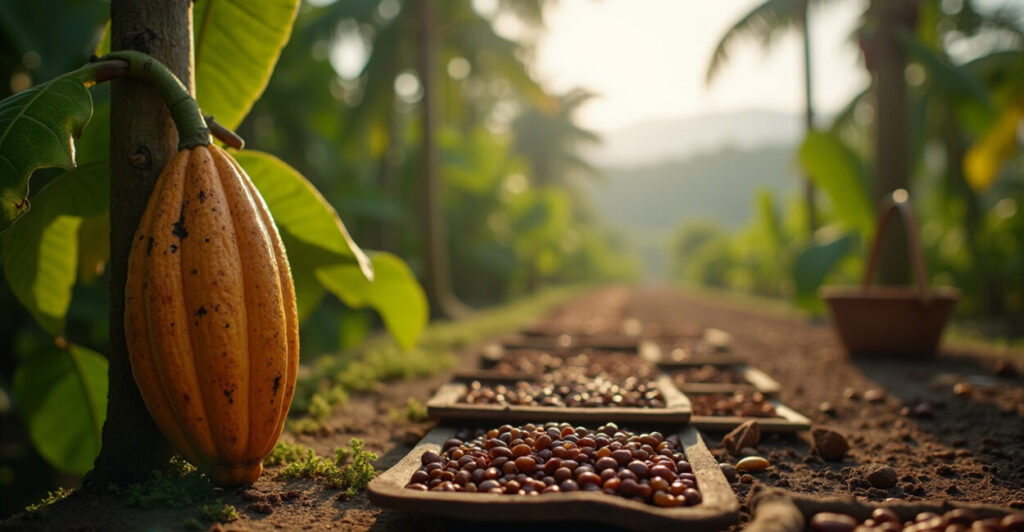
Cabruca, the traditional system of growing cocoa under native Atlantic Forest canopy, is central to Brazil’s identity in sustainable cocoa. It stores carbon, preserves biodiversity and produces beans with complex sensory profiles. Today’s Brazilian producers blend cabruca with improved agronomy, digital traceability and direct trade relationships to deliver sustainability credentials to international buyers.
Five Pillars Driving Brazil’s Cocoa Sustainability Transformation
1. Cabruca Agroforestry System — Shade-grown Cocoa Preserving Native Forest
How it works in practice: Cabruca integrates cocoa beneath native forest trees, maintaining canopy cover and promoting natural pest regulation. Farmers retain native species, manage shade levels and combine cocoa with occasional intercrops. Benefit to planet and producer: It conserves biodiversity, sequesters carbon and often yields premium-flavored beans that fetch higher prices. Real example: Southern Bahia cooperatives have revitalized smallholder incomes by certifying cabruca lots for specialty markets and securing long-term offtake agreements.
2. Disease-Resistant Varieties — Breeding Resilience Into Plantations
How it works in practice: Research institutions and seed programs have developed cultivars resistant to witches’ broom and other pathogens, enabling replanting with longer-lived, higher-yielding trees. Benefit to planet and producer: Resistant varieties reduce the need for chemical controls and lower replanting frequency, improving economic resilience. Real example: Embrapa and state universities in Bahia and Pará distribute improved seedlings alongside technical assistance to accelerate recovery.
3. Digital Traceability & Blockchain — From Bean to Bar Visibility
How it works in practice: Farmers and cooperatives use smartphone apps, QR codes and blockchain ledgers to record farm origin, practices, and transactions. Benefit to planet and producer: Traceability meets EUDR and buyer requirements, unlocking premium prices and market access. Real example: Several bean-to-bar companies trace Brazilian cabruca lots via blockchain, providing transparent provenance to consumers and enabling direct payment flows to producers.
Market Models and Revenue Streams Boosting Sustainability
4. Fair Trade & Direct Trade Models — Linking Farmers to Premium Markets
- Cooperatives negotiate direct contracts with specialty chocolate makers
- Premium pricing for quality and documented sustainability practices
- Capacity building and collective marketing strengthen bargaining power
- Income diversification via value-added processing at origin
- Transparency in premiums and quality improvements
How it works in practice: Cooperatives certify groups of smallholders, manage quality control, and secure direct relationships with international buyers. Benefit to planet and producer: Higher and more stable incomes incentivize conservation and reinvestment in farm resilience. Real example: Cooperativa de Cabruca in Bahia facilitating exports to specialty chocolatiers under direct-trade terms.
5. Carbon Sequestration Credits — Monetizing Ecosystem Services
How it works in practice: Agroforestry systems like cabruca are quantified for carbon storage and enrolled in voluntary carbon markets. Benefit to planet and producer: Farmers earn extra revenue for forest protection and carbon sequestration, improving livelihoods while conserving habitat. Real example: Pilot projects in southern Bahia and Pará validate carbon stocks from agroforestry cocoa and channel payments to community funds and farmers.
Brazil Vs West Africa: Sustainability and Supply Comparison
Comparative Sustainability Indicators
Brazilian cocoa benefits from lower recent deforestation risk in many producing regions, stronger traceability pilots, and growing certification uptake. West Africa still faces high rates of forest conversion and entrenched child labor issues. Cocoa Farming Sustainability comparisons show Brazil generally scores higher on integrated agroforestry, traceability readiness and product differentiation for specialty markets.
Direct Operational Comparison
| Criterion | Brazil | West Africa |
|---|---|---|
| Deforestation risk | Low | High |
| Child labor reports | Rare | Widespread |
| Traceability | Advanced | Limited |
Analysis: Brazil is not perfect, but in sustainability metrics—agroforestry adoption, traceability initiatives and certification—it is often ahead. That is why many chocolate manufacturers are diversifying supply to include Brazilian origins.
Why Chocolate Makers Are Pivoting to Brazil
- Access to beans with premium flavor profiles and stable traceability
- Lower regulatory risk given EUDR compliance pilots
- Opportunities to invest in landscape-level restoration tied to supply security
These drivers convince buyers that diversifying toward Brazil helps mitigate reputational, regulatory and supply risks while supporting Cocoa Farming Sustainability goals.
The Premium Chocolate Connection: Market Opportunities for Sustainable Cocoa
Specialty Chocolate Boom and Brazilian Beans
Demand for bean-to-bar and single-origin chocolate has surged, and Brazilian cocoa—especially cabruca—has taken top prizes in international competitions. Cocoa Farming Sustainability in Brazil translates directly into sensory differentiation, enabling higher margins for producers and brands focused on traceable, ethical sourcing.
Industry Interest and Investment Flows
Major players like Barry Callebaut and Valrhona have increased investments and sourcing pilots in Brazil to secure sustainable, high-quality beans. These partnerships include technical assistance, forward contracts and quality premiums that accelerate farmer adoption of sustainable practices and expand market access.
How Brazilian Producers Access Premium Markets
Producers can access premium channels by joining cooperatives, adopting traceability systems, participating in certification schemes, and focusing on post-harvest quality. These steps meet buyer requirements and unlock direct-trade relationships that reward Cocoa Farming Sustainability with better prices.
Persisting Challenges and Pragmatic Solutions
Infrastructure and Logistics Gaps
Rural roads, cold storage and port capacity remain limiting factors in Bahia and Pará. These constraints increase transport costs and post-harvest losses. Solutions include public-private investments in rural infrastructure, cooperative-managed collection centers, and coordination with logistics providers to streamline routes and reduce spoilage.
Need for Research, Extension and Skilled Labor
Expanding sustainable cocoa at scale requires more agronomic research, extension services and trained technicians. Partnerships between Embrapa, universities and private firms are scaling training programs, seedling distribution and field schools to raise yields and management capacity among smallholders.
Price Competition and Market Positioning
- Standard-grade cocoa competes on price with West African supply
- Brazil must emphasize quality and sustainability to secure premiums
- Value-addition at origin helps capture more revenue locally
While cost-competitive pressures persist, differentiation through Cocoa Farming Sustainability and premium traceable beans is a realistic pathway for many Brazilian producers.
The Future Outlook for Brazilian Cocoa Sustainability
Production and Expansion Projections
Projections to 2026–2030 show continued growth as replanting, adoption of resistant varieties and expansion into new states increase output. If current trends continue, Brazil could consolidate its role as a global supplier of sustainable, specialty cocoa, supporting both domestic value chains and exports.
Economic and Environmental Impacts
Scaling Cocoa Farming Sustainability in Brazil could raise rural incomes, create agroforestry jobs, and contribute measurable carbon sequestration. The sector’s expansion also feeds into regional development, with opportunities for processing, quality control and tourism around sustainable cocoa landscapes.
Strategic Recommendations for Stakeholders
Producers, buyers and policymakers should prioritize investment in traceability systems, targeted research, and blended finance mechanisms to scale sustainable production. Coordinated action can position Brazil as a global hub for ethical, high-quality cocoa while meeting strict regulatory demands like the EUDR.
In summary, Cocoa Farming Sustainability is the thread connecting Brazil’s historical revival, technical innovation, and market opportunity. From cabruca agroforestry to blockchain traceability, Brazil offers a scalable, ethical alternative to supply chains under stress.
Do you think Brazil can become the world’s leading sustainable cocoa producer? Share your thoughts below.
FAQ — Cocoa Farming Sustainability Questions Answered
What is Cocoa Farming Sustainability and Why Does It Matter?
Cocoa Farming Sustainability refers to practices that protect ecosystems, improve farmer livelihoods, and ensure long-term productivity of cocoa landscapes. It matters because it reduces deforestation, prevents labor abuses, builds climate resilience, and secures premium markets that reward quality and traceability.
How Does Cabruca Agroforestry Contribute to Sustainability?
Cabruca preserves canopy trees, enhancing biodiversity and carbon storage while providing shade that improves bean quality. It reduces the need for inputs, supports ecosystem services like pollination, and often yields beans with distinctive flavors valued by specialty chocolate makers.
Can Smallholder Farmers Benefit Financially from Sustainable Cocoa?
Yes—through direct trade contracts, certification premiums, carbon credits, and improved yields via resistant varieties and better agronomy, smallholders can increase incomes. Collective action via cooperatives improves bargaining power and access to finance and technical assistance.
What Role Does Traceability Play for Buyers and Regulators?
Traceability proves origin, farming practices and compliance with regulations like the EUDR. It reduces reputational risk for buyers, enables premium pricing for verified sustainable lots, and helps channel investments into producer communities that meet environmental and social standards.
How Realistic is Brazil’s Claim to Be a Leading Ethical Cocoa Supplier?
Brazil has credible advantages—agroforestry systems, improved cultivars, active traceability pilots and growing industry partnerships. Challenges remain in logistics and scaling, but with continued investment and policy support, Brazil can realistically become a leading source of sustainable, high-quality cocoa.
External sources: FAO, Embrapa, European Commission (EUDR)