Skip to content
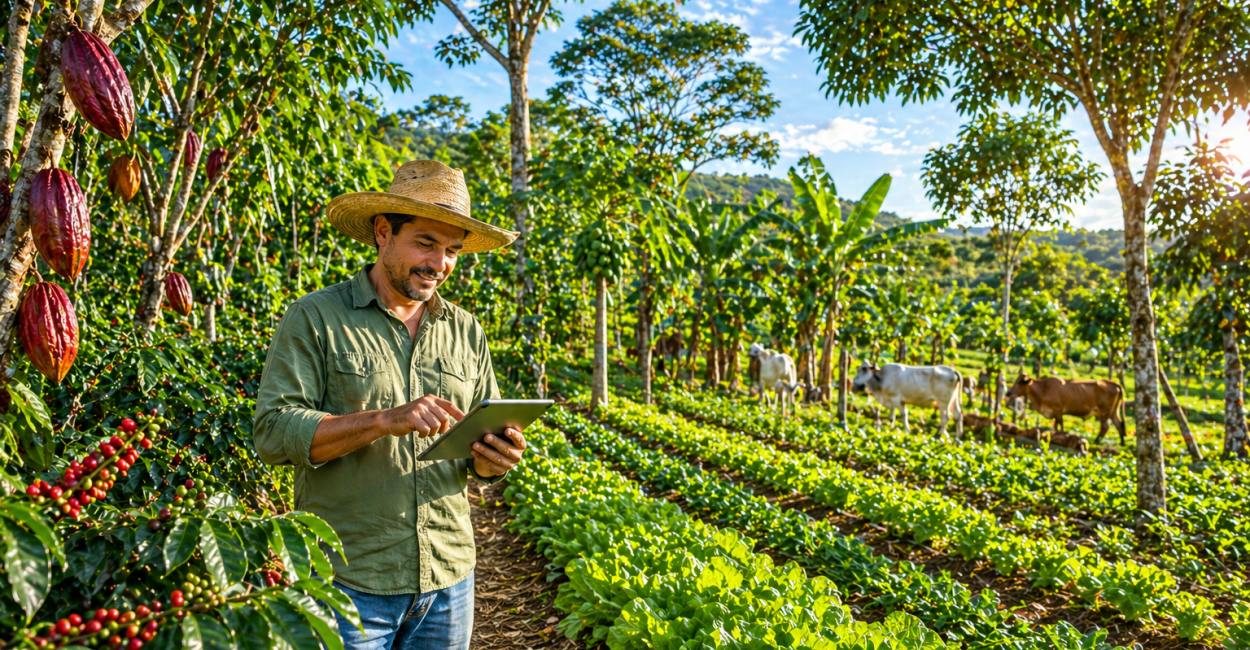
Agroforestry systems benefits farmers by combining trees with crops and/or livestock on the same land to boost income, restore soil and increase resilience. This integrated approach matters because it delivers production and ecosystem services together, offering a practical pathway to adapt and thrive. To start using agroforestry systems benefits farmers, assess your land, markets and long-term goals, then adopt a proven system like alley cropping, silvopasture or riparian buffers.
Imagine a Brazilian farmer who tripled income planting trees among crops while neighbors lost yields to extreme weather. Conventional farming today faces climate shocks, rising input costs and tightening environmental rules. Agroforestry systems benefits farmers by reducing risk, diversifying revenue and improving compliance—Brazil is a global laboratory for these practices.
In this article we explore what agroforestry is, the eight proven benefits changing farm strategy, a frank comparison with monocultures, Brazil’s leadership, how to start, financing paths, common mistakes and the outlook to 2030. Keep reading to discover why agroforestry may be the most powerful farming system you’ve never seriously considered.
What Agroforestry Means for Modern Farms (agroforestry Systems Benefits Farmers)
Clear Definition and Practical Focus
Agroforestry is the intentional integration of trees with crops and/or livestock to produce food, fiber and ecosystem services on the same land. Unlike natural forest, the production objective is explicit—trees are managed for timber, fruit, fodder or carbon while supporting agricultural yields. This combination targets productivity, resilience and ecological recovery simultaneously.
Practically, farmers design spatial and temporal arrangements so trees and crops complement rather than compete, using species selection and management—pruning, spacing and rotation—to balance light, water and nutrient dynamics.
For producers asking “what is agroforestry?”, think of it as a multifunctional farming design that captures both market value and environmental benefits in one system.
How Agroforestry Differs from Conventional Forest or Monoculture
In monoculture the priority is a single crop, maximizing short-term yield often via high chemical inputs and land simplification. Agroforestry retains production focus but reintroduces structural diversity: trees create vertical layers, shelter and resource cycling that monocultures lack. Forests aim for conservation and climax ecosystems; agroforests are managed for recurring economic returns.
This managed heterogeneity reduces pest outbreaks, improves soil health and enhances microclimate stability—outcomes directly tied to the agroforestry systems benefits farmers seek.
Adoption requires farm-level planning and active tree management rather than passive protection or single-crop intensification.
Main Agroforestry System Types Used by Farmers Worldwide
Farmers deploy several proven system models depending on goals and environment. Alley cropping places crops between tree rows for shade and soil improvement. Silvopasture combines trees with pasture and grazing, increasing fodder and animal welfare. Forest farming grows understory products under a tree canopy. Riparian buffers protect waterways while producing timber or fruits. Windbreaks reduce wind damage and moisture loss.
Brazilian examples include cacau cabruca, ILPF (Integração Lavoura-Pecuária-Floresta) and Amazon family SAFs, each adapted to local species and markets. These models embody many agroforestry systems benefits farmers can replicate at different scales.
Choosing the right system depends on climate, soils, livestock presence and market demand for timber, fruit, carbon credits or specialty crops.
Why Agroforestry Delivers Multiple On-farm Benefits (agroforestry Systems Benefits Farmers)
Core Economic and Ecological Benefits — What to Expect Diversified Production: Timber, Fruit, Coffee, Cacao, Fodder Risk Reduction Through Multiple Revenue Streams Improved Soil and Water Retention Eligibility for Carbon Markets and Sustainability Premiums
Agroforestry systems benefits farmers by stacking outputs vertically and temporally. Instead of single-crop price exposure, farms produce immediate annual crops plus medium and long-term tree products. This stabilizes cash flow and spreads risk across commodities and time horizons.
From an ecological angle, trees increase organic matter and nutrient cycling, supporting healthier soils and greater biological control of pests, which reduces external input needs and improves long-term profitability.
Quick Economic Indicators of Agroforestry Vs Monoculture
| Indicator | Agroforestry | Monoculture |
|---|---|---|
| Income stability | High (diversified) | Low (single crop) |
| Input costs over time | Lower (reduced fertilizer/pesticide) | Higher |
| Climate resilience | Very high | Low |
Implementing the Eight Proven Benefits in Practice
Producers see the benefits as linked outcomes: diversified income, microclimate buffering, soil regeneration, water conservation, biodiversity gains, carbon sequestration, market premiums and increased land value. Each benefit emerges from specific practices—shade trees for coffee, fodder trees in silvopasture, riparian strips to protect springs.
Empirical studies show mature agroforests can raise net farm income by 30–50% and reduce crop losses by about 40% during extreme events. These numbers explain the growing interest from producers and buyers alike.
Adoption is context-specific; good design and species choice determine whether the theoretical benefits become realized on the farm.
Comparing Systems: Agroforestry Vs Conventional Farming (agroforestry Systems Benefits Farmers)
Practical Trade-offs and Suitability Initial Setup Complexity and Planning Time to Full Economic Return (trees Require Years) Management Skills: Pruning, Species Selection, Rotation Market Integration and Certification Needs Capital Needs for Establishment
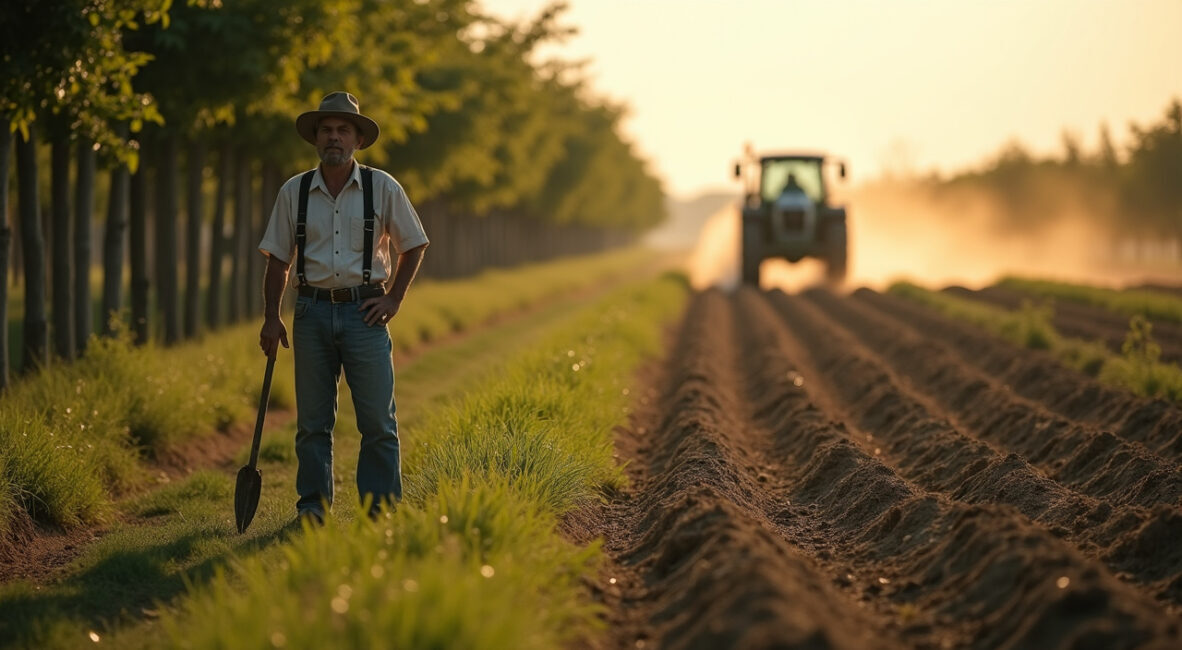
Agroforestry offers higher long-term resilience and ecosystem service returns but demands more upfront planning than monoculture. Farmers must manage multiple components—trees, crops and sometimes livestock—requiring diversified skills and longer investment horizons.
For those with limited capital or urgent cash needs, monoculture may offer quicker returns, but at higher ecological and market risk over the medium term.
Smart adoption often begins with pilot plots or phased integration, letting farmers learn management while capturing early benefits like shade and soil cover.
Side-by-side Comparison for Decision-making
| Criteria | Agroforestry |
|---|---|
| Setup time | Longer (5–10 years) |
| Return horizon | Staggered, diversified |
| Regulatory compliance (EUDR) | Better positioned |
Who Benefits Most — Realistic Guidance
Agroforestry systems benefits farmers most when producers seek income diversification, resilience to climate shocks, access to premium markets or compliance with stringent supply-chain rules. Ideal candidates include smallholders, mixed livestock operations and farms near conservation zones.
It’s less suitable for purely short-term growers reliant on rapid returns and with no market for tree products or services. Honest appraisal of capital, labor and market access will determine the right path.
Extension services, co-ops and phased implementation reduce risk and build farmer capacity over time.
Brazil’s Leadership and Global Relevance (agroforestry Systems Benefits Farmers)
National Scale Adoption and Signature Systems
Brazil is the global reference for agroforestry with over 11 million hectares reported and iconic models like cacau cabruca in Bahia, ILPF in the Cerrado and family SAFs in the Amazon. These systems combine production and restoration, showing how agroforest designs fit tropical and subtropical contexts.
The Brazilian experience demonstrates scalable pathways to combine commodity exports and landscape conservation—vital for markets demanding deforestation-free supply chains.
Institutions like Embrapa provide technical support and research that accelerate on-farm adoption across diverse biomes.
Why Multinational Buyers and Policy Makers Pay Attention
Global buyers—chocolate, coffee and timber companies—seek supply chains that meet EUDR and other deforestation regulations. Agroforestry systems benefits farmers by providing traceable, high-quality products while rehabilitating landscapes, which aligns with corporate sustainability goals.
Brazil’s large area under agroforestry offers a testing ground for certification models and carbon finance mechanisms attractive to international investors.
As standards tighten, agroforestry becomes a competitive advantage for supply-chain compliance and premium market access.
Examples of Brazilian On-farm Transformations
A cacao cabruca grower in southern Bahia now sells cacao, timber and carbon credits—income streams that buffered extreme weather losses. In the Cerrado, ILPF adopters improved pasture productivity and soil carbon while maintaining cattle output. Amazonian family farms used SAFs to recover degraded plots and keep springs flowing during droughts.
These cases show how agroforestry systems benefits farmers translate into social, economic and environmental wins across contexts.
Replication depends on good species selection, market connections and access to technical assistance.

How to Design and Finance Your Agroforestry Plan (agroforestry Systems Benefits Farmers)
Step-by-step Design Essentials Conduct a Property Diagnostic: Soil, Slope, Water and Microclimate Set Primary Objectives: Income, Carbon, Restoration or Mixed Choose the System: Alley Cropping, Silvopasture, Forest Farming, Riparian Buffers Select Compatible Tree and Crop Species Adapted to the Site Plan Spacing, Planting Sequence and Management Schedule
Good design starts with clear objectives and a realistic timeline. A phased approach—pilot strips, incremental tree planting and market tests—reduces risk and allows adaptive learning. Species choice must balance productivity, growth rate and marketability.
Map water resources and erosion risk; integrate riparian buffers where necessary. Practical steps include nursery sourcing, training in pruning and a budget for initial labor and materials.
Financing Options and Market Pathways
Funding can come from national programs like Pronaf Floresta, ABC+ and Fundo Amazônia, or international sources such as the GEF, IFAD and World Bank. Impact investors and ESG funds increasingly target agroforestry projects with verifiable carbon and social outcomes.
Carbon markets offer ongoing revenue; current agroforestry carbon prices average $15–$50/ton in voluntary markets, creating meaningful supplementary income. Certification (Rainforest Alliance, organic, FSC) opens premium channels, sometimes required for EUDR-compliant exports.
Combining grants, concessional loans and early product sales smooths cash flow during establishment years.
Typical Financing Timeline for a 5–10 Year SAF
| Stage | Funding sources | Primary costs |
|---|---|---|
| Establishment (Years 0–2) | Pronaf, grants, microcredit | Seedlings, labor, fencing |
| Growth (Years 3–5) | Impact investors, carbon advances | Maintenance, market development |
| Harvest/Market (Years 6+) | Product sales, carbon credits | Processing, transport |
Common Pitfalls and How to Avoid Them (agroforestry Systems Benefits Farmers)
Species Mismatch and Spacing Errors
Choosing trees that compete excessively with crops or that are ill-adapted to local soils is a frequent mistake. Correct spacing prevents light and water competition—designs must reflect growth rates and root architecture. Consult local nurseries and extension agents; trial small plots before scaling.
Misplaced species can lead to pest or disease problems and lost years of investment. Invest time in species trials and proven regional combinations to maximize agroforestry systems benefits farmers.
Good records and adaptive pruning schedules reduce long-term competition risks and improve yields.
Underestimating Management and Time to Profit
Agroforestry requires active management—pruning, thinning, and integrating harvest schedules. Many farmers expect quick returns but trees typically deliver medium to long-term value. Plan working capital for 5–10 years and phase plantings to create earlier harvests from intercrops or fast-growing species.
Training and mentorship shorten the learning curve. Cooperative arrangements for processing and marketing also reduce individual risk while building demand for diversified products.
Realistic financial planning is essential to capture agroforestry systems benefits farmers expect.
Documentation, Certification and Market Planning Failures
Failure to document management and yields undermines eligibility for carbon credits and certifications. From day one, track planting dates, species, inputs and harvests. Lack of a market plan leads to wasted products or poor prices. Secure buyer relationships or cooperative marketing channels early.
Proper documentation supports access to climate finance, PES programs and premium markets—mechanisms that often finance the up-front costs of transition.
Combining monitoring with advisory support ensures credibility and long-term revenue capture.
The Future Outlook: Policy, Tech and Market Trends (agroforestry Systems Benefits Farmers)
Global Targets, Regulation and Market Pull
Ambitious targets like restoring 350 million hectares to agroforestry by 2030 (Bonn Challenge) and EUDR compliance are pushing agroforestry into mainstream supply-chain strategies. Buyers increasingly require deforestation-free, regenerative sourcing—criteria agroforestry can meet while producing saleable commodities.
Policy incentives and public funding will likely increase, making early adoption advantageous for market access and payment schemes.
Farmers positioned today reap both regulatory alignment and new market opportunities tomorrow.
Technology, Traceability and Measurement
Remote sensing, drones and AI now enable scalable monitoring of tree cover, growth and carbon sequestration. Blockchain solutions and traceability platforms can link products to verified farm-level practices, improving trust with buyers and certifiers.
These tools reduce costs of verification and open doors to premium markets and finance, strengthening the economic case for agroforestry systems benefits farmers.
Adoption of tech requires capacity building but accelerates access to high-value value chains.
Socioeconomic Impacts and Long-term Land Value
Trees on farms create durable assets—timber, improved soil and enhanced water security—that raise property values and household wealth. Studies show land with established tree cover can appreciate 15–25% compared to treeless parcels, while diversified production supports local employment and food security.
Agroforestry systems benefits farmers not just in annual income but as intergenerational capital that stabilizes rural livelihoods and encourages stewardship.
For communities, scaled adoption transforms landscapes from liability into a diversified natural capital portfolio.
Agroforestry systems benefits farmers by combining productivity, resilience and market opportunities in one integrated approach. This is not a quick fix but a strategic shift: with planning, finance and technical support, farms can diversify income, sequester carbon and increase land value while complying with global regulations. Are you already using agroforestry on your farm? Share your experience in the comments — your story could inspire thousands of farmers worldwide.
Frequently Asked Questions
What is the First Step to Start an Agroforestry System on My Farm?
The first step is a thorough property diagnostic: assess soil type, water availability, slope, existing vegetation and local climate. Combine that with a market scan for timber, fruits or carbon services and define clear objectives—income, restoration or both. This diagnostic guides species selection, spacing and financing decisions. Engage local extension services or institutions like Embrapa early to draft a realistic phased plan that matches your cash-flow needs and technical capacity.
How Long Until I See Financial Returns from Agroforestry?
Returns are staggered: intercrops and annuals can provide income in the first season, while tree products and timber typically require 5–10 years to mature. Some configurations—fruit trees or fast-growing timber—offer intermediate harvests. Plan for phased revenue and secure short-term financing or grants to cover establishment costs. Proper species choice and market links shorten the payback period, and carbon credits can provide supplementary income during growth years.
Can Agroforestry Reduce Fertilizer and Pesticide Costs?
Yes. Mature agroforestry systems often lower dependence on chemical fertilizers as trees recycle nutrients and build organic matter, and increased biodiversity supports natural pest control, reducing pesticide needs. Studies report up to 60% reduction in fertilizer use in established systems. Benefits accrue over several seasons, so initial adoption may still require inputs until soil health improves. Integrating legumes and fodder trees accelerates nutrient cycling and reduces overall input costs.
Are Agroforestry Projects Eligible for Carbon Financing?
Agroforestry projects can be eligible for voluntary carbon markets when they demonstrate additionality, permanence and measurable sequestration. Trees in agroforestry sequester roughly 5–15 tCO2/ha/year depending on species and climate. Early engagement with verified standards and robust monitoring increases eligibility. Carbon revenues range widely; in 2026 prices for agroforestry credits averaged $15–$50/ton, providing meaningful supplemental income for many farmers when managed transparently.
How Does Agroforestry Help Meet New Supply-chain Regulations Like EUDR?
Agroforestry provides traceable, tree-covered production systems that align with deforestation-free sourcing requirements under regulations like EUDR. By maintaining canopy cover, documenting management and registering plots, producers can supply compliant commodities. Certifications (Rainforest Alliance, FSC) and robust traceability systems improve market access. For exporters, integrating agroforestry demonstrates responsible land use and reduces risk of losing access to regulated markets, while also opening premium price opportunities.
Further reading and resources: Embrapa, Rainforest Alliance, and the Bonn Challenge.