Skip to content
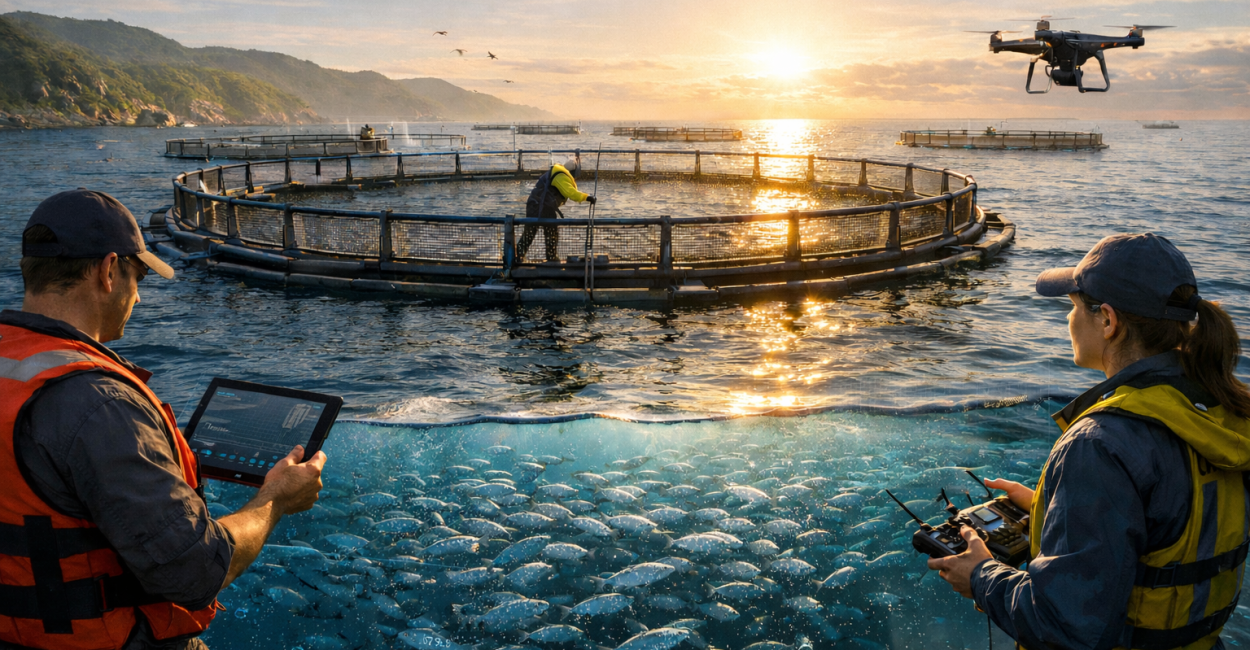
The oceans are at the brink — 90% of global fish stocks are fully exploited or overfished, and aquaculture farming future food is rapidly moving to the center of the solution. Aquaculture farming future food matters because it offers scalable, efficient animal protein with lower land and water footprints than conventional livestock, and it can be deployed close to growing urban markets.
With the world population headed toward 10 billion by 2050, demand for protein will surge while wild fisheries can no longer expand. This article explains why aquaculture farming future food is critical, which technologies are transforming production, and how Brazil and global investors are positioned to benefit. Keep reading to discover why aquaculture may be the most important food revolution you’ve never heard of.
Understanding Aquaculture Farming Future Food: Scope and Urgency
What Aquaculture Farming Future Food Means Today
Aquaculture farming future food refers to the cultivation of aquatic organisms—fish, shellfish, seaweed—at scale to supply the growing global demand for protein. It combines traditional pond and cage culture with advanced systems like recirculating aquaculture systems (RAS) and offshore cages. The key benefit is predictable, year-round production that can be optimized for feed conversion, growth rates, and reduced environmental footprint.
This emerging food source is critical because wild capture fisheries are plateauing, while demand for animal protein is rising strongly in developing regions. Policymakers and producers are increasingly framing aquaculture as a climate-smart, resource-efficient alternative to beef and other land-intensive livestock.
Getting started involves assessing local water resources, market access, and potential for technology adoption—steps governments and investors are prioritizing to scale sustainable production fast.
Why Scale is Urgent for Global Food Security
Growth in global protein demand is driven by rising incomes and urbanization. Aquaculture farming future food offers one of the few scalable protein pathways that does not require equivalent land expansion or freshwater withdrawals compared to beef. Scaling responsibly requires investment in infrastructure, workforce training, and strong biosecurity to avoid repeating past disease-driven setbacks.
International institutions now highlight aquaculture in food security strategies because it can be integrated with supply chains, cold chain logistics, and export markets. Efficient scale-up hinges on aligning technology, regulation, and finance to accelerate sustainable yields.
Without urgent scale-up, many low- and middle-income countries will struggle to meet nutritional needs while meeting climate and land-use goals.
How Policymakers and Producers Can Begin
Start with zoning and regulatory clarity to enable RAS, coastal leases, and offshore operations. Encourage pilot projects that combine local species with proven feed and health management practices. Public-private partnerships can underwrite initial capital for hatcheries and processing facilities.
Data-driven decision making—using monitoring systems and performance benchmarks—helps de-risk early investments. Training extension services for small producers multiplies impact and spreads best practices across regions.
Linking production to markets, including export channels and domestic procurement (schools, hospitals), ensures steady demand that justifies further expansion of aquaculture farming future food.
Global Protein Crisis and Aquaculture Farming Future Food as the Solution
Collapse of Fisheries and the Protein Gap
Wild fish stocks are under severe pressure: FAO reports indicate a growing share of stocks are fully exploited or overfished, limiting future catch expansion (FAO). Simultaneously, protein demand is rising fastest in developing countries as diets diversify. This mismatch creates a clear protein gap that wild fisheries alone cannot fill.
Conventional livestock production is constrained by land, water, and greenhouse gas (GHG) emissions, so alternative scalable sources are urgently needed. Aquaculture farming future food can supply high-quality animal protein without equivalent land-use change or deforestation.
Effective policy and investment in aquaculture are therefore central to closing the projected protein shortfall by 2050.
Drivers Increasing Demand for Animal Protein
Urbanization and income growth lead to higher per-capita consumption of animal-sourced foods. Protein demand rises particularly in Africa and Asia, increasing pressure on domestic supply chains. Consumers also demand product safety, traceability, and sustainability credentials—areas where modern aquaculture can score highly when well-managed.
Meeting this demand requires expanding production, improving feed efficiency, and reducing losses in post-harvest handling. Investment in cold chain and processing boosts value-capture for producers and improves food safety for consumers.
Shifting dietary policies and public procurement toward sustainable aquaculture can accelerate adoption while improving nutrition outcomes.
Why Capture Fisheries Can’t Scale—limitations Explained
Capture fisheries are biologically constrained by recruitment variability, habitat loss, and climate-driven ecosystem change. Overfishing has eroded many stocks’ resilience; ecosystem recovery requires reduced pressure and long recovery times. As a result, capture fisheries cannot be relied on for significant expansion of supply.
Aquaculture farming future food is the scalable alternative because production can be intensified and geographically diversified—on land, nearshore, and offshore—without depending on wild stock increases. This reduces pressure on marine ecosystems when implemented with strong environmental safeguards.
Combining aquaculture expansion with fisheries management offers a balanced approach to meet protein needs while protecting ocean health.
- FAO stock assessments and global fisheries data
- Rising per-capita protein demand in developing regions
- Land and water constraints of traditional livestock
- Environmental limits on capture fisheries growth
| Issue | Capture Fisheries | Aquaculture |
|---|---|---|
| Scalability | Limited | High |
| Predictability | Variable | High |
| Environmental footprint | Dependent on stock health | Manageable with tech |
Aquaculture Farming Future Food by the Numbers
Global Production and Growth Dynamics
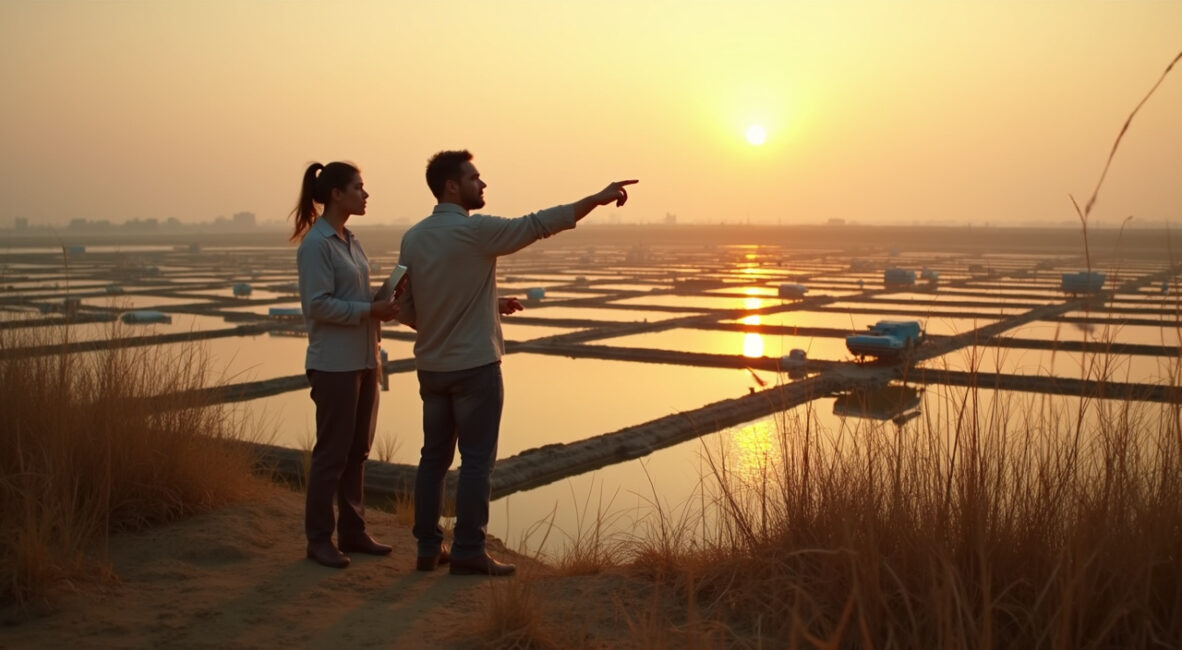
Aquaculture already accounts for more than 50% of the seafood consumed globally and has been the fastest-growing animal-food sector at roughly 7% annual expansion. Rapid growth is driven by intensification, technology adoption, and market integration. Institutional forecasts estimate the global aquaculture market will exceed $300 billion by 2026, with continued expansion through 2030.
This expansion is concentrated in Asia—China, India, and Indonesia dominate production—but emerging producers like Brazil are increasing output rapidly. As production grows, efficiency gains in feed conversion and genetics continue to lower unit costs and environmental intensity.
Understanding these numbers helps investors and policymakers prioritize areas for infrastructure, regulation, and training to sustain growth while minimizing negative impacts.
Key Producing Countries and Emerging Markets
China leads global aquaculture by a large margin, followed by India and Indonesia. These markets benefit from integrated value chains, strong hatchery networks, and large domestic demand. Brazil is notable for fast-growing tilapia production and untapped offshore potential. Emerging markets in Africa and Latin America present opportunities for targeted investment and technology transfer.
Market dynamics vary by species—tilapia, shrimp, salmon, and carp have different input needs and market channels. Export-led growth requires compliance with international sanitary and sustainability standards, which incentivizes modernization.
Regional diversification reduces supply risk and creates resilience against localized disease or environmental shocks.
Projections: Who Will Be Eating Aquaculture Products by 2030
Analysts project aquaculture could supply protein to roughly 1 in 3 people worldwide by 2030 if current trends continue and investment accelerates. This outcome depends on scaling feed alternatives, improving hatchery reliability, and expanding processing and cold chain capacity to reach consumers affordably.
In urban centers, farmed seafood will increasingly appear in grocery, foodservice, and institutional menus. Demand for sustainably certified products will shape production practices and market premiums.
Policymakers and producers that focus on traceability, quality control, and value-added processing will capture the most growth opportunities in the coming decade.
- Global market growth and valuation (>$300B by 2026)
- Top producing countries: China, India, Indonesia
- Rising production in Latin America and Africa
- Projected share of population fed by aquaculture by 2030
- Species-specific market dynamics (tilapia, shrimp, salmon)
Technologies Driving Aquaculture Farming Future Food
Recirculating Aquaculture Systems (RAS) & Land-based Farming
Recirculating Aquaculture Systems (RAS) are closed, land-based facilities that treat and reuse water, enabling intensive production with minimal freshwater withdrawals. RAS provides operators control over temperature, oxygenation, and stocking densities—reducing disease risk and environmental discharge. These systems are ideal where coastal leasing is limited or to locate production near urban markets to cut transport emissions.
Benefit: high biosecurity, low water use, and year-round predictable production. RAS can reduce effluent and allow for integration with wastewater treatment or aquaponics for additional value.
Example: Atlantic Sapphire operates large-scale land-based salmon farms in Florida, demonstrating commercial viability of RAS in non-traditional salmon geographies and cutting time-to-market by proximity to consumers.
AI, Computer Vision & Fish Health Monitoring
AI and computer vision monitor fish behavior and health continuously via underwater cameras and analytics. Machine learning models detect anomalies—feeding changes, lethargy, or early signs of disease—before they affect entire cohorts. Early detection reduces mortality, improves welfare, and lowers antibiotic use significantly when actioned promptly.
Benefit: proactive health management and optimized feeding schedules, improving feed conversion ratios and reducing medication costs. AI also enables precision husbandry at scale across multiple sites from a single control center.
Example: Several aquatech companies deploy onboard AI to triage health alerts and optimize feeding, cutting antibiotic use by up to 30% and improving operational efficiency.
Offshore & Deep-sea Systems Combined with IoT Monitoring
Offshore and deep-sea aquaculture move cages into open, high-energy waters that provide natural flushing and reduced coastal conflicts. When combined with IoT sensors and remote monitoring systems, operators can manage dissolved oxygen, temperature, and currents in real time. These systems expand available cultivation areas while minimizing local environmental pressure nearshore.
Benefit: access to vast marine areas, lower risk of coastal eutrophication, and potential for larger cages and stock densities with remote oversight. IoT enables multi-farm management from centralized platforms.
Example: SalMar in Norway runs offshore farms using submersible cages and remote sensors to monitor water quality and fish welfare, enabling safe operation in exposed waters.
Aquaculture Farming Future Food Potential in Brazil
Freshwater Reserves and Tilapia Leadership
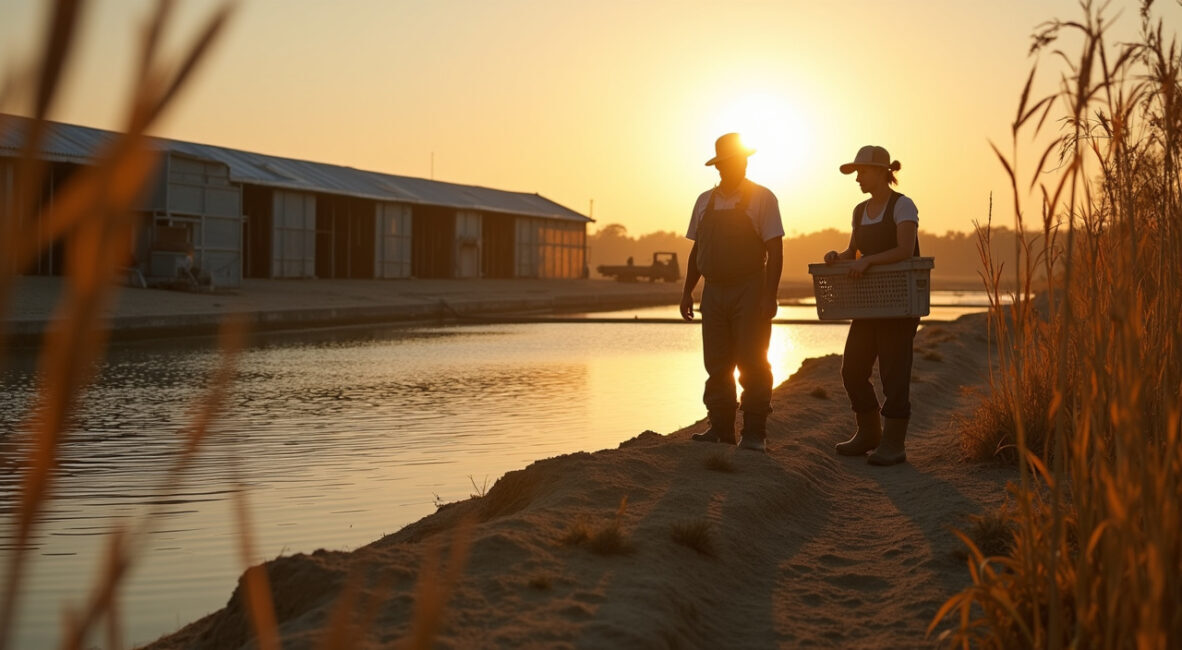
Brazil holds roughly 12% of the world’s renewable freshwater resources, a major asset for freshwater aquaculture. The country is already the largest tilapia producer in Latin America and is rapidly scaling hatcheries, feed mills, and value-added processing. Leveraging inland water resources supports regional food security and export capacity without competing directly with coastal uses.
Benefit: abundant water, diverse climates, and large domestic markets allow Brazil to expand inland aquaculture with relatively low environmental conflict when managed responsibly. Domestic processing can add value and create rural jobs.
Example regions driving growth include the South, Northeast, and expanding production in the Center-West where integrated farming and feed supply chains are developing.
Offshore Opportunity and Coastal Potential
Brazil’s 8,500 km coastline offers huge untapped opportunity for offshore aquaculture, from finfish cages to integrated multi-trophic systems (IMTA). Offshore farming could diversify species produced and reduce pressure on coastal ecosystems, but requires clear leasing regimes, investment in port and logistics, and rigorous environmental monitoring.
Benefit: export-oriented production and year-round supply to global markets, leveraging Brazil’s geographic position to serve North and South American markets cost-effectively. Local capacity-building can enable domestic firms to compete internationally.
Challenge: regulatory frameworks, environmental impact assessments, and financing need to evolve to unlock this potential sustainably.
Challenges—regulation, Finance and Infrastructure
Major barriers include inconsistent regulation across states, limited cold chain logistics in interior regions, and constrained access to affordable finance for SMEs. Addressing these gaps requires targeted public investment, incentives for private capital, and capacity-building for small producers to meet sanitary standards.
Benefit: coordinated policy and finance can scale production while ensuring environmental safeguards and equitable growth. Public support for RAS, hatcheries, and processing hubs accelerates value chain development.
Opportunity: Brazil could become a leading exporter of sustainable aquaculture protein if it aligns policy, infrastructure, and finance to scale responsibly.
- Abundant freshwater resources (12% of global total)
- Largest tilapia producer in Latin America
- Extensive but underused offshore coastline
| Metric | Brazil (current) | Potential |
|---|---|---|
| Tilapia production | High | Increase with processing hubs |
| Offshore farms | Minimal | Large expansion potential |
Comparing Aquaculture Farming Future Food with Traditional Livestock
Feed Efficiency and Resource Use Comparison
Aquaculture generally offers superior feed conversion ratios (FCR) compared to cattle and often beats poultry on aquatic species like salmon and tilapia. For example, many finfish can achieve FCRs near 1.2:1, while beef often exceeds 6:1. This efficiency reduces upstream feed demand, lowering land and water footprints associated with feed crops.
Benefit: Lower indirect land-use change and reduced pressure on freshwater when systems like RAS or well-managed pond systems are used. Improving feed formulation—using insects, algae, and single-cell proteins—further shrinks environmental impact.
Understanding these metrics helps investors and policymakers compare proteins on sustainability, cost, and scalability grounds.
Emissions, Land Use and Water Intensity
GHG emissions per kilogram of protein from aquaculture are typically much lower than beef and competitive with poultry, especially when powered by renewable energy and optimized feed. Land use per unit protein is also minimal for aquatic systems, particularly RAS and offshore farms, which do not require cropland or pastures.
Benefit: Aquaculture supports climate and land-sparing goals if scaled responsibly. Water use varies by system—RAS uses far less water than open ponds and can treat effluents to minimize contamination.
These advantages position aquaculture as an attractive option for countries aiming to reduce agricultural emissions while increasing protein supply.
Risks and How Technology Mitigates Them
Aquaculture is not risk-free: escapes, disease outbreaks, and coastal impacts have historically caused negative outcomes. However, modern biosecurity, genetic selection, precision nutrition, and closed containment systems mitigate these risks. Offshore submersible cages and RAS reduce escape probability and disease transmission to wild populations.
Benefit: Combined technological and management interventions can substantially lower environmental risks and enhance animal welfare. Certification schemes and traceability tools further improve consumer confidence and market access.
Result: Aquaculture can offer a net sustainability improvement over many terrestrial livestock systems when best practices are applied.
| Criterion | Aquaculture | Beef Cattle |
|---|---|---|
| Feed conversion | 1.2:1 | 6–16:1 |
| GHG emissions | Very Low | Very High |
| Water usage | Low (RAS) | Very High |
Investment Opportunities in Aquaculture Farming Future Food
Venture Capital, Corporate and Public Finance Trends
Investment into aquatech surged in 2025–2026 as VCs and strategic corporate investors backed feed alternatives, RAS projects, and AI platforms. Large agribusiness players and food companies are acquiring aquaculture assets to secure protein supply chains. Public finance institutions like development banks are offering blended finance to de-risk early-stage farms and infrastructure projects.
Benefit: Increased capital lowers barriers for modern farms and processing facilities, enabling scale-up and technology adoption. Strong investor interest also drives professionalization and improved governance across the sector.
For Brazil, tapping multilateral funds and national development banks can accelerate adoption among small and medium producers.
Opportunities for Small and Medium Producers
SMEs can capture value by specializing in fingerling production, regional processing, or integrated farming (e.g., aquaponics). Aggregation models—cooperatives or producer associations—help small producers access feed, finance, and markets. Technical assistance and traceability systems improve quality and open export channels.
Benefit: Distributed production with centralized processing and marketing reduces risk and increases incomes in rural communities while expanding national supply.
Access to credit lines from BNDES and concessional funding from multilateral organizations can catalyze SME growth in Brazil and other emerging markets.
How to Access Financing and Build Investor-ready Projects
Prepare bankable project proposals with clear environmental safeguards, market off-take agreements, and realistic financial projections. Use pilot data on yields and FCR to demonstrate viability. Consider blended finance structures and impact funds that value ESG outcomes alongside returns.
Benefit: Investor-ready projects attract lower-cost capital and faster deployment, essential to scaling aquaculture farming future food. Partnerships with technical universities and research centers can strengthen proposals.
Engaging early with certification bodies and offtakers reduces market risk and helps secure long-term contracts for production.
Challenges, Risks and the Future Outlook of Aquaculture Farming Future Food
Disease, Antibiotics and Biosecurity Lessons
Disease outbreaks have historically threatened shrimp and other industries, highlighting the need for robust biosecurity. Overuse of antibiotics creates resistance risks. Advances in genomic selection, vaccines, and early detection via AI reduce disease impact and dependence on antibiotics.
Benefit: Proactive health management and improved husbandry practices lower mortality and increase predictability. Regulatory oversight and best-practice guidelines are crucial to maintain consumer trust and market access.
Continued R&D and training for producers ensure the sector learns from past crises and builds resilience.
Environmental and Regulatory Hurdles
Poorly sited or unmanaged farms can cause eutrophication, habitat loss, and conflicts with other coastal users. Regulatory inconsistency among jurisdictions complicates trade and investment. Harmonized environmental standards, site selection frameworks, and monitoring tools help mitigate these issues.
Benefit: Transparent permitting, science-based carrying-capacity assessments, and enforcement protect ecosystems while enabling sustainable expansion. Certification schemes can incentivize better practices through market premiums.
Governments must balance growth with environmental protection to ensure long-term viability of aquaculture farming future food.
2030 And Beyond—innovation Frontiers and Integration
Future frontiers include vertical and spatial aquaculture, integration with renewable energy (solar, wind), and synergies with cultivated seafood technologies. Protein from cell-cultured seafood may complement farmed species, offering niche markets and reducing pressure on some wild stocks.
Benefit: Integrated systems that combine aquaculture with renewables and circular feed sources can deliver low-carbon protein at scale. Digitalization and traceability will be essential to meet consumer expectations and regulatory demands.
With the right policy and investment mix, aquaculture farming future food will play a central role in global food security and the transition to sustainable protein production.
Conclusion: Aquaculture Farming Future Food as the Solution
Key Takeaways
Our oceans are at ecological limits while demand for animal protein grows—making aquaculture farming future food a necessary, scalable complement to terrestrial livestock. Technologies like RAS, AI monitoring, precision feeds, genomic selection, offshore systems, and IoT are rapidly improving efficiency and sustainability across the sector.
Brazil’s freshwater wealth and coastal potential position it as an emerging leader, provided regulation, infrastructure, and finance evolve. Investors see compelling opportunities across the value chain, from hatcheries to feed alternatives and digital platforms.
Final Impact Statement
Aquaculture is not a silver bullet but represents one of the most promising pathways to feed a growing world sustainably. When guided by strong governance, innovation, and responsible investment, aquaculture farming future food can reduce pressure on wild stocks, spare land, and deliver nutritious protein at scale.
Do you think aquaculture is the future of food? Share your thoughts in the comments below.
FAQ
What is Aquaculture and How Does It Differ from Fishing?
Aquaculture is the controlled cultivation of aquatic organisms—fish, shellfish, seaweed—whereas fishing (capture fisheries) harvests wild populations. Aquaculture allows predictable production, onsite management of growth conditions, and higher feed conversion efficiency, reducing pressure on wild stocks.
Can Aquaculture Farming Future Food Be Environmentally Sustainable?
Yes—when managed with best practices like proper site selection, feed alternatives, waste treatment, and biosecurity. Technologies such as RAS, precision feeds, and offshore systems help minimize effluent, escapes, and habitat impacts, enabling sustainable scale-up.
Is Farmed Seafood Safe and Nutritious?
Farmed seafood is safe and nutritious when produced under proper sanitary standards. Modern practices and improved feed formulations ensure high protein quality, omega-3 content, and traceability—often matching or exceeding wild-caught equivalents for safety.
How Does Aquaculture Compare to Beef in Terms of Emissions?
Aquaculture generally has much lower greenhouse gas emissions per kilogram of protein than beef, particularly when powered by renewables and optimized feeds. Land use and water intensity are also significantly lower for many aquaculture systems.
What Are the Best Ways to Invest in Aquaculture?
Investment routes include equity in aquatech startups, direct farm projects (especially RAS and value-added processing), feed and genetics companies, and funds focusing on sustainable protein. Blended finance and public guarantees can reduce risk for early-stage projects.