
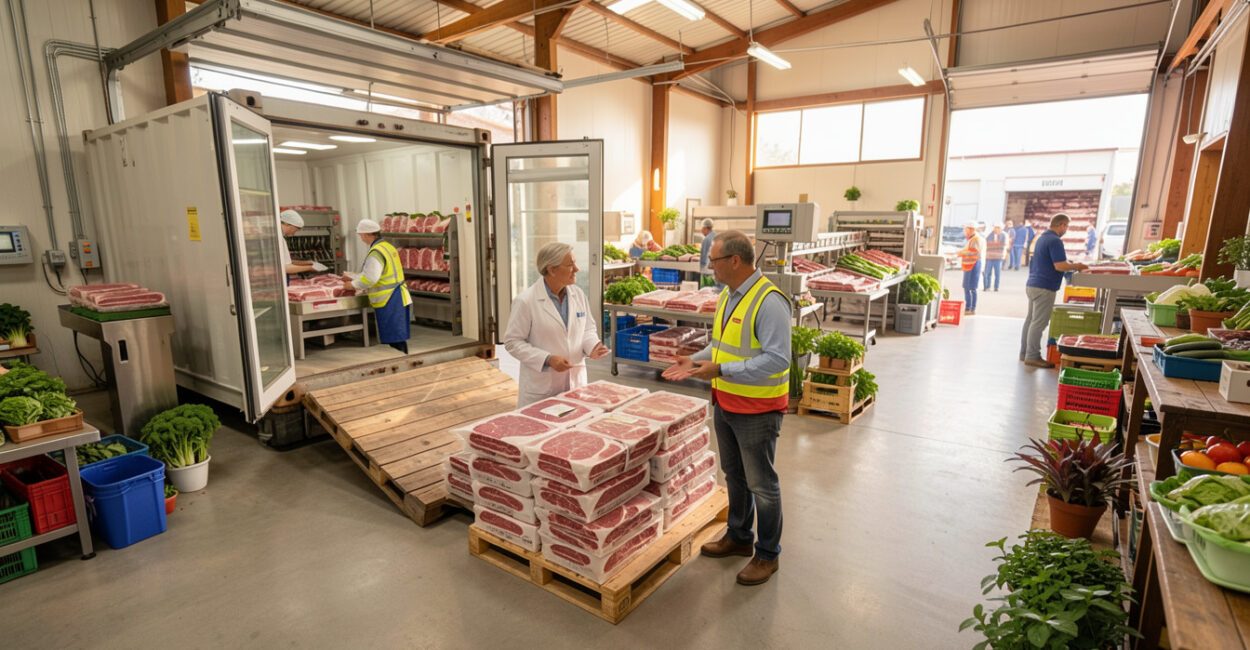
Brazil can expand beef exports while U.S. cattle supplies remain tight, yet the two countries also compete for buyers and respond to different production costs. That tension helps explain the Global Beef Market: a network shaped by herd cycles, consumer demand, trade rules, and prices—not a single global price or business measure.
For a comparable volume snapshot, USDA Foreign Agricultural Service (FAS) tables report beef production, consumption, and trade in carcass-weight equivalent. Market-research firms also publish dollar-size estimates, but those figures may cover different stages of the supply chain and should not be treated as directly comparable.
The figures below use USDA’s 2025 estimates and forecasts as a dated reference point, not as verified 2026 results. For decisions made now, check the latest USDA release and national customs data; revisions and reporting calendars can change the picture.
What is the Global Beef Market at a Glance?
The Global Beef Market is the worldwide production, consumption, and trade of beef, measured by physical volume or by the value of products at a defined point in the supply chain. USDA’s 2025 outlook put global production at roughly 61 million metric tons, with consumption close to that level and trade amounting to a much smaller share of output.
These rounded figures are useful for scale, not for treating small year-to-year differences as exact. USDA’s Livestock and Poultry: World Markets and Trade distinguishes production, domestic consumption, imports, and exports, and its estimates can differ from FAO data because of definitions and reporting methods.
Measure Reference figure How to read it Global production About 61 million metric tons, 2025 estimate USDA series; carcass-weight equivalent Global consumption Close to production, 2025 estimate Domestic disappearance, not retail sales value International trade Roughly 13 million metric tons, 2025 forecast Trade is a minority of total production Dollar market size No single authoritative global total Depends on product scope, price point, and currency basis
Global beef trade is large enough to move prices, but most beef is still produced and consumed within national or regional markets.
How is Global Beef Market Size Measured, and What is the Outlook?
There is no single definitive dollar figure for global beef market size because market reports measure different products and transaction stages. A forecast may count farmgate cattle value, wholesale beef sales, retail purchases, or processed products; each answers a different commercial question.
Volume statistics are generally more comparable when the source specifies carcass-weight equivalent, which converts cuts and bone-in products to a common carcass basis. Dollar estimates require additional checks: whether they include offal, whether they track nominal or inflation-adjusted prices, and whether exchange rates or retail margins are included.
A practical rule: use USDA or FAO volume series to compare physical supply and trade, then use a commercial market report only when its product scope matches the investment or sales question. The OECD-FAO Agricultural Outlook provides a longer-term agricultural baseline, but its projections depend on assumptions about income, productivity, policy, and input costs.
The near-term outlook is constrained by biological timing. When producers retain heifers to rebuild herds, fewer animals may reach slaughter in the short run, even if future productive capacity improves. Forecasts therefore remain sensitive to drought, pasture recovery, feed prices, and the pace of herd rebuilding.
Which Countries Produce and Consume the Most Beef?
The United States and Brazil are the leading beef-producing countries, while China and the United States are among the largest consumers by total volume. Rankings shift with the year, whether buffalo meat is included, and how sources convert products into carcass-weight equivalents.
USDA’s 2025 estimates place U.S. production at roughly 12 million metric tons and Brazil’s near that scale; China is also a major producer, with output below those two. India’s position depends on whether a dataset groups buffalo meat with beef, a distinction that can materially alter country comparisons.
By consumption, China’s large population makes it a major market even though per-person consumption is far below that of several traditional beef-eating countries. The United States combines high production with high domestic demand, while Brazil supplies both domestic consumers and export customers.
Country totals do not tell a processor whether exportable product is available. Domestic demand, slaughter capacity, cut preferences, and export eligibility determine what actually reaches foreign buyers. A plant may have cattle nearby but lack the sanitary approval or customer specifications needed for a particular destination.
Who Are the Largest Beef Exporters and Importers?
Brazil, Australia, and the United States are among the leading exporters, while China and the United States are major importers; the order changes with the reporting period and product definition. Brazil’s export position reflects a large cattle base and access to multiple destination markets, while Australia’s supply is shaped by pasture conditions and herd rebuilding.
Trade flows are not interchangeable. China’s demand for imported beef can redirect product from other destinations, while U.S. imports often include lean beef used in ground-beef blends. Exporters also face country-specific sanitary protocols, plant approvals, tariff quotas, and labeling requirements.
A common analytical mistake is to equate production capacity with export availability. If domestic prices rise or drought forces additional slaughter, export volume can move in either direction: more animals may temporarily lift shipments, while a later herd contraction tightens supply.
Grain trade policy can also affect livestock economics through feed costs and shipping disruptions. The analysis of grain export restrictions and food prices is relevant when evaluating how policy shocks may transmit from crop markets into cattle margins.
Export leadership depends on market access and the mix of cuts buyers want, as much as on the number of cattle a country raises.
What Drives Beef Supply, Demand, and Prices?
Beef prices respond to both the cattle cycle and the market for competing proteins, with weather, feed costs, incomes, and trade access shaping how those forces interact. Because cattle take years to produce, supply cannot adjust as quickly as demand for a supermarket product.
- Herd cycles: Retaining breeding females reduces near-term slaughter but can support later output; liquidation has the opposite timing effect.
- Feed and forage: Corn, soybean meal, pasture, and water availability influence finishing costs and decisions to sell or hold cattle. See the site’s explanation of forces behind global soybean prices for one input-market connection.
- Weather: Drought can raise feed costs and prompt early sales; prolonged pasture stress can reduce future herd capacity.
- Demand and substitution: Household income, food-service demand, and the relative prices of poultry and pork affect how much beef consumers buy.
- Trade conditions: Tariffs, currency movements, disease restrictions, and shipping costs can shift demand between origins.
A typical supply-chain example: a drought-hit ranch may sell more cattle early because pasture is short. That can increase slaughter availability in the near term, while reducing the breeding base and tightening supply later. The timing, severity, and rainfall recovery determine whether that pattern appears in national totals.
What Risks and Opportunities Are Reshaping the Beef Industry?
The main opportunities lie in improving output per animal, meeting verified buyer requirements, and reducing losses; the main risks include climate stress, disease, emissions scrutiny, and uneven traceability. These pressures affect producers differently depending on land, capital, infrastructure, and access to markets.
- Sustainable beef production: Emissions intensity can fall through better reproductive performance, animal health, and feed efficiency, but results vary by production system. Buyers increasingly ask for evidence rather than broad sustainability claims.
- Traceability: Reliable animal identification and records can support disease response and export eligibility. Weak data systems may exclude otherwise competitive suppliers from premium or regulated markets.
- Animal health and biosecurity: Disease outbreaks can trigger movement controls or import bans. Prevention, surveillance, and rapid reporting protect both herd productivity and market access.
- Productivity: Better fertility, lower calf mortality, and improved carcass quality can raise saleable output without expanding herd size, though adoption requires investment and suitable local management.
- Consumer expectations: Demand varies across markets; claims about grass-fed, organic, welfare, or low-emissions beef need clear standards and supply-chain verification.
These opportunities are not equally available to every operation. Traceability costs may weigh more heavily on small producers, and productivity investments can fail where feed, veterinary services, or reliable market infrastructure are limited.
What Should Buyers and Investors Watch Next?
Watch herd inventories, female slaughter, feed and forage conditions, export policy, and import demand before interpreting price movements or relying on a beef market forecast. These indicators help separate a temporary supply shock from a longer change in productive capacity.
For a commercial decision, match the evidence to the exposure: a feedlot should prioritize grain costs and feeder-cattle supply; an exporter should track sanitary access, currency, and destination demand; an investor should check whether a market-size estimate measures cattle, wholesale beef, or retail sales. FAO’s FAOSTAT production database is useful for historical country comparisons, while USDA trade reports provide more frequent market updates.
Data limits matter. USDA, FAO, and national agencies may differ in coverage, timing, and treatment of buffalo meat or processed products; estimates can also be revised. Treat precise country rankings as a dated snapshot, especially when comparing a forecast with a later revised series.
Question Short answer What defines market size? Volume or value, with product scope and supply-chain stage stated. Who leads production? The United States and Brazil are among the largest producers. Who leads trade? Brazil, Australia, and the United States are major exporters; China and the United States are major importers. What moves prices? Herd cycles, weather, feed costs, incomes, competing proteins, and trade rules. What should be checked first? Latest official inventories, trade data, and feed-market conditions.
Before committing capital or signing a supply contract, identify the relevant product and market stage, then compare the latest USDA estimates with national data for the countries involved. That simple scope check prevents a retail-value forecast from being mistaken for a cattle-price or export-volume outlook.
Frequently Asked Questions
Why Do Global Beef Production Figures Differ Between Reports?
Sources may use different marketing years, carcass-weight conversions, country coverage, or treatment of buffalo meat and processed products. Revisions also occur as national data arrive.
Does a Large Cattle Herd Mean a Country Will Export More Beef?
No. Domestic consumption, slaughter capacity, sanitary approvals, and market access determine how much product can be exported. A large herd can support production without guaranteeing exportable supply.
How Do Cattle Prices Differ from Beef Prices?
Cattle prices refer to live animals or carcasses at particular market stages. Beef prices may refer to wholesale cuts or retail products, which include processing, transport, and distribution costs.
Can a Country Increase Beef Output While Its Herd is Shrinking?
It can happen temporarily if more animals are slaughtered or carcass weights rise. The pattern may not last: a smaller breeding herd can limit future calf numbers and tighten supply later.
Which Data Should a Business Use for a Specific Trade Decision?
Use the latest official trade and sanitary information for the destination, alongside the relevant product specification and tariff terms. USDA reports help with global context, but customs and veterinary authorities determine the rules that apply to a shipment.