Skip to content
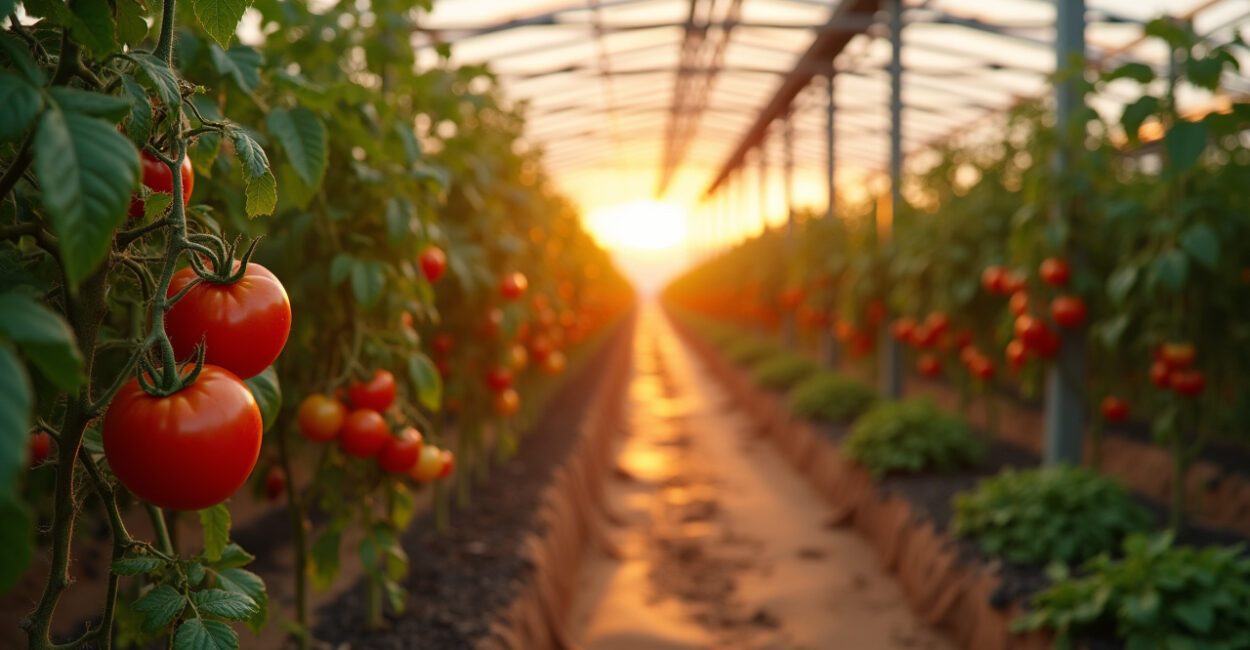
Greenhouse tomato farming cost per acre profit is a critical topic for growers aiming to maximize returns in a highly competitive market. As the demand for fresh, locally grown tomatoes rises, understanding the financial dynamics behind greenhouse production becomes essential. While greenhouse tomato cultivation promises impressive gross revenues—sometimes exceeding $300,000 per acre—the reality of operating costs, especially energy and labor, can significantly impact net profits.
The paradox here is striking: despite steep operating expenses, growers can still net profits ranging from $50,000 to over $100,000 per acre. However, these figures depend heavily on factors such as energy prices, labor efficiency, and market channels. With energy costs having risen by roughly 30% recently and labor being notoriously difficult to manage, the actual profitability of greenhouse tomato farming varies widely. This article breaks down the costs, yields, and profit scenarios of greenhouse tomato production in 2026, offering real-world data segmented by operation type to help growers make informed decisions.
Three Types of Greenhouse Structures — And Why the Choice Defines Everything
Primary Greenhouse Categories and Their Characteristics
- High Tunnel / Hoop House: Basic, low-cost polyethylene-covered metal arches.
- Conventional Greenhouse: Aluminum or steel framed with double-inflated polyethylene, moderate environmental controls.
- High-Tech Greenhouse: Glass or polycarbonate structures with full automation and supplemental lighting.
- Cost ranges widely from $5 to over $100 per square foot depending on the structure type.
- Yield and capital investment scale proportionally with structure sophistication.
High Tunnel / Hoop House Details
High tunnels, or hoop houses, are the most affordable greenhouse option, costing between $5 and $15 per square foot. These structures offer minimal environmental control, lacking heating or artificial lighting, which limits yield to about 15–35 tons per acre annually. Suitable mainly for extending growing seasons in warmer climates, they require lower startup capital, typically $200,000 to $600,000 per acre. They are ideal for producers entering greenhouse tomato farming or targeting local markets.
Conventional Greenhouse Overview
Conventional greenhouses, priced between $25 and $40 per square foot, provide moderate climate control including heating, ventilation, and basic fertigation systems. With 1–2 production cycles annually, yields range from 40 to 80 tons per acre. Startup costs for a full 1-acre facility can reach $1.5 million to $2.5 million. These are suitable for serious commercial operations with established regional retail or food service markets, balancing cost and productivity.
| Type | Construction Cost per sq ft | Yield (tons/acre/year) | Startup Capital (1 acre) |
|---|---|---|---|
| High Tunnel | $5–$15 | 15–35 | $200k–$600k |
| Conventional Greenhouse | $25–$40 | 40–80 | $1.5M–$2.5M |
| High-Tech Greenhouse | $40–$100+ | 80–150 | $2M–$4M+ |
Full Startup Cost Breakdown — What You Actually Need to Budget
Essential Cost Categories for Greenhouse Farming
- Structure construction costs vary widely by type and size.
- Production systems, including hydroponics and climate control, add significant expenses.
- Post-harvest equipment and operational tools are often overlooked.
- Pre-harvest working capital must cover months of expenses before sales begin.
- Licenses, insurance, and compliance form ongoing fixed costs.
Detailed Capital Requirements
Structural costs for 10,000 sq ft range from $50,000 for high tunnels to over $1 million for high-tech greenhouses. Production systems such as hydroponics can add $75,000–$175,000, while climate control systems cost an additional $20,000–$40,000. Post-harvest equipment investments include cold storage, packaging lines, and delivery vehicles. Most importantly, growers must budget six to nine months of working capital, which can total $80,000–$170,000, to cover labor, energy, and materials before revenue stabilizes.
Realistic Total Budgets by Operation Scale
| Scale | Structure | Production Systems | Working Capital | Total Startup |
|---|---|---|---|---|
| Beginner (2,000 sq ft) | $30k–$80k | $40k–$70k | $40k–$60k | $110k–$210k |
| Small Commercial (10,000 sq ft) | $150k–$400k | $100k–$200k | $80k–$150k | $330k–$750k |
| Medium Commercial (1 acre) | $1M–$1.7M | $400k–$700k | $200k–$350k | $1.6M–$2.75M |
| High-Tech (1 acre) | $2M–$4M | $800k–$1.5M | $350k–$500k | $3.1M–$6M |

Yield Expectations — What You Can Realistically Produce Per Square Foot
Factors Influencing Tomato Yield in Greenhouses
- Greenhouse type and environmental controls strongly affect yield.
- Tomato variety influences both yield and labor requirements.
- Plant density balances production volume and disease risk.
- Operator experience plays a significant role in achieving target yields.
- Disease outbreaks can drastically reduce output.
- Energy quality and climate zone impact growing conditions.
Typical Yields by Greenhouse Type
American growers using high tunnels generally achieve 15–25 lbs per square foot annually, translating to 75–125 tons per acre per cycle. Conventional greenhouses produce 25–50 lbs/sq ft with 1–2 cycles, totaling 125–250 tons per acre. High-tech greenhouses can reach 50–80 lbs/sq ft with nearly continuous production, amounting to 1,000–1,580 tons per acre annually. These figures contrast with open-field yields of around 25–35 tons per acre.
Key Yield Challenges and Solutions
Yield is limited by diseases such as Botrytis cinerea and Tomato Spotted Wilt Virus, which can cut production by up to 50%. Growers must manage plant density carefully to avoid outbreaks, select appropriate tomato varieties for their markets, and invest in operator training to optimize production. Energy management also plays a crucial role, especially in colder climates where heating costs can restrict growing conditions.
Operating Costs — The Numbers That Determine Whether You Profit
Major Operating Cost Drivers in Greenhouse Tomato Production
- Labor costs are the largest and most variable expense.
- Energy costs fluctuate seasonally and geographically.
- Nutrient and substrate expenses are ongoing and essential.
- Fixed costs include depreciation, insurance, and maintenance.
- Packaging and logistics add to total operational overhead.
Labor Expenses Breakdown
Operating a 1-acre greenhouse requires about four full-time employees (FTEs) for production and packing. With agricultural wages ranging from $13 to $17 per hour in 2026, annual labor costs can range from $124,800 to over $187,000 per acre, especially for labor-intensive cherry tomato crops. High-tech operations with automation may reduce labor needs to 2–3 FTEs, lowering costs accordingly.
Energy and Nutrient Costs Overview
Energy expenses represent 20–30% of total operating costs and vary with climate zone. Heating a 10,000 sq ft greenhouse in Zones 5–6 costs between $1,200 and $6,000 annually, while supplemental lighting for high-tech setups can add $30,000–$80,000 per acre. Nutrient solutions and growing substrates typically cost $0.15–$0.50 per square foot annually, reflecting the importance of precise fertigation management in optimizing production.
Revenue Per Square Foot — Pricing and Market Channels
Revenue Drivers Across Market Channels
- Wholesale prices are generally lower but require high volume.
- Food service channels pay premiums for consistent quality.
- Farmers markets offer the highest retail prices but limited volume.
- Community Supported Agriculture (CSA) provides stable cash flow.
- Direct-to-consumer online sales are growing but require logistics.
Price Ranges by Market Segment
Wholesale tomatoes sell from $0.60 to $1.80 per pound depending on variety. Food service prices range from $1.50 to $5.00 per pound for premium or cherry tomatoes. Farmers market prices can reach $2.00 to $7.00 per pound or pint, reflecting direct consumer premiums. CSA boxes typically retail between $25 and $45 weekly, offering predictable income streams for growers.
Revenue Per Square Foot by Operation and Market
| Operation Type | Yield (lbs/sq ft/year) | Average Price ($/lb) | Gross Revenue ($/sq ft) |
|---|---|---|---|
| High Tunnel, Farmers Market | 15 | $3.00 | $45 |
| Conventional Greenhouse, Food Service | 30 | $1.80 | $54 |
| Conventional Greenhouse, Farmers Market | 30 | $3.00 | $90 |
| High-Tech, Wholesale | 60 | $1.00 | $60 |
| High-Tech, Food Service Premium | 60 | $2.00 | $120 |
Profit Per Square Foot — The Three Scenarios That Matter
Scenario 1: Beginner High Tunnel (2,000 Sq Ft)
With an initial investment of about $60,000 and a single production cycle yielding 30,000 lbs at $3.50/lb, the gross revenue is $105,000 annually. Operating costs excluding labor total roughly $16,600, leaving a margin of $88,400 before owner labor. Accounting for 1,500 hours of labor at $20/hour ($30,000), the net profit is approximately $58,400 per year, or $44.20 per square foot. This scenario is ideal for growers with strong local markets and the ability to supply their own labor.
Scenario 2: Small Commercial Conventional Greenhouse (10,000 Sq Ft)
An investment of $500,000 supports a yield of 300,000 lbs and mixed sales to food service and farmers markets averaging $2.48/lb, generating $744,000 in revenue. Annual operating expenses, including labor ($62,400), energy ($25,000), and packaging ($30,000), total $201,400 before depreciation. After deducting $25,000 in depreciation, the operation shows strong profitability, provided market access and labor management are maintained efficiently.
Scenario 3: High-Tech Operation (1 Acre)
High-tech greenhouses require $3 million or more in startup capital with yields exceeding 1 million lbs annually. With premium wholesale and food service pricing, revenue potential is high, but energy and labor costs also escalate. Profitability hinges on advanced automation, access to energy-efficient infrastructure, and secured market channels. This scenario suits well-capitalized operators targeting consistent year-round production.
The Profit-Killing Variables — What Most Projections Ignore
Critical Risk Factors Affecting Greenhouse Profitability
- Winter energy cost spikes can triple heating bills, threatening cash flow.
- Disease outbreaks like Botrytis and ToBRFV may force crop destruction.
- Market price volatility, especially during open-field tomato season.
- High labor turnover increases training costs and reduces yield.
Managing Energy Cost Volatility
Heating expenses in cold climates are the largest unpredictable cost. Fixed-rate energy contracts, thermal curtains, and better insulation can mitigate risk. Failure to manage these costs often leads to financial distress during peak production months when cash flow is most needed.
Ensuring Market Access Before Investment
Many growers make the mistake of building before securing buyers. Successful operations first establish contracts or sales channels, then scale their greenhouse accordingly. Without guaranteed markets for 300,000+ lbs annually, profitability goals become unattainable, regardless of production capability.
Government Programs That Can Reduce Your Startup Cost
Federal and State Support for Greenhouse Growers
- USDA NRCS High Tunnel Initiative offers 50–75% cost-share on construction.
- Specialty Crop Block Grants provide non-repayable funding for competitive projects.
- FSA Microloans and Beginning Farmer Loans offer low-interest financing.
- State programs in CA, FL, MI, NY, and PA provide additional specialty crop support.
USDA NRCS High Tunnel Initiative
This program supports commercial growers with cost-sharing of up to 75% for high tunnel construction, capped around $25,000 to $35,000 annually per applicant. It is widely available but underutilized by new entrants to greenhouse tomato production.
Financing Options for New Growers
Microloans up to $50,000 with competitive interest rates assist beginners without credit access to conventional loans. The USDA Beginning Farmer Loans offer low down payments and operating capital loans, crucial for managing pre-harvest cash flow challenges in greenhouse farming.
In conclusion, understanding greenhouse tomato farming cost per acre profit requires a detailed look at structure types, startup costs, yield realities, and operating expenses. While greenhouse tomato production offers lucrative returns, success depends on careful planning, market alignment, and managing key risks like energy costs and labor turnover. Growers equipped with accurate data and realistic expectations can leverage government programs and targeted strategies to build profitable greenhouse operations.
Are you ready to explore which greenhouse setup fits your goals and market? Dive into the numbers, plan strategically, and position your farm for success in 2026 and beyond.
Frequently Asked Questions
What is the Typical Profit Margin for Greenhouse Tomato Farming Per Acre?
Profit margins vary widely by operation type and market, but net profits typically range from $50,000 to over $100,000 per acre annually after all costs. High-tech operations with optimized markets may achieve higher margins, while beginners should expect more modest returns initially.
How Much Does It Cost to Start a Greenhouse Tomato Farm on One Acre?
Startup costs depend on greenhouse type. Basic high tunnels may cost $200,000–$600,000 per acre, conventional greenhouses $1.5 million to $2.5 million, and high-tech greenhouses $2 million to $4 million or more, including systems and working capital.
What Are the Main Operating Costs in Greenhouse Tomato Production?
Labor and energy are the largest ongoing expenses, often comprising 60% of total costs. Nutrients, substrates, packaging, maintenance, depreciation, and insurance also contribute significantly to annual operating costs.
Which Markets Offer the Best Prices for Greenhouse Tomatoes?
Farmers markets and direct-to-consumer sales provide the highest prices, often $2–$7 per pound or pint, but with limited volume. Food service channels pay moderate premiums with predictable contracts, while wholesale markets offer lower prices but require high volumes to be profitable.
Are There Government Programs to Help Reduce Startup Costs?
Yes, programs like the USDA NRCS High Tunnel Initiative offer cost-sharing, while Specialty Crop Block Grants and FSA loans provide grants and low-interest financing. Many states also have specialty crop support programs to assist greenhouse growers.