Skip to content
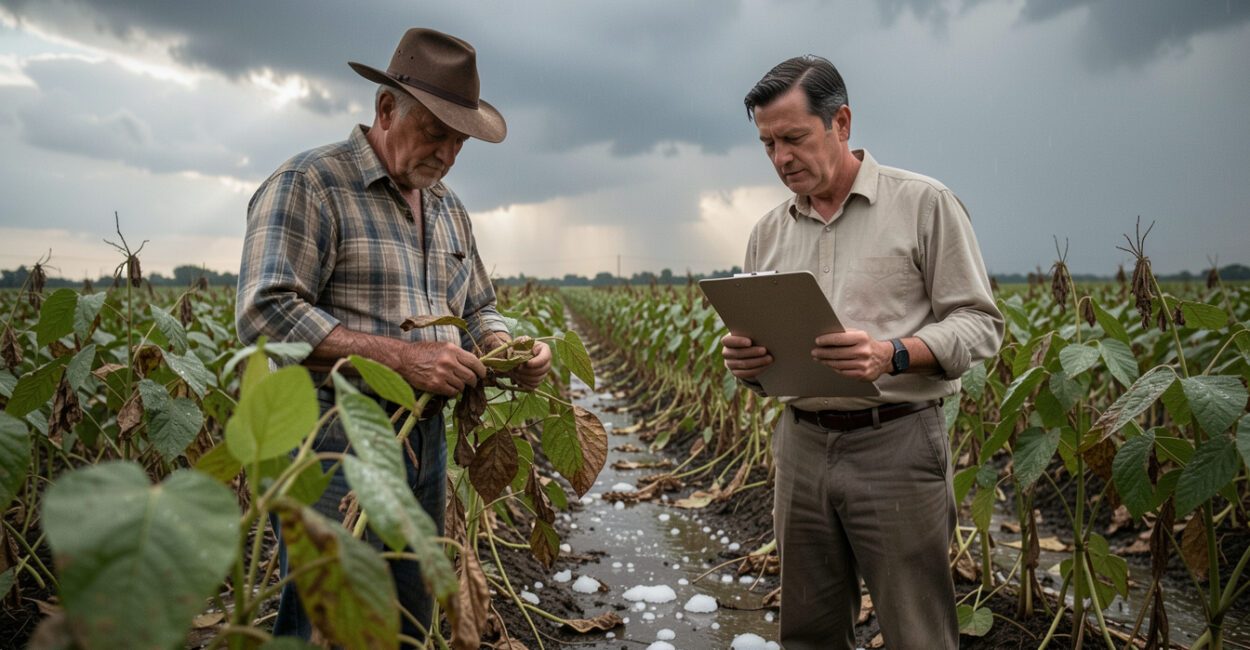
A hailstorm can damage a field in minutes, while the effect on yield may not be clear until weeks later. Crop hail insurance is a private policy that can pay for covered hail damage to an insured crop, subject to its terms, limits, and deductible. It is separate from federal crop insurance, and the two may work together.
Whether the added premium makes sense depends on what your existing policy protects, the crop’s exposure, and how much loss your operation could absorb. The key is to compare the policy’s insured value and claim terms with the protection you already have, rather than assuming every hail loss is covered.
At a Glance
- Policy type: Private crop insurance, generally sold through an insurer or agent.
- Main peril: Hail damage, as defined in the policy.
- Federal coverage: Separate from Multiple Peril Crop Insurance (MPCI).
- Price: Varies by crop, location, insured value, deductible, and insurer.
- Claim process: Prompt notice, damage documentation, inspection, and adjustment under the policy.
What Crop Hail Insurance Covers and How It Works
Crop hail insurance is a private insurance contract that pays an indemnity for qualifying physical damage caused by hail to insured crops, calculated according to the policy’s valuation method, coverage limit, and deductible. In plain terms, it can help replace some crop revenue or value lost when hail damages a covered field, even when the loss does not trigger an indemnity under a federal policy.
Coverage is typically written by unit of land or crop, with a selected dollar amount per acre or another stated basis. The adjuster evaluates the damaged crop under the policy’s loss-adjustment procedure; the payment is not automatically equal to the full insured amount. A crop hail deductible may apply by acre, as a percentage, or through another structure specified in the contract.
Policy language controls. Some contracts may include provisions for related perils or additional coverages, while others focus narrowly on hail. Wind, fire, transit, replanting, or companion crop damage should never be assumed covered without checking the declarations and endorsements.
What the Policy May Exclude or Limit
Hail is the central insured peril, but the policy’s definition of damage, valuation rules, and exclusions determine whether a particular field loss qualifies. Damage caused by drought, disease, flooding, insects, or poor stand establishment generally requires other coverage or may be excluded; the exact answer depends on the contract.
A practical detail matters after a storm: hail injury can look severe while the plants are still standing, yet later yield impact depends on growth stage, plant recovery, and damage to kernels, pods, or stalks. Avoid estimating a final loss from appearance alone. Preserve field records and follow the insurer’s instructions before harvesting or altering damaged acreage.
Also check whether the policy caps payment at the selected amount per acre, how it treats multiple hail events, and whether salvage value or remaining production affects the adjustment. Those provisions can materially change the result.

Crop Hail Insurance Vs. MPCI
Crop hail coverage is a private, peril-specific policy; MPCI is federally regulated, multi-peril crop insurance that protects against specified production or revenue losses under a chosen plan. A farmer may hold both, and hail insurance may respond to field-level damage that does not cause the farm or insurance unit to fall below the MPCI coverage trigger.
MPCI plans, including Revenue Protection and Yield Protection, operate under federal rules and approved policy provisions. The USDA Risk Management Agency provides program information and policy resources. For a related look at federal coverage choices, see this overview of corn crop insurance coverage levels and premium considerations.
| Feature | Crop hail policy | MPCI |
|---|---|---|
| Primary purpose | Cover qualifying hail damage | Cover insured yield or revenue losses from covered causes |
| Coverage basis | Often a selected value per acre or policy-defined amount | Plan, unit, coverage level, production history, and price terms |
| Provider and rules | Private insurer; contract terms vary | Federally regulated program delivered through approved providers |
| How they interact | May pay when hail damage alone does not trigger MPCI | May respond when total insured loss meets plan requirements |
Coordination provisions vary, so disclose both policies when reporting damage. A claim under one does not automatically determine the outcome under the other.
Who Should Consider Hail Protection?
It may be worth evaluating for farms with hail-prone fields, high-value crops, concentrated acreage, or limited cash reserves to absorb a localized loss. The decision is less compelling when the premium is high relative to the amount of risk transferred, or when the farm can comfortably withstand the loss.
Crop and growth stage matter. A hail event can have different economic consequences for emerged corn, flowering soybeans, or a specialty crop close to harvest. The farm’s MPCI unit structure also matters: a localized loss may be diluted across a larger unit, while a separate hail policy may assess damage on a more field-specific basis, depending on its terms.
Buy hail protection for the uncovered loss your operation cannot comfortably absorb, not merely because hail is possible.
Farmers comparing broader risk protection can also review soybean insurance options and coverage structures before deciding whether a separate peril policy fills a meaningful gap.
How Much Does Crop Hail Insurance Cost Per Acre?
There is no reliable nationwide price per acre: the premium depends on the crop, county or rating territory, insured value, coverage options, deductible, and the insurer’s filed rates and underwriting rules. Request a crop hail insurance quote for each relevant field and compare the same assumptions across providers.
Do not compare premiums alone. A lower quote may carry a higher deductible, lower insured value, narrower coverage, or different loss-adjustment terms. Ask the agent to show the premium and potential claim calculation for a stated per-acre value, and confirm whether fees or endorsements are included.
Use a consistent comparison worksheet: crop and acres, field location, insured amount per acre, deductible, covered perils, effective date, exclusions, and claim settlement basis. The USDA Risk Management Agency’s crop insurance resources can help distinguish federal policy terms from the separate private contract.
When to Buy and What to Ask Before Binding
Buy before the policy’s stated effective date and before a loss occurs. Availability, deadlines, and restrictions vary by company, crop, and location; a producer cannot generally insure damage that has already happened. Confirm the exact date with the agent rather than relying on last year’s schedule.
Set the insured value with a realistic view of crop value and the loss you want to transfer. A limit that is too low may leave a large gap, while insuring far above likely value may cost more without producing a larger payable loss. Ask how the company handles late-season purchases, acreage changes, unplanted acres, and multiple hail events.
- What is the deductible, and how is it applied?
- Which crops, fields, and growth stages qualify?
- How does the policy calculate damage and account for remaining yield?
- What notice deadline and harvest restrictions apply after a storm?
- How does this policy coordinate with my MPCI coverage and unit structure?
For the broader farm budget, compare the added premium with other input and risk decisions, such as the cost-control approaches discussed in this guide to managing fertilizer costs without sacrificing yield potential.
How to File a Crop Hail Insurance Claim
Report suspected damage to the insurer or agent as soon as the policy requires, document affected fields, and wait for the adjuster’s direction before destroying or harvesting damaged acreage. Notice deadlines, inspection procedures, and settlement rules vary by contract, so the policy and insurer’s instructions take precedence.
- Record the storm date and affected field boundaries; take dated photos or video from several areas.
- Contact the insurer promptly and provide the policy number, crop, location, and apparent damage.
- Keep planting, acreage, input, and production records available for the adjuster.
- Follow instructions about inspection, harvest, replanting, or other field work.
- Review the adjustment and payment calculation against the policy’s deductible and valuation terms.
Example: Hail strikes one section of a soybean field, but the rest remains largely intact.
The farmer photographs the damage and reports it before harvest.
The adjuster inspects the affected area and applies the policy’s loss method.
Any payment depends on the insured value, deductible, and documented damage, not the field’s appearance alone.
Keep a copy of the claim notice and all communications. If the proposed adjustment seems inconsistent with the contract, ask the insurer to explain the calculation in writing and use the policy’s review or dispute process.
Next Steps for a Coverage Decision
Put your MPCI plan beside a proposed hail contract and compare the field-level gap: what losses each policy covers, what triggers payment, and how much you would retain after deductibles. Then obtain comparable quotes using the same insured value and coverage assumptions.
The best decision is specific to the crop, field, and farm balance sheet. Before binding, verify the effective date, claims procedure, and coordination language in the actual policy documents.
📱 See this content as a Web Story
Frequently Asked Questions
Can Crop Hail Coverage Pay When MPCI Does Not?
Yes, it may pay for covered hail damage even when the loss does not meet an MPCI plan’s indemnity trigger. Payment still depends on the private policy’s deductible, damage assessment, and other terms.
Does Hail Insurance Cover Wind Damage from the Same Storm?
Not automatically. Check the policy’s covered-peril language and endorsements; hail and wind may be treated differently.
Can I Insure Only Selected Fields?
Often, but eligibility and selection rules vary by insurer and policy. Confirm how the contract identifies insured acreage and whether fields or crops must be insured together.
Should I Wait Until the Forecast Predicts Hail?
No. Coverage must be in force before damage occurs, and insurers may impose effective-date rules or restrictions. Last-minute availability is not guaranteed.
What Records Help Support a Claim?
Keep acreage and planting records, dated photos, field maps, production records, and the time and date you notified the insurer. These materials help document the affected area and support the adjuster’s review.
Does a Hail Claim Reduce My MPCI Coverage?
The policies are separate, but their interaction depends on the facts and contract provisions. Report the loss as required under both policies and ask each insurer how the claim should be coordinated.