Skip to content
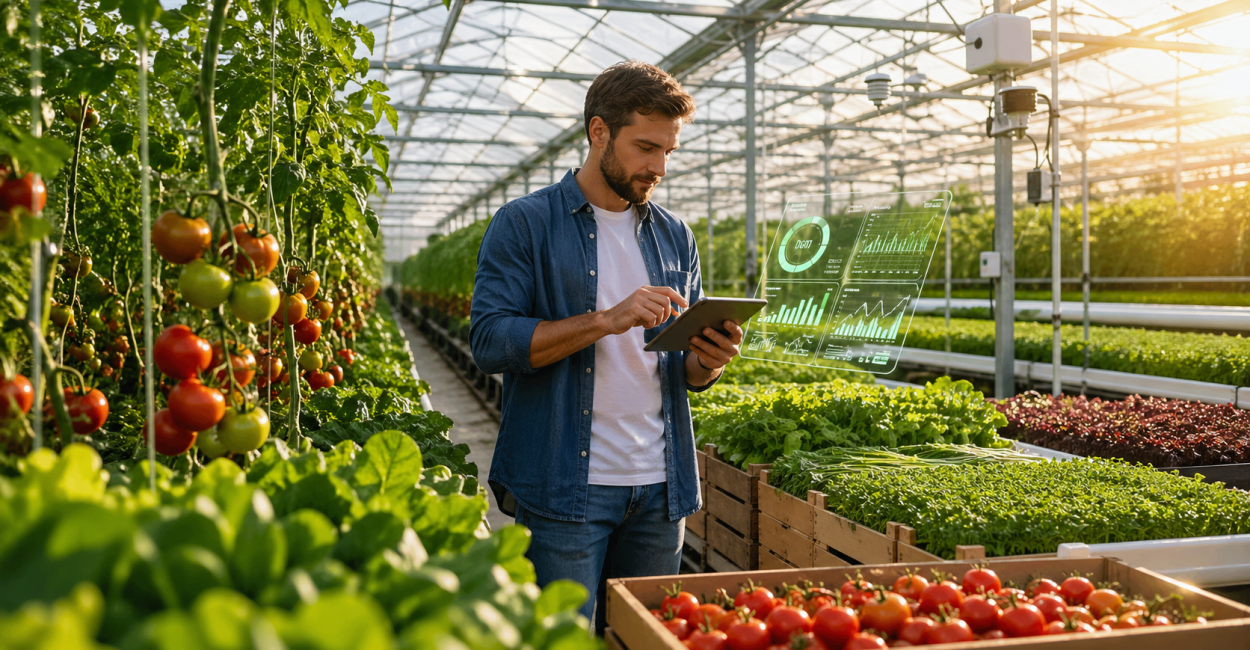
A Greenhouse can transform a small plot into a high-revenue farm by controlling climate, pests and production cycles. It matters because predictable year-round yields and premium prices close the gap between small growers and large outdoor farms. To get started, focus on structure choice, crop fit and market channels to secure buyers and cash flow.
Imagine a Dutch tomato grower earning $500,000 a year on 2 hectares while neighbors with 20 hectares outdoors struggle — that gap is the hook driving many to greenhouse farming. Most producers fear the upfront investment because they don’t see real returns; this guide gives numbers, costs and revenue — no fluff. Keep reading to discover exactly how much greenhouse farming can make per square meter in 2026.
Why Greenhouse Production is Exploding in 2026
Greenhouse Market Growth and Drivers
Global demand for greenhouse-grown produce is surging as climate variability undermines open-field predictability. Consumers want fresher, local and low-pesticide options, pushing retailers to source stable greenhouse supplies. Meanwhile, falling costs of sensors, automation and LED lighting make controlled-environment agriculture more accessible to mid-size and even small producers.
Key Countries Leading Greenhouse Adoption
Leading adopters include the Netherlands, Spain, China and the USA, with rapid growth seen in Brazil and Mexico. These countries combine strong supply chains, export infrastructure and investment in agri-tech. For exporters and local retail markets alike, Greenhouse systems reduce seasonality and increase export windows, improving market access and price stability.
Top Reasons 2026 Is the Right Entry Point
Entering in 2026 means lower equipment prices, mature automation platforms, and growing consumer willingness to pay premiums for quality. Policy incentives and financing for climate-smart agriculture support capital deployment. The convergence of demand, technology and finance shortens payback for the right scale and crop mix.
Greenhouse Structures: Choosing the Right System
Low-tech Polytunnels and Starter Options
- Low capital requirement and fast deployment
- Basic temperature and ventilation controls
- Suitable for tomatoes, cucumbers, leafy greens
- Easy repairs and low-tech maintenance
Polytunnels cost roughly $5–$15/m² and fit smallholders or pilot projects. They provide basic protection from weather and pests but limited climate control. Polytunnels are ideal when starting, testing varieties or selling locally where premium pricing is moderate.
Semi-climate Controlled Greenhouses
Semi-controlled houses incorporate fans, shade screens and automated irrigation. Costs range $20–$50/m² and deliver more consistent yields and better quality. Mid-size producers aiming for supermarkets or regional distribution benefit from reduced variability and higher post-harvest quality compared to open-field production.
High-tech Climate-controlled Options
High-tech houses cost $100–$300/m² for full control of temperature, humidity, CO₂ and fertigation. They target commercial growers supplying premium markets year-round. These systems demand skilled labor and precision management but deliver superior product quality and predictable margins.
| Type | Approx. Cost/m² |
|---|---|
| Polytunnel | $5–$15 |
| Semi-controlled | $20–$50 |
| High-tech | $100–$300 |
Advanced Systems: Vertical, Hydroponics and Indoor Farming
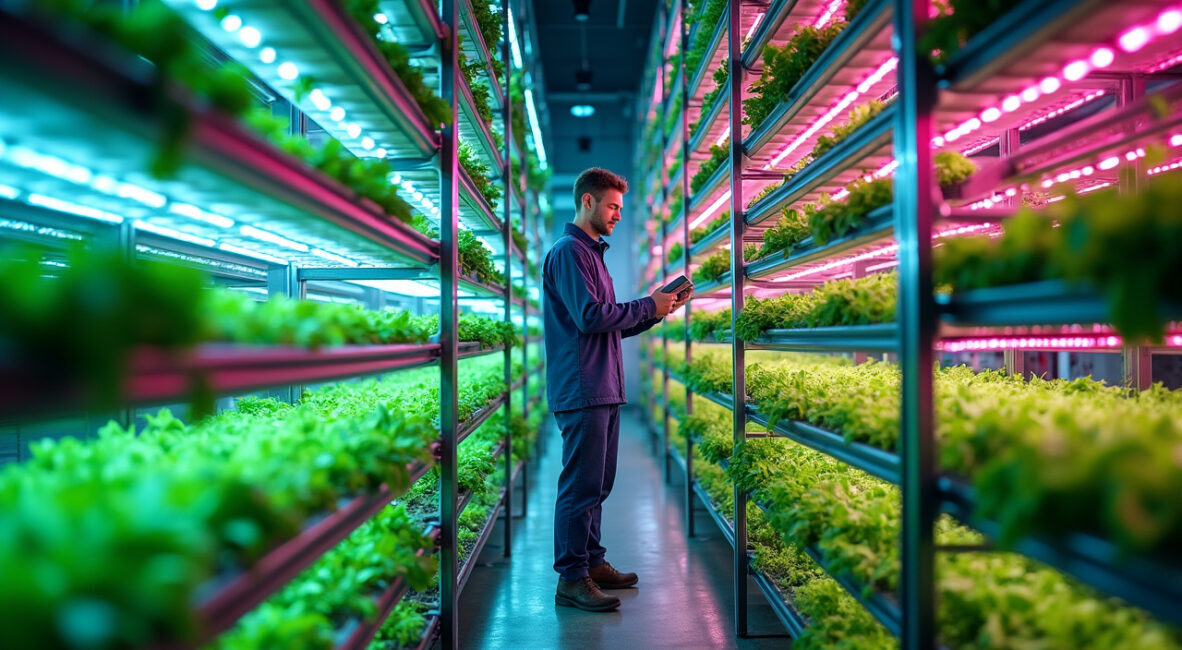
Vertical Farming and Indoor Controlled Environments
- Maximizes yield per m² with stacked racks
- Full environmental control with LEDs and hydroponics
- High capital cost but premium product positioning
- Ideal for urban markets and subscription models
- Strong fit for leafy greens and microgreens
Vertical farms run $500–$2,000/m² installed and require disciplined operations management. They remove weather risk entirely but need continuous energy supply and sophisticated nutrient management. When close to high-paying urban buyers, vertical farms reach top margins and fast turnover.
Hydroponic Greenhouse Integration
Integrating hydroponics into greenhouse floors improves water efficiency and can increase per m² yields. Hydroponic systems reduce soil-borne disease risk and enable tighter nutrient control. Capital and operational expertise are higher, but performance metrics often justify the investment through reduced input waste and higher product uniformity.
Energy and Resource Optimization
Energy is the biggest operating cost for indoor and high-tech greenhouses. Solar arrays, battery storage and heat recovery systems drastically cut expenses. Water reuse and closed-loop nutrient systems reduce input costs while improving sustainability credentials, helping unlock premium channels and certifications.
Crop Economics: Per Square Meter Profitability
Tomatoes and High-value Fruiting Crops
Tomatoes yield 50–80 kg/m²/year. With average prices $1.50–$3/kg, gross revenue ranges $75–$240/m². Operational costs vary but net margins often sit 25–35% when post-harvest handling and contracts are in place. Tomatoes benefit from established supply chains and year-round demand, making them a reliable cornerstone crop in many greenhouses.
Leafy Greens and Fast-turnover Vegetables
Leafy greens produce 30–50 kg/m²/year across multiple cycles. Prices typically run $2–$5/kg, yielding $60–$250/m². With short cycles (30–45 days), cash flow is rapid and margins often 30–45%. These crops are ideal for direct-to-consumer, CSA and premium retail segments due to freshness and quick replenishment.
Microgreens, Herbs and Premium Niches
Microgreens deliver 10–20 kg/m² per cycle with cycles of 8–14 days and prices $20–$50/kg. Annualized revenue can hit $500–$2,000/m² with net margins 40–60% in the right markets. High labor intensity and precise handling are trade-offs, but microgreens unlock top per-m² profitability when targeting restaurants and specialty stores.
| Crop | Revenue/m² (range) |
|---|---|
| Tomatoes | $75–$240 |
| Leafy Greens | $60–$250 |
| Microgreens | $500–$2,000 |
Cost Structure: What You Really Spend
Initial Investment and Capital Items
- Structure and covering (poly or glass)
- Irrigation and fertigation systems
- Climate control and automation hardware
- Lighting for indoor/vertical systems
- Substrate, benches and propagation areas
Initial costs per m² span $15–$300 for structures, plus $5–$30 for irrigation, $10–$100 for climate systems and $20–$150 for LED lighting when needed. Choose scale and tech to match market pricing power and management capacity to avoid over-investment.
Annual Operating Expenses
Annual operating costs typically include energy ($10–$80/m²), labor ($15–$50/m²), seeds and inputs ($5–$20/m²), maintenance ($3–$15/m²) and logistics/packaging ($5–$25/m²). Energy is often the single largest variable, especially for LED-lit indoor farms, so optimizing energy mix is critical to margins.
Payback Timelines by Greenhouse Type
Payback varies: low-tech polytunnels 2–4 years, semi-controlled 4–6 years, high-tech 6–10 years and vertical indoor farms 8–12 years. Proper market contracts and phased investments shorten payback; misaligned crop choice or weak distribution can extend it substantially.
Maximizing Greenhouse Returns: Practical Strategies
Crop Selection, Market Channels and Pricing
Choose crops suited to local demand and your margin goals. Selling direct via farmers markets, restaurants and CSAs captures premiums by removing intermediaries. Certifications (organic, GAP) can boost prices 30–50% when you have consistent supply and traceability systems in place.
Cost Control and Energy Strategies
Reduce electricity cost with solar, efficient LEDs and load- shifting. Combine short-cycle and long-cycle crops to maintain cash flow and optimize labor. Outsourcing logistics or partnering with local distributors can reduce packaging and transport overheads while improving market reach.
Risk Management and Operational Excellence
Invest in pest and disease monitoring, staff training and data-driven crop management. Regular maintenance and spare-part strategies avoid prolonged downtime. Contracts or pre-orders with retailers stabilize revenue and reduce the risk of unsold produce.
Success Stories and Practical Benchmarks
High-performing Tomato Operation
A Dutch tomato grower scaled to 2 hectares under glass and reached $800,000/yr revenue by focusing on premium varieties, tight climate control and export contracts. Key lessons: consistent quality, rigorous post-harvest handling, and active market development deliver outsized returns from modest land footprints.
Microgreens Urban Success
An American microgreens producer on 200 m² reported $120,000/yr net by selling to restaurants and subscription consumers. High unit prices and rapid cycles offset labor intensity. Critical factors were branding, freshness guarantees and reliable daily deliveries to chefs.
Regional Greenhouse ROI Example
A Brazilian bell pepper grower in São Paulo state recovered investment in four years using semi-controlled houses and contracting with supermarket chains. Combining technical assistance, sound varietal choice and integrated pest management kept costs predictable and volumes steady.
Conclusion
Greenhouse farming is a highly profitable pathway when you align crop choice, technology level and market channels. With the right mix, Greenhouse systems convert limited land into steady, high-value production and predictable cash flow.
For beginners, start with polytunnels and leafy greens or tomatoes; advanced growers should consider climate-controlled houses or vertical setups for premium microgreens. What crop are you growing or planning to grow in your greenhouse? Tell us in the comments — we’ll help you calculate the ROI.
FAQ
How Much Revenue Can a Greenhouse Generate Per Square Meter?
Revenue varies by crop: tomatoes yield roughly $75–$240/m² annually, leafy greens $60–$250/m², and microgreens can reach $500–$2,000/m². Actual income depends on yields, pricing, market access and operational efficiency, so run crop-specific financials before investing.
What Are the Main Operating Costs I Should Expect?
Major operating costs include energy ($10–$80/m²/yr), labor ($15–$50/m²/yr), seeds/inputs ($5–$20/m²/yr), maintenance ($3–$15/m²/yr) and packaging/logistics ($5–$25/m²/yr). Energy management and labor optimization are the most impactful levers to improve margins.
Which Greenhouse Type Has the Fastest Payback?
Low-tech polytunnels typically offer the fastest payback (2–4 years) because of low upfront costs. Semi-controlled systems follow (4–6 years). High-tech and vertical farms require longer payback but enable premium pricing and year-round production.
Is Microgreens Production Worth the High Setup Cost?
Microgreens have high per-m² revenue and strong margins (40–60%), but they require skilled labor and precise handling. If you have dependable premium buyers nearby, the higher setup cost is often justified by superior returns and short crop cycles.
Where Can I Find Reliable Technical Resources and Data?
Authoritative resources include research and extension services at universities and public institutes, industry reports and agri-tech providers. Consult local extension services for region-specific guidance and international resources for benchmarking and technology trends.
References: FAO, IPCC, Agritecture