Skip to content
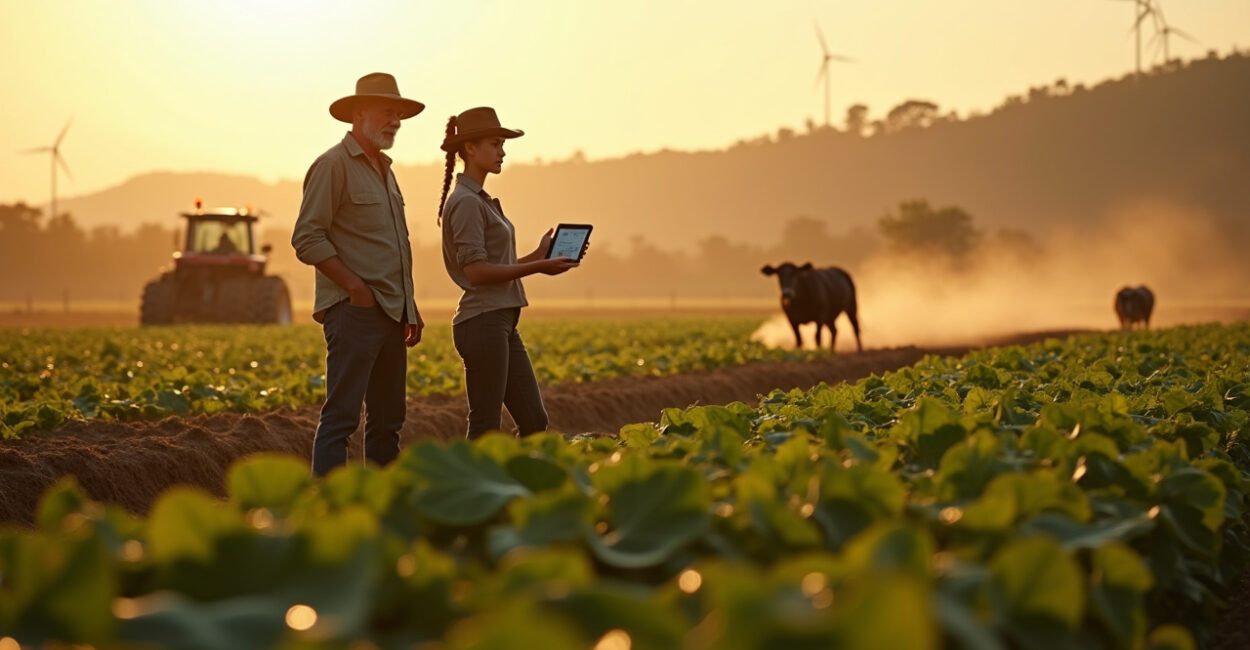
Brazil’s agribusiness sector accounts for approximately 26% of the national GDP and places the country among the top global exporters of soybeans, beef, and coffee. This remarkable strength underpins a critical debate: can agricultural growth coexist with environmental preservation? Many view these goals as opposing forces. However, a robust agricultural industry is not only compatible with sustainability but essential for securing long-term productivity and environmental health. This article explores how a strong agribusiness sector in Brazil can drive a sustainable future, balancing economic vitality with ecological responsibility.
Understanding this relationship requires looking beyond mere production volumes to the foundations that make agribusiness resilient and sustainable. From adopting cutting-edge technology to restoring degraded lands, Brazilian agriculture is evolving to meet both market demands and ecological challenges. The following sections unpack what “strong agribusiness” means today, why sustainability is non-negotiable, and how these pillars interconnect to shape the future of agriculture in Brazil.
The Essentials of Strong and Sustainable Agribusiness
- Strong agribusiness today encompasses efficiency, technological innovation, profitability, and resilience, not just output volume.
- Climate change and global market pressures have made sustainability a mandatory consideration for maintaining productivity and market access.
- Innovations like precision agriculture, land restoration, and crop-livestock-forest integration enable higher yields without expanding deforestation.
- Real-world examples demonstrate that farms can increase profitability while reducing environmental footprints.
- Challenges remain, including high technology costs and access to credit, particularly for small-scale producers, which require coordinated efforts across the sector.
What “Strong Agribusiness” Means Today
Strong agribusiness is often reduced to the sheer volume of crops or livestock produced, but that view overlooks critical dimensions. Today, strength reflects a sector’s ability to operate efficiently, adopt innovative technologies, maintain profitability, and withstand external shocks such as climate variability or market fluctuations. Brazil’s agribusiness produces over 250 million tons of grains annually and is the world’s largest exporter of beef and coffee, demonstrating its economic power. Yet, these figures alone don’t capture the full picture.
Efficiency involves optimizing input use—water, fertilizers, labor—and minimizing waste. Technology plays a pivotal role, from drones monitoring crop health to data analytics guiding planting schedules. Profitability ensures the sector attracts investment and remains viable, while resilience allows it to adapt to risks like droughts or trade disruptions. In practice, I’ve seen farms that integrated modern irrigation and soil management systems reduce costs by 20% while boosting yields, proving that strength is multifaceted and dynamic.
Why a Sustainable Future Became a Requirement, Not a Choice
Global consumers and importing countries increasingly demand products that are traceable and produced under environmentally responsible conditions. Traceability systems verify the origin and sustainability of agricultural goods, essential for accessing markets in Europe, China, and the U.S. Additionally, green credit programs and sustainability-linked financing incentivize farmers to adopt eco-friendly practices by offering better loan conditions.
Beyond market forces, climate change exerts direct pressure on productivity. Brazil has experienced intensified droughts and unpredictable weather patterns that threaten harvests and livestock health. For instance, the 2021 drought in the Southeast region caused significant losses in coffee production. These realities transform sustainability from an option into a core business imperative. Without sustainable practices, the sector risks losing its competitive edge and jeopardizing future food security.

The Pillars That Connect Strength and Sustainability
Technology and Precision Agriculture
Precision agriculture employs sensors, drones, satellite imagery, and big data to optimize input use and increase crop yields while minimizing environmental impact. These tools enable farmers to apply fertilizers and pesticides only where needed, reducing runoff and preserving biodiversity.
Restoration of Degraded Land
Instead of expanding into new frontiers, restoring degraded soils offers a way to increase production sustainably. Techniques like reforestation, cover cropping, and organic amendments improve soil fertility and carbon sequestration. Farms in Mato Grosso have successfully increased output by restoring previously abandoned lands.
Crop-Livestock-Forest Integration (ICLF)
This system combines agriculture, livestock, and forestry in the same area, promoting multiple uses of the soil while improving productivity and environmental outcomes. ICLF reduces deforestation pressure and enhances biodiversity, as seen in parts of Brazil’s Cerrado region.
Bio-inputs and Soil Management
Using bio-fertilizers and biopesticides reduces reliance on synthetic chemicals, lessening environmental risks and promoting healthier soils. Effective soil management practices also contribute to carbon capture and long-term fertility.
Renewable Energy on the Farm
Integrating renewable energy sources such as biogas from manure, solar panels, and biofuels reduces farms’ carbon footprint and energy costs. Some large operations in Brazil generate surplus energy, feeding it back into the grid.
“The difference between a strong agribusiness and a sustainable one lies not in opposing goals but in integrated solutions that boost productivity while preserving natural resources.”
Practical Cases and Results
In Mato Grosso, the use of precision agriculture combined with ICLF has boosted soybean yields by 15% over five years while reducing fertilizer use by 25%. Producers report cost savings and higher profits, validating that sustainability pays off economically. Similarly, farms in Paraná adopting renewable energy have cut operational costs by up to 30%, with positive impacts on local communities.
These cases show that sustainable practices are not just environmental buzzwords but translate into measurable financial returns. The key is integrating technologies and management approaches tailored to regional conditions.
The Challenges Still Holding Back Progress
Despite clear benefits, many producers face barriers to adopting sustainable technologies. High upfront costs and limited access to credit particularly affect small and medium farmers. Environmental regulations, while necessary, sometimes lack clarity, creating compliance difficulties.
Misinformation also poses a challenge, with some stakeholders skeptical about the feasibility or benefits of sustainable practices. In practice, I’ve witnessed producers hesitate to invest in new methods due to unclear ROI or peer pressure. Overcoming these obstacles requires coordinated policy support, education, and financing mechanisms that consider diverse farm realities.
The Role of Each Link in the Chain
A sustainable and strong agribusiness depends on collaboration across the entire value chain. Producers must commit to best practices and continuous improvement. Cooperatives provide technical assistance and collective bargaining power, helping smaller farms access technology and markets.
Industry players can invest in sustainable supply chains and transparency tools, while the government plays a crucial role in setting clear policies, offering incentives, and supporting research. Finally, informed consumers influence demand through their purchasing choices, encouraging producers to maintain high environmental standards.
“Sustainability is a shared responsibility: every actor in the agribusiness chain has a role to play in shaping a resilient future.”
Next Steps for a Strong and Sustainable Agribusiness
The path forward involves embracing integrated solutions that enhance productivity without sacrificing natural resources. Stakeholders should prioritize investments in precision agriculture, land restoration, and renewable energy, while policymakers need to facilitate access to credit and clear regulatory frameworks.
Farmers and agribusiness leaders must also foster knowledge exchange and transparency to build trust and overcome skepticism. By doing so, Brazil’s agribusiness can continue to thrive economically while securing a sustainable future for generations to come.
Take action today: explore emerging technologies and sustainable practices applicable to your operation or region. Consider downloading detailed case studies on sustainable Brazilian farms or scheduling a consultation with agritech experts to tailor solutions that fit your needs.
What Are the Main Benefits of Integrating Crop, Livestock, and Forest Systems?
Integrating crop, livestock, and forest systems (ICLF) optimizes land use by combining multiple production activities on the same plot, enhancing biodiversity and soil health. This approach diversifies income, reduces deforestation pressure, and improves resilience against climate variability. In practice, ICLF leads to better nutrient cycling and microclimate regulation, which can increase overall productivity while safeguarding natural resources.
How Does Precision Agriculture Contribute to Sustainability?
Precision agriculture uses technologies like sensors and drones to apply water, fertilizers, and pesticides more accurately, reducing waste and environmental impact. This targeted approach lowers input costs, preserves soil and water quality, and increases yields. By monitoring crop health in real time, farmers can make data-driven decisions that enhance both profitability and ecological balance.
What Challenges Do Small Producers Face in Adopting Sustainable Practices?
Small producers often struggle with the high upfront costs of sustainable technologies and limited access to credit or technical assistance. Regulatory complexity and lack of tailored support can also discourage adoption. Additionally, misinformation or cultural resistance may lead to doubts about the benefits or feasibility of new methods, requiring focused outreach and education efforts to overcome these barriers.
Why is Climate Change Making Sustainability Mandatory in Agribusiness?
Climate change introduces risks such as droughts, floods, and temperature extremes that directly affect crop yields and livestock health. These impacts threaten productivity and food security. Sustainable practices help build resilience by improving soil health, conserving water, and reducing greenhouse gas emissions. As global markets increasingly demand sustainability, failing to adapt risks economic losses and restricted market access.
What Role Do Consumers Play in Promoting Sustainable Agribusiness?
Consumers influence agribusiness by demanding products with verified sustainability credentials, pushing producers toward environmentally responsible practices. Their preferences drive supply chain transparency and encourage companies to invest in green certifications and traceability systems. Educated consumers can thus accelerate the sector’s shift toward sustainability by rewarding responsible production with their purchasing choices.