Skip to content
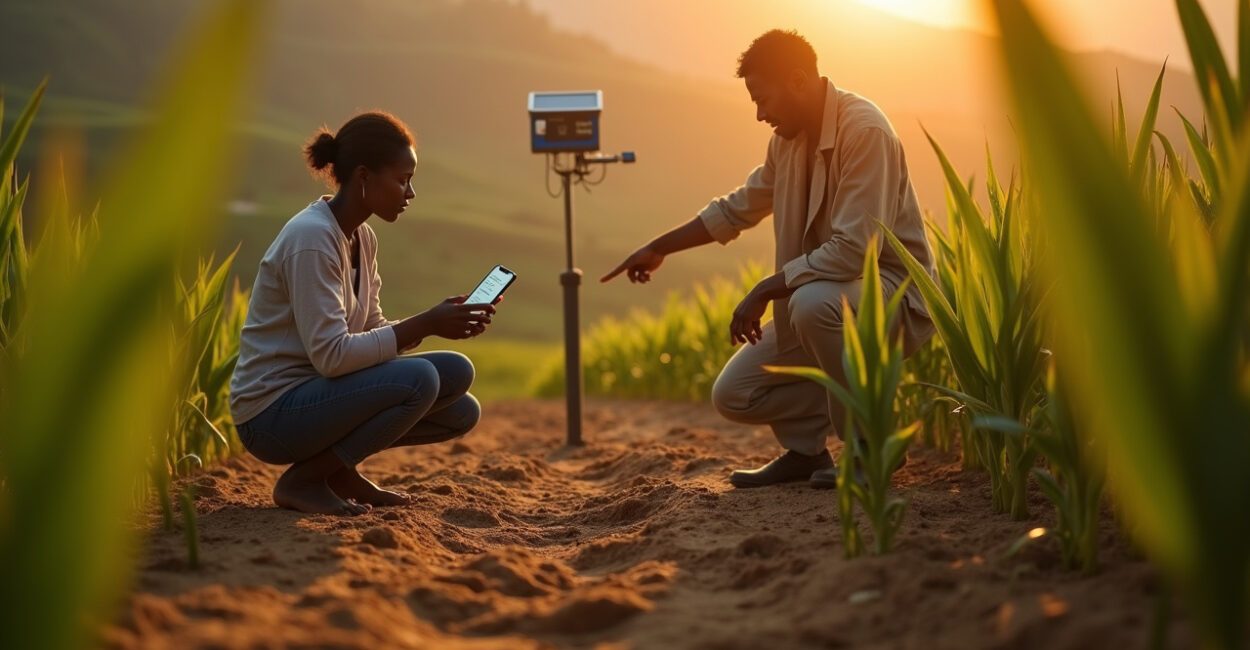
Nearly 80% of smallholder farmers worldwide lack any form of agricultural insurance, according to data from the Food and Agriculture Organization (FAO) and the World Bank. Traditional crop insurance models often fail these farmers due to high inspection costs, fraud risks, and the challenge of reaching remote villages. Parametric crop insurance, a form of index-based coverage, is changing this landscape by offering fast, automated payouts triggered by measurable weather or crop health indices. In 2026, this innovative approach is scaling rapidly, providing a lifeline for smallholders facing increasing climate volatility and food security challenges.
This article dives into parametric crop insurance explained in practical terms. You’ll learn what makes it different from conventional insurance, why it’s better suited for small-scale farmers, and how technology and partnerships are driving its growth. Whether you’re an agricultural professional, policymaker, or curious reader, this overview connects clear concepts with real-world applications.
The Essentials of Parametric Crop Insurance
- Parametric crop insurance pays out automatically when predefined environmental triggers, like rainfall or satellite vegetation indices, cross set thresholds, reducing delays and disputes common in traditional claims.
- Traditional crop insurance struggles with high monitoring costs, moral hazards, and slow payouts, making it largely inaccessible for smallholder farmers.
- There are three main parametric insurance types: weather index, area-yield index, and satellite/NDVI index, each suited for different regions and crops.
- Advanced technologies like remote sensing satellites, mobile money platforms, and AI-driven pricing models are enabling efficient delivery of parametric insurance in 2026.
- Despite its advantages, parametric insurance still faces challenges such as basis risk and uneven regulatory frameworks, but ongoing innovations are steadily addressing these issues.
Parametric Crop Insurance Explained: How Index-Based Coverage is Reaching Smallholder Farmers in 2026
Parametric crop insurance, also known as index-based insurance, is a financial product that provides automatic payouts based on objective indices rather than assessed losses on individual farms. Unlike traditional multi-peril or named peril insurance that requires detailed damage assessments, parametric policies trigger payments when a specific environmental metric—such as cumulative rainfall, temperature extremes, or satellite-derived vegetation health—hits a predefined threshold.
Originating in the early 2000s through initiatives by the World Bank and the International Food Policy Research Institute (IFPRI), parametric insurance was designed to overcome inefficiencies of traditional models. For example, a policy might state: if rainfall during the growing season falls below 250 mm, the farmer receives compensation without the need for on-site inspections. This clear, data-driven trigger simplifies claims, speeds payouts, and reduces administrative costs.
“What sets parametric crop insurance apart is its reliance on objective, measurable indices rather than subjective loss assessments, enabling rapid, transparent payouts that smallholder farmers desperately need.”
Why Traditional Crop Insurance Fails Smallholders
Traditional crop insurance often excludes smallholder farmers due to several structural challenges. First, the cost of monitoring and verifying claims on small, dispersed farms is prohibitive. Inspectors must visit each plot, driving up operational expenses that translate into high premiums. This makes coverage unaffordable for farmers who typically earn less than $2 a day.
Additionally, traditional insurance faces moral hazard and adverse selection problems—farmers might neglect good practices if they expect payouts, or only high-risk farmers might enroll. Many smallholders lack documented historical yield data, making risk assessment difficult. Finally, long claim processing times, sometimes stretching months, stall recovery efforts after crop failures.
“Traditional crop insurance is often a mismatch for smallholders because it was designed for large, commercial farms with reliable data and easy access—not scattered rural communities.”

The Three Main Types of Parametric Crop Insurance
| Type | Trigger | Advantages | Ideal Context |
|---|---|---|---|
| Weather Index Insurance | Rainfall, temperature, wind speed | Simple, fast payouts; widely applicable | Regions with good weather station coverage |
| Area-Yield Index Insurance | Average regional crop yields | Reflects actual production better; reduces basis risk | Areas with reliable yield statistics |
| Satellite/NDVI Index Insurance | Vegetation health via remote sensing | Useful where ground data is sparse; covers drought and pest damage indirectly | Remote or data-poor regions |
How a Parametric Policy Actually Works: A Step-by-Step Example
Consider a maize farmer in Kenya enrolled in a parametric insurance plan. At planting, the farmer pays a premium of $15 per hectare. A local weather station or satellite tracks rainfall during the critical growing window.
The policy states that if rainfall totals less than 250 mm during this period, an automatic payout is triggered. Once the threshold is crossed, the payout is processed through mobile money services like M-Pesa within 2 to 4 weeks, ensuring rapid financial relief.
In practice, this speed and automation are game changers. Farmers can reinvest in inputs or meet household needs without waiting months for claim approval.
The Technology Stack Making It Possible in 2026
Parametric crop insurance relies on a sophisticated blend of technologies. Earth observation satellites like Planet, Sentinel, and ICEYE supply high-resolution data on rainfall, soil moisture, and vegetation indices (NDVI). This data forms the backbone of index triggers.
Mobile money platforms such as M-Pesa, MoMo, and Wave facilitate immediate, frictionless payouts in rural areas. Blockchain and smart contracts automate claim validation and payment, minimizing human error and delays.
Digital farmer registries with simplified Know Your Customer (KYC) processes ensure accurate identification, while AI-powered actuarial models use vast datasets to price premiums more precisely, improving affordability and sustainability.
Real Programs Reaching Millions of Smallholders
Several initiatives are scaling parametric insurance globally. ACRE Africa covers millions of smallholders across Kenya, Tanzania, and Rwanda. The R4 Rural Resilience Initiative, a collaboration between the World Food Programme and Oxfam, offers innovative models allowing farmers to pay premiums through labor.
India’s PMFBY program is one of the world’s largest agricultural insurance schemes, incorporating parametric components. Pula Advisors partners with governments and insurers to expand coverage, while reinsurers like Swiss Re and Africa Re provide financial backing.
These programs demonstrate that parametric insurance is no longer experimental; it is a mainstream risk management tool for vulnerable smallholders.
The Big Problem: Basis Risk (And How It’s Being Solved)
Basis risk occurs when the index triggers a payout but the farmer’s actual losses are minimal, or conversely, when the farmer suffers losses but the index does not trigger. This mismatch can erode trust in parametric insurance.
Basis risk often stems from the physical distance between weather stations and farm locations or from satellite data resolution limits. In 2026, solutions include densifying ground sensor networks, deploying low-cost local sensors, and using higher-resolution satellite imagery.
Hybrid models combine parametric triggers with sample loss verification to fine-tune payouts. While basis risk cannot be eliminated entirely, these advances are narrowing the gap substantially.
How Smallholders Can Access Parametric Coverage
Smallholder farmers can obtain parametric insurance through various channels. Cooperatives and producer associations often negotiate group policies, reducing individual costs. Input suppliers bundle insurance with seeds and fertilizers, creating convenient packages.
Rural banks and fintech companies provide credit-linked insurance, integrating premiums into loan repayments. Direct-to-consumer apps like Pula, OKO, and WorldCover enable farmers to buy coverage via smartphones.
To enroll, farmers generally need proof of identity, farm location data, and the ability to pay premiums, sometimes supported by subsidies. Awareness and financial literacy remain key to increasing adoption.
What to Do Next: Exploring Parametric Insurance Options
Parametric crop insurance is rapidly evolving into a practical, scalable solution for smallholder risk management. Farmers and agricultural stakeholders should explore partnerships with local cooperatives, fintech platforms, and extension services offering index-based coverage. Testing pilot programs and engaging with ongoing digital innovations can unlock new resilience pathways against climate shocks.
Understanding policy terms, premium costs, and basis risk helps farmers make informed decisions. The convergence of technology, capital, and data in 2026 marks an inflection point where parametric insurance is finally delivering on its promise to protect the world’s most vulnerable farmers.
Frequently Asked Questions
What’s the Difference Between Parametric and Traditional Crop Insurance?
Parametric insurance pays out based on predetermined environmental triggers, like rainfall or satellite data, without needing on-farm loss assessments. Traditional crop insurance requires detailed inspections and proof of damage, which can be time-consuming and costly. This makes parametric insurance faster and often more affordable, especially for smallholders who lack formal yield records or easy access to claims adjusters.
How Fast Do Parametric Insurance Payouts Arrive?
Payouts from parametric insurance are typically processed within 2 to 4 weeks after the triggering event, thanks to automated data collection and mobile payment platforms. This speed contrasts sharply with traditional insurance claims, which can take months due to manual inspections and paperwork.
Can a Smallholder Farmer in Africa Really Afford Parametric Crop Insurance?
Though premiums can range from 3% to 12% of the insured value, subsidies and bundled products with credit or inputs often make parametric insurance affordable. Programs like ACRE Africa and R4 have demonstrated that, with proper support, smallholders can access and benefit from this coverage.
What Happens If My Crop Fails but the Index Doesn’t Trigger?
This situation is known as basis risk. It occurs when the index used doesn’t perfectly reflect your farm’s actual losses. While basis risk can be frustrating, new hybrid models and improved sensor networks are reducing its frequency. Farmers should understand this risk when choosing parametric policies and consider supplemental risk management strategies.
Is Parametric Crop Insurance Available in the United States?
Yes, parametric insurance is gaining traction in developed markets like the U.S., often complementing federal programs such as the Risk Management Agency (RMA). It is used to cover risks like late frost or hail, which traditional policies may not fully address, and is increasingly adopted by cooperatives, agribusinesses, and banks.