Skip to content
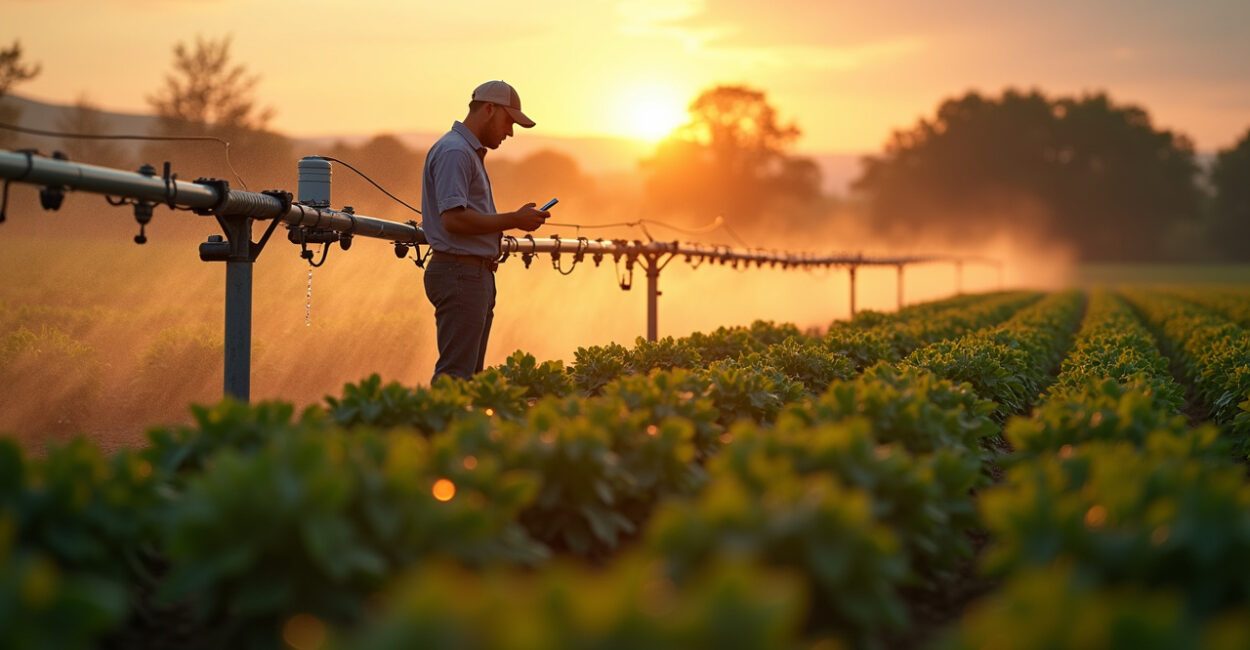
Smart irrigation is an advanced agricultural water management system that uses sensors, data analytics, and automated controls to deliver precise amounts of water exactly when and where crops need it. Unlike conventional irrigation methods that often operate on fixed schedules or manual intervention, smart irrigation dynamically adjusts to real-time soil moisture, weather conditions, and plant requirements, significantly improving water efficiency and crop performance.
The relevance of adopting smart irrigation technologies has never been greater. Pressures from climate change, escalating population demands, and shrinking freshwater supplies are driving farmers to seek more sustainable irrigation solutions. Increasing drought frequency and severity threaten both ecosystems and food security, making efficient water use a top priority. Implementing smart irrigation enables growers to conserve water, enhance plant health, and boost yields—critical factors for meeting future agricultural needs.
Key Insights
- Smart irrigation systems collect real-time data from soil moisture sensors, weather stations, and crop growth models to customize watering schedules with high precision.
- These technologies can reduce water consumption by 30% to 50% compared to traditional irrigation by minimizing overwatering and runoff.
- Integration with Internet of Things (IoT) platforms allows remote monitoring and automated control, cutting labor costs and improving operational efficiency.
- Smart irrigation complements precision agriculture by coordinating water delivery with nutrient management and pest control strategies.
- While the upfront investment can be significant, long-term savings and yield improvements justify the transition for many farming operations.
Contents
ToggleUnderstanding Smart Irrigation: Definition and Core Components
Technical Definition of Smart Irrigation
Smart irrigation refers to irrigation systems enhanced by digital technologies such as soil moisture sensors, weather forecasting tools, automated valves, and data analytics platforms. These components work together to optimize water application based on crop water demand and environmental variables.
In simpler terms, it’s a system that “listens” to the plants and soil, applying water only when necessary and in the right quantity, rather than following rigid schedules.
Key Technologies Involved
Core technologies include capacitance or tensiometer-based soil moisture sensors, evapotranspiration (ET) data from weather stations, and programmable logic controllers (PLCs) or smart controllers. These are often connected via IoT networks to cloud-based platforms for data processing and remote management.
How Smart Irrigation Differs from Traditional Systems
Traditional irrigation typically relies on predetermined timings or manual decisions, which can lead to under- or over-watering. Smart irrigation adapts constantly to variable conditions, reducing water waste and stress on crops.
Why Smart Irrigation Matters Today: Environmental and Economic Drivers
Climate Change Impact on Water Availability
Rising temperatures and altered precipitation patterns increase drought risk worldwide. According to the U.S. Geological Survey, agriculture consumes about 70% of global freshwater, making it a critical sector for water conservation efforts.
Population Growth and Food Security
The global population is projected to reach nearly 10 billion by 2050, demanding a 60% increase in food production. Efficient irrigation is essential to sustain this growth without depleting water resources.
Economic Incentives for Farmers
Water scarcity leads to higher costs and increased operational risks. Farmers utilizing smart irrigation have reported significant savings on water bills and improved crop yields, translating into better profitability.
Integrating Smart Irrigation Into Farming Practices
Assessing Site-Specific Needs
Successful implementation begins with understanding soil type, crop water requirements, and local climate. Detailed soil analysis and crop modeling inform sensor placement and irrigation scheduling.
System Design and Installation
Modern systems combine drip or sprinkler irrigation with smart controllers connected to sensors. Installation demands precision to ensure sensor accuracy and system responsiveness.
Data Management and Decision Making
Farmers and agronomists use dashboards to monitor soil moisture trends, forecast irrigation events, and adjust parameters. This data-driven approach improves water use efficiency and crop health.
Challenges and Limitations of Smart Irrigation Systems
Initial Investment and Maintenance Costs
While prices for sensors and smart controllers have dropped, upfront costs remain a barrier for small-scale farmers. Additionally, maintenance and calibration require technical knowledge.
Infrastructure and Connectivity Constraints
Rural areas with limited internet access may face difficulties in real-time data transmission and remote control, affecting system performance.
Crop and Regional Variability
Smart irrigation works best in certain crops and environments. For instance, highly heterogeneous soils or mixed cropping systems can complicate sensor data interpretation. There’s also ongoing debate about optimal sensor placement and irrigation thresholds.
Case Studies Demonstrating Impact of Smart Irrigation
Case Study 1: California Almond Orchards
Adoption of soil moisture sensors and automated drip irrigation in California’s almond farms resulted in water savings of approximately 40%, while increasing nut yield by 15%. The University of California’s Agricultural Extension documented these improvements in 2022.
Case Study 2: Vegetable Production in Spain
Spanish growers integrating weather-based irrigation scheduling reduced water use by 35% and cut fertilizer runoff, improving both crop quality and environmental impact. Research from the Instituto de Agricultura Sostenible supports these findings.
Lessons from Real-World Applications
These examples highlight that smart irrigation can deliver measurable benefits but requires adequate technical support and farmer training to realize its full potential.
Supporting Technologies and Related Concepts
Internet of Things (IoT) in Agriculture
IoT enables connectivity between sensors, controllers, and data platforms, allowing centralized management and remote adjustments.
Evapotranspiration (ET) Modeling
ET models estimate crop water use based on weather data, helping refine irrigation timing and amounts.
Precision Agriculture Integration
Smart irrigation is a key component of precision agriculture, linking water management with nutrient application and pest control for holistic crop management.
Water-Energy Nexus
Reducing water use also decreases energy consumption for pumping and treatment, underscoring the environmental benefits of these systems.
Next Steps for Implementing Smart Irrigation on Your Farm
Transitioning to smart irrigation begins with a thorough assessment of your farm’s water use patterns, soil characteristics, and crop requirements. Partnering with agricultural extension services or technology providers can help design an effective system tailored to your needs.
Investing in training and maintenance ensures the system operates at peak efficiency. Monitoring performance over time and adjusting irrigation based on data feedback will maximize water savings and crop productivity.
Looking ahead, advances in machine learning and satellite remote sensing promise to further enhance irrigation precision and accessibility, making smart irrigation an indispensable tool for sustainable agriculture.
Frequently Asked Questions
- How do soil moisture sensors work in smart irrigation?
These sensors measure volumetric water content or soil tension, providing real-time data that informs irrigation timing and volume to avoid over- or under-watering. - Can smart irrigation be implemented on small farms?
Yes, although cost and technical complexity can be limiting. Scaled-down systems with fewer sensors and simpler controllers are available for small-scale operations. - What types of crops benefit most from smart irrigation?
High-value crops like fruits, nuts, and vegetables often see the greatest improvements due to their sensitivity to water stress and precise water needs. - Is internet connectivity mandatory for smart irrigation?
While remote control and cloud data enhance functionality, some systems operate offline using local controllers and manual data downloads. - How much water can smart irrigation save compared to traditional methods?
Studies show water savings ranging from 30% to 50%, depending on crop type, climate, and system design. - Are there any environmental risks associated with smart irrigation?
Generally, smart irrigation reduces environmental impact. However, incorrect sensor placement or calibration may lead to inadequate watering, stressing plants or causing runoff.
References: