
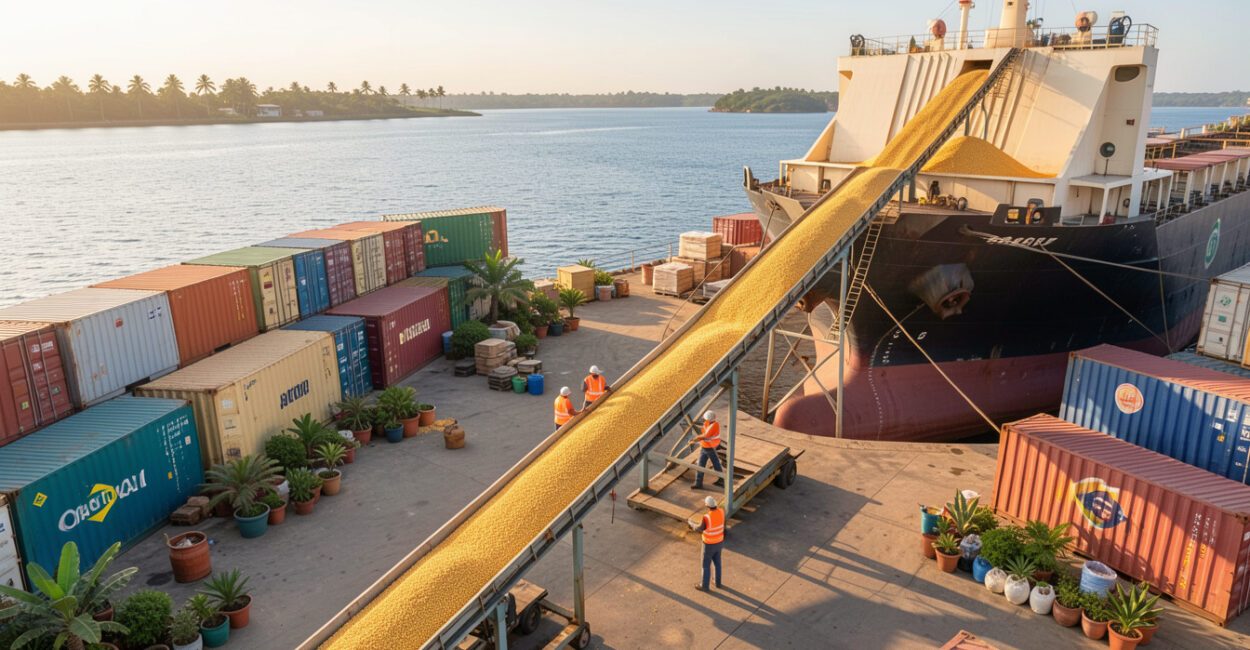
Soybeans, meat, sugar, coffee, and forest products give Brazil a place among the world’s major agricultural suppliers, but export totals depend on what gets counted. Brazil’s Agricultural Exports can refer to customs data for individual products or to a broader agribusiness measure. The distinction matters when comparing values, volumes, and markets.
The latest full-year figure used here is the Ministry of Agriculture’s reported $164.4 billion in agribusiness exports for 2024. That broad measure is not interchangeable with a customs tally for a single commodity or with Brazil’s total exports. For newer totals, check the reporting period and product classification in Comex Stat before comparing figures.
At a Glance
- 2024 agribusiness export value: $164.4 billion, as reported by Brazil’s Ministry of Agriculture.
- Scope: The ministry’s agribusiness measure; individual product customs data may use different classifications.
- Major export groups: Soy complex, meat, sugar and ethanol, coffee, and forest products.
- Key data source: Brazil’s Ministry of Development, Industry, Trade and Services (MDIC), through Comex Stat.
- Important comparison: Export value can rise even when physical shipment volume falls.
Brazil’s Agricultural Exports at a Glance
Brazil’s agricultural exports are sales abroad of farm and related agribusiness goods, recorded by product, destination, value, and often physical quantity. In 2024, the Ministry of Agriculture reported $164.4 billion in agribusiness exports, led by products such as soybeans, meat, sugar, and coffee. That headline figure describes a broad sector measure, not a uniform customs category.
For a product-level check, MDIC’s Comex Stat database lets users examine trade by period, destination, and product classification. The Ministry of Agriculture’s broader agribusiness reporting serves a different purpose. Before citing a number, verify whether it covers a calendar year, a particular commodity code, or a broader group of goods.
Brazil’s export strength comes from a wide commodity base, while the meaning of any headline total depends on its reporting scope.
What Are Brazil’s Main Agricultural Exports?
The leading export groups combine large-scale field crops with livestock and products processed from agricultural raw materials. Soybeans anchor the crop trade; beef and poultry connect exports to livestock production and processing; sugar, coffee, and pulp add other major revenue streams.
Product group What is exported Common destinations or market features Soy complex Soybeans, soybean meal, and soybean oil China is a major buyer of beans; meal and oil serve a wider range of markets. Meat Beef, poultry, and pork Destinations vary by species, product specification, and market approval. Sugar and ethanol Raw and refined sugar, plus ethanol Trade patterns depend on price, fuel policy, and buyers’ refining needs. Coffee Green and processed coffee Sales reach roasters and traders across several consuming regions. Forest products Pulp, paper, and wood products Demand is tied to industrial users and the specifications of each product.
These groups are useful for orientation, but they should not be treated as a ranked table of export value: the categories can be defined differently across datasets. For soybean shipments, market prices and global crop conditions also matter; this overview of the forces behind global soybean prices provides helpful context.
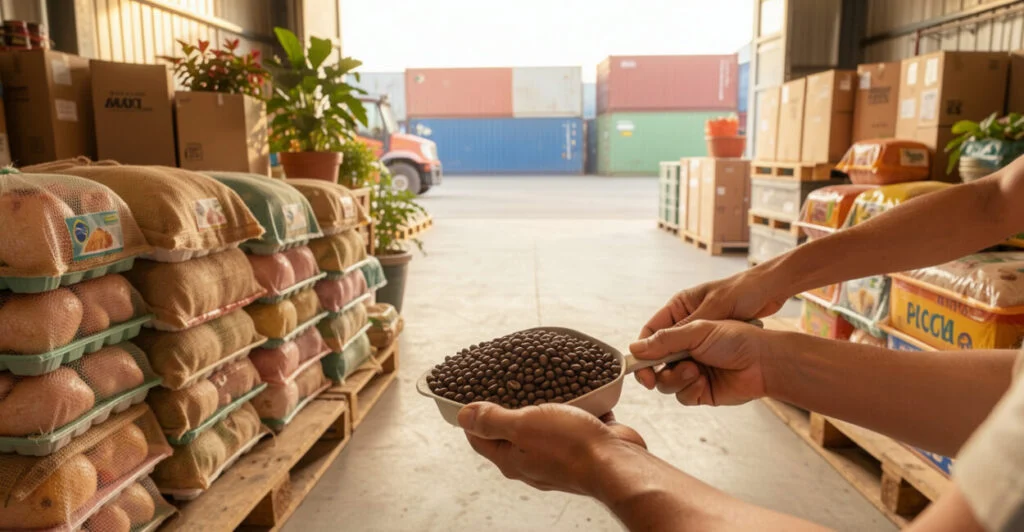
Where Do Brazilian Agricultural Export Markets Fit?
China is a major destination for Brazilian agricultural goods, particularly soybeans, but it is not the only market that shapes the sector. The European Union, the United States, and countries across the Middle East and Asia also buy Brazilian products. Their importance changes by commodity, product form, and year.
Market concentration is best assessed product by product. A high share of soybean sales going to one buyer does not mean that beef, coffee, or poultry has the same exposure. Brazil’s trade data can show where goods were shipped, but a destination is not always the final consumer: cargo may be traded or processed again after arrival.
For exporters and producers, that distinction affects risk planning. A disruption in a major soybean market can have a different effect from a change in inspection rules for meat or a shift in coffee demand. The bilateral picture also evolves; Brazil’s beef trade with the United States illustrates why individual product relationships deserve their own analysis.
How Brazil’s Agricultural Export Mix is Changing
Export patterns shift through changes in both volume and value. A larger harvest can increase shipments, while a price rally can lift export revenue even if the number of tons sold is flat or lower. Currency movements, freight rates, and product mix add further complications.
How Can Readers Distinguish Value Growth from Volume Growth?
Compare the same product classification and reporting period in both measures: export value in U.S. dollars and net weight or another stated physical unit. If value rises while shipped weight falls, the increase reflects higher average unit value, a change in product mix, or both—not necessarily more product reaching buyers.
A practical check is to calculate unit value by dividing export value by net weight, then compare that result across matching periods. Treat it as an average, not a quoted market price: different grades, processing levels, and destinations can change the mix. The FAO’s trade data can provide a separate international reference, but definitions and coverage still need to match before comparing datasets.
How Agricultural Products Move from Farm to Export Market
Export supply chains connect production to customs clearance, and each handoff can affect quality, timing, and cost. A typical route includes these steps:
- Production and harvest: Farms produce crops or raise livestock under conditions shaped by weather, input availability, and production standards.
- Aggregation and storage: Grain moves to silos or terminals; livestock products go through inspected processing facilities. Storage capacity and handling determine how much product can be held before shipment.
- Processing and documentation: Exporters prepare product specifications, commercial documents, and any health or origin certificates required by the destination.
- Inland transport and port handling: Trucks, rail, and waterways move cargo toward export terminals, where queues and loading capacity affect schedules.
- Customs clearance and shipment: Declarations and inspections are completed before cargo is loaded and dispatched.
A common operational mistake is to plan from the vessel’s departure date backward without allowing for inland transit, storage availability, or inspection. For perishable goods, delays can threaten product condition; for grain, a missed shipping window can create storage costs or force a later sale.
What Challenges Shape Exporters’ Decisions?
How Do Freight Costs Affect Competitiveness?
Higher freight costs reduce the net price an exporter receives after transport, insurance, and handling. The effect is sharper for lower-value or bulky goods, for distant destinations, and when competing suppliers can ship more cheaply. A freight increase does not affect every product equally; exporters should compare the delivered cost to the buyer, not just the farm or port price.
How Do Weather Events Affect Supply and Shipment Timing?
Drought can reduce yields and leave exporters with less product to sell, while heavy rain can delay harvest, damage roads, or slow movement to ports. Weather can also shift the harvest calendar, changing when supplies reach storage and terminals. The size of the effect depends on the crop, region, infrastructure, and whether production losses can be offset elsewhere.
Which Products Need Certification or Inspection?
Requirements depend on the product and destination. Meat and other animal products commonly face veterinary health certification and establishment approval; plants and plant products may require phytosanitary certification, pest inspection, or treatment. Exporters should confirm current rules with Brazil’s agriculture authorities and the importing country before committing cargo, since approvals and conditions can differ by market.
Other pressures include changing import rules, sustainability scrutiny, and commodity-price swings. These concerns are specific: a rule applying to one product or destination should not be described as a blanket restriction on all Brazilian exports. The broad trade outlook also reflects shifts across commodities, as explored in this analysis of global agricultural commodity trends.
Outlook for Brazil’s Agricultural Exports
Brazil has opportunities to serve buyers seeking soy, meat, coffee, sugar, and forest products, but future export performance depends on harvest outcomes, market access, transport capacity, and prices. New demand or expanded approvals may support sales; none guarantees a particular export total. Forecasts should be read as scenarios, not confirmed outcomes.
The broad rule has limits: an export boom in one commodity can coexist with weaker shipments in another, and a national total can conceal regional supply problems. For a current decision, first identify the exact product and destination, then check the latest Comex Stat period, applicable market requirements, and the freight cost to delivery. That gives a sounder basis than relying on a single sector-wide headline.
📱 See this content as a Web Story
Frequently Asked Questions
Does the $164.4 Billion Figure Include Every Brazilian Export?
No. It is the Ministry of Agriculture’s 2024 agribusiness export measure, not Brazil’s total exports across all sectors. Always check the scope and classification attached to a figure.
Are Soybean Exports the Same as Exports of the Soybean Complex?
No. The soybean complex can include beans, meal, and oil. A figure for soybeans alone should not be compared directly with a total that combines processed products.
Why Can Two Official Sources Report Different Export Totals?
They may use different product definitions, coverage, valuation methods, or reporting periods. Check those details before treating the difference as a change in trade.
Can a Port’s Shipment Data Identify the Final Buyer?
Not always. A recorded destination may be an intermediate trading or processing point, so customs destination data do not necessarily identify where the product is ultimately consumed.
Where Should an Exporter Verify Current Market-Entry Requirements?
Check Brazil’s agriculture ministry guidance and the importing country’s competent authority for the specific commodity and destination. Requirements can change, and approval for one product or facility does not automatically cover another.