
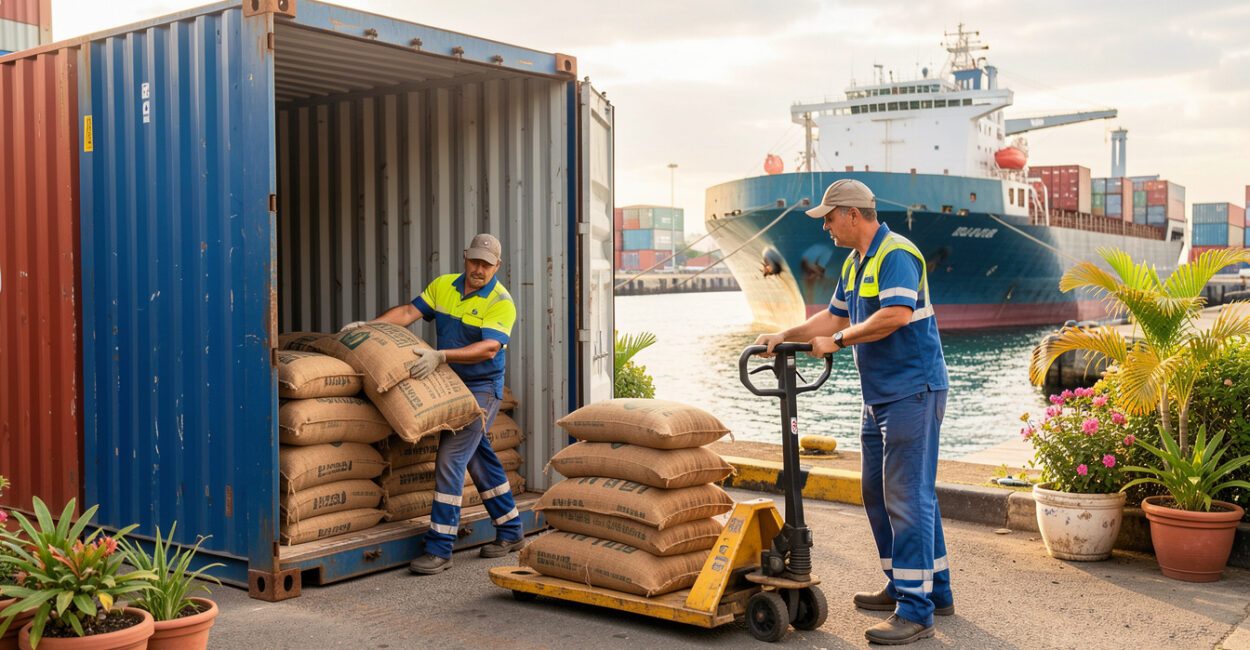
Brazil shipped a record 50.44 million 60-kilogram bags of coffee in calendar year 2024, earning about $12.3 billion, according to the Brazilian Coffee Exporters Council (Cecafé). Those figures are a dated benchmark, not a current 2026 total. Claims that exports to the United States have surged as tariffs eased need to be checked against the latest monthly data.
For trade research, keep three measures separate: physical volume, customs value, and coffee type. They answer different questions, and none alone shows whether Brazil has more coffee available or whether a particular buyer is paying more.
Reporting periods matter, too. Calendar-year exports, crop-year estimates, and coffee marketing-year figures can describe different stretches of trade, so a headline comparison may not be like-for-like.
Brazilian Coffee Exports at a Glance
Brazil exported 50.44 million 60-kilogram bags of coffee, worth about $12.3 billion, in calendar year 2024, based on Cecafé’s annual reporting. That total covers multiple coffee forms, including green and processed coffee. For a reliable 2026 figure, check the latest report and note its period, unit, and product coverage before comparing it with this benchmark.
Measure Calendar year 2024 benchmark How to read it Export volume 50.44 million 60-kilogram bags Physical quantity reported by Cecafé Export value About $12.3 billion Reported export revenue, not a measure of volume Reporting period January–December 2024 Do not treat it as a crop-year or 2026 result
These are historical figures, not a forecast. A higher export value can reflect higher prices even when shipments fall, while volume can rise without a matching increase in revenue. Cecafé’s monthly export reports provide trade updates; Brazil’s Comex Stat offers official customs data with product and destination filters.
What Types of Coffee Does Brazil Export?
Brazil exports green coffee, soluble coffee, and other processed coffee products. Green coffee is unroasted bean traded in bulk; the main species and commercial groups are Arabica and canephora, commonly called conilon in Brazil and often grouped with Robusta in trade reporting.
- Arabica: A major component of Brazil’s green-coffee exports. It is generally traded in distinct grades and preparations, such as natural or washed coffees.
- Conilon/Robusta: Canephora coffee used in blends and soluble products. “Conilon” is a common Brazilian term, while datasets may classify it under Robusta or broader canephora categories.
- Soluble coffee: Processed coffee exported in forms such as spray-dried or freeze-dried products. Its weight and value should not be compared directly with green-bean figures without checking the dataset’s conversion basis.
When evaluating Brazil Arabica exports or Brazil Robusta exports, confirm whether a source reports species, commercial category, or customs product code. Those classifications are not always interchangeable, and “coffee” totals may include processed products.
Brazil’s coffee trade sits within a broader export mix that includes several farm commodities; a wider view is available in this overview of Brazil’s agricultural exports.

Where Does Brazilian Coffee Go?
The United States and European markets are among the major destinations for coffee from Brazil, alongside buyers in Asia. Exact rankings can change by month and year, so a destination list should always be tied to a reporting period and product definition.
Destination statistics can also differ depending on whether they record the country of import, the country of final consumption, or the immediate shipping destination. Coffee routed through a trading or logistics hub may appear under a different destination than the market where it is ultimately consumed.
To test a claim about a particular market, filter Comex Stat by period, coffee product code, and destination, then compare the same fields in the prior period. For example, a rise in shipments to the United States does not by itself establish that tariff changes caused the increase; harvest timing, prices, inventories, and freight can also affect trade.
For context on agricultural trade relationships between the two countries, see this analysis of Brazil and the United States in the global beef market. It concerns beef, so it should not be used as evidence about coffee tariffs or coffee volumes.
How Have Exports Changed by Year and Month?
Brazil coffee exports can set a volume record in one period and earn a different amount in another because shipments and prices move independently. Cecafé reported 50.44 million bags and about $12.3 billion in export revenue for calendar year 2024; compare later totals only after matching the product scope and period.
A monthly series can be volatile. Harvest availability, shipment scheduling, port capacity, and buyer inventories may shift dispatches between months, while prices can move sharply without an equivalent change in bags shipped. A single month is therefore a poor basis for declaring a durable trend.
Illustrative example: if a hypothetical exporter ships 100 bags at $200 per bag, the gross value is $20,000. If the next period has 90 bags at $250 per bag, value rises to $22,500 despite a 10% drop in volume. This arithmetic illustrates why export value and export volume should be tracked separately; it is not a Brazilian trade statistic.
When comparing Brazil coffee exports by year, use either calendar years throughout or the same crop/marketing-year definition throughout. Mixing them can make a normal timing difference look like a sudden change in supply.
What Drives Brazil’s Coffee Export Performance?
The Brazil coffee harvest sets the broad supply context, but export shipments also depend on how much coffee producers and traders hold, when contracts are fulfilled, and whether ports can load cargo on schedule.
- Harvest and weather: Rainfall, drought, heat, and the production cycle influence yield and the balance between Arabica and conilon. Their effects differ by region and crop stage.
- Prices and currency: Global coffee prices and the Brazilian real’s exchange rate influence local selling incentives and dollar-denominated export receipts. They do not guarantee a specific shipment volume.
- Logistics and available stocks: Vessel space, port congestion, and the timing of exportable inventory can delay or advance shipments.
- Buyer demand and trade policy: Importer inventories, purchasing plans, and tariff or regulatory changes can affect orders. Establishing causation requires more than observing a change in monthly exports.
These forces interact. A strong harvest may not immediately produce a matching export increase if producers hold stocks or shipping capacity is tight. Likewise, high prices can lift export revenue while limiting buyers’ purchases.
Commodity prices and exchange rates shape other Brazilian agricultural trade as well; this explainer on what drives soybean prices in global markets offers useful market context, though coffee has its own supply dynamics.
How Do Export Rules, Shipping, and Quality Requirements Work?
Coffee export transactions typically require accurate product classification, commercial and shipping documents, and compliance with the importing country’s rules. Exact requirements depend on the product, destination, contract, and current regulations; this overview is not legal advice.
Exporters and buyers commonly align on grade, moisture, defects, packaging, lot identification, and pre-shipment sampling in the contract. For soluble coffee, specifications differ from those for green beans. Agreeing on the sampling method and acceptance criteria before loading helps prevent disputes when a buyer’s arrival sample differs from the seller’s retained sample.
For a shipment, reconcile the invoice, packing details, certificate information, and customs declaration against the same product description and quantity. A frequent practical error is comparing a green-coffee weight with a processed-coffee weight as if they represented equivalent quantities; verify the product code and unit before drawing conclusions from trade data.
Traceability and documentation requirements may vary by destination and buyer. Ask the importer and relevant authorities which rules apply to the specific shipment, rather than relying on a general checklist that may be outdated.
How Can You Track the Latest Brazilian Coffee Export Statistics?
Use Cecafé for sector-level monthly export reporting, Comex Stat for Brazil’s official foreign-trade customs data, and the International Coffee Organization (ICO) for international coffee trade statistics. Each source answers a different question, so record the source and definition beside every number.
Cecafé publishes monthly reports that summarize coffee exports by volume, value, and other categories. Comex Stat, maintained by Brazil’s Ministry of Development, Industry, Trade and Services, lets users query exports by time, destination, and product classification. The International Coffee Organization’s trade statistics support comparisons across coffee-exporting and importing countries.
Before citing a figure, check these four points: reporting dates, unit, product scope, and whether the number is provisional or revised. Cecafé’s bag-based reporting and customs datasets may use different product groupings or measurement units, so totals need not match exactly.
To assess a headline about exports surging after tariffs eased, compare monthly volume and value for the same coffee categories and destinations, then check the relevant tariff rule and effective date. If the reporting period spans a policy change, the monthly series alone cannot show that the policy caused the result.
📱 See this content as a Web Story
Frequently Asked Questions
Does Brazil Export Coffee Only as Green Beans?
No. Green coffee accounts for a major part of trade, but Brazil also exports soluble and other processed coffee products. Always check whether a reported total includes those products.
Why Might Cecafé and Comex Stat Show Different Totals?
They may differ in product coverage, classification, units, reporting cutoffs, or revisions. Compare matching periods and product categories before treating the difference as an error.
Can a Rise in Export Value Prove That Brazil Shipped More Coffee?
No. Export value reflects both the amount shipped and the prices recorded for those shipments. Review volume and value side by side to see whether revenue growth came with more physical coffee or higher prices.
What Should a Buyer Verify Before Comparing Supplier Offers?
Match the coffee type, grade, processing, lot size, delivery terms, shipment window, and quality tolerances. Two offers with different specifications or delivery conditions are not directly comparable, even when both quote a price per bag.